
The Marine Environment and Shipping: The Rules That Govern What Goes Over the Side
How shipping protects the marine environment: the six MARPOL annexes, special areas and ECAs, ballast water standards, carbon rules and shipboard practice.
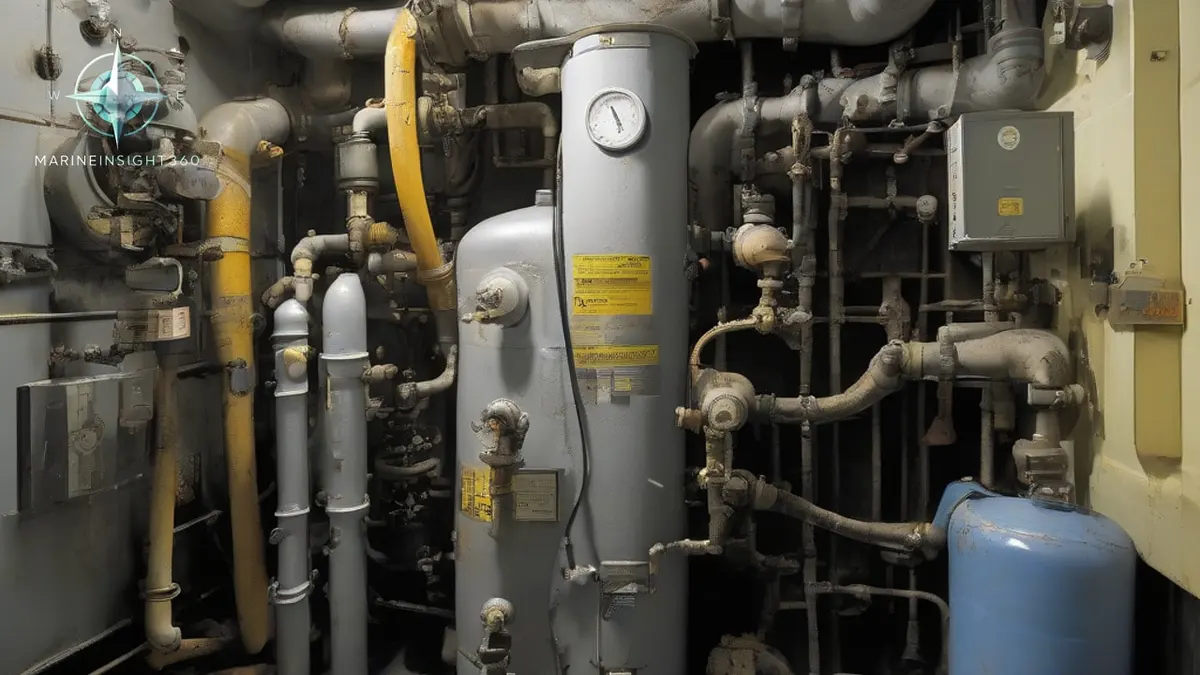
What the marine environment means in shipping practice
For a working ship the marine environment is a regulated space. Every discharge, emission and transfer over the side is governed by a specific instrument and evidenced by a specific record. The core is MARPOL, the International Convention for the Prevention of Pollution from Ships, which covers pollution from operational and accidental causes across six technical annexes. Around it sit ballast water rules, anti-fouling controls and a widening set of regional requirements.
MARPOL was adopted on 2 November 1973 and combined with a 1978 protocol after a run of tanker casualties. The combined instrument, MARPOL 73/78, entered into force on 2 October 1983 and remains the reference behind every oil record book entry and garbage log a ship keeps today.
Six annexes, six waste streams
- Annex I, oil. Engine room bilges, oily residues, tank washings and cargo oil operations, with the oil record book as the evidence trail.
- Annex II, noxious liquid substances in bulk. Roughly 250 substances sorted by hazard category, controlling prewash and residue discharge on chemical tankers.
- Annex III, harmful substances in packaged form. Packing, marking, labelling and stowage of marine pollutants carried in containers.
- Annex IV, sewage. Discharge permitted through an approved treatment plant, or at defined distances from land and controlled rates.
- Annex V, garbage. Discharge of plastics is prohibited everywhere at sea, and other categories are prohibited or tightly limited by distance and treatment.
- Annex VI, air pollution. Sulphur oxides, nitrogen oxides, ozone depleting substances and shipboard incineration, plus the energy efficiency measures added since.
Special areas and emission control areas
Some sea areas receive stricter treatment because of their oceanographic character and traffic density. Under the discharge annexes these are special areas, among them the Mediterranean, Baltic, Black Sea, Red Sea, the Gulfs area and Antarctic waters, where discharge standards tighten or fall to zero.
Annex VI works on a different geography. Emission control areas cap fuel sulphur at 0.10 per cent by mass against the 0.50 per cent global limit that took effect on 1 January 2020. Crossing an ECA boundary is therefore a planned engineering operation with a fuel changeover, a completed changeover log and a recorded time and position, not a formality to be squared away afterwards.
Ballast water and biofouling move species, not chemicals
Not every environmental harm is a discharge of oil or chemicals. Ballast water carries larvae, cysts and juveniles between ecosystems, and hull fouling does the same on the outside of the ship. The Ballast Water Management Convention entered into force on 8 September 2017 with two standards: D-1, exchange at sea, and D-2, a treatment performance standard expressed in viable organisms per unit volume. Ships are held to D-2 through an installed treatment system.
Treatment systems fail quietly. Sensors drift, filters blind in silty water and UV lamps lose output long before they fail outright. Crews who log system performance at every ballast operation find those problems before a port state sampling regime does.
Air emissions and the carbon rules
Annex VI now reaches well beyond local air quality. The IMO greenhouse gas strategy adopted in 2023 targets net zero emissions from international shipping by or around 2050, with indicative checkpoints along the way, and operational measures such as the carbon intensity indicator already apply to ships in scope. The European Union has brought maritime transport into its emissions trading system, attaching a direct cost to emissions on voyages touching EU ports.
For crews the practical effect is data quality. Fuel consumption reporting, accurate bunker delivery notes and clean voyage records now carry commercial consequences as well as regulatory ones.
Newer pressures: noise, pellets and washwater
Underwater radiated noise from propellers and machinery is recognized as a pressure on marine mammals, and IMO guidelines encourage design and operational reductions such as propeller maintenance and hull cleaning. Plastic pellet loss from containers, lost fishing gear and washwater from exhaust gas cleaning systems have all drawn regulation at regional or port level, and a number of states restrict open loop scrubber discharge inside their waters.
Those restrictions belong in the passage plan, not in a conversation at the pilot station.
What good practice looks like on board
Record keeping is the part port state control can verify without instruments, so it is the part that gets checked hardest. Entries must be contemporaneous, legible and consistent with tank soundings and equipment logs. Beyond paperwork the habits are simple: no overboard valve opened without an independent check, bunkering with scupper plugs verified and a spill kit laid out, garbage segregated at source, and any equipment defect reported the day it appears rather than the week before an inspection.
Sources and further reading
- IMO: International Convention for the Prevention of Pollution from Ships (MARPOL)
- NAMEPA: International Convention for the Prevention of Pollution from Ships
- MARPOL: A Practical Guide
What to read next
Recommended Reading
Marine Scrubbers: Types, How They Work and Where the Rules Are Tightening
How marine scrubbers strip sulfur from ship exhaust, the difference between open-loop, closed-loop and hybrid systems, and where washwater discharge is banned.
US Tightens Controls on Iran and Warns Shipping Over Hormuz Tolls
The US has warned shipping that paying Iranian Strait of Hormuz tolls risks sanctions. Designations, insurance fallout and compliance steps explained.
What Are Portholes? Purpose, Construction and the Rules Behind Ship Side Scuttles
What portholes are, why they are round, how side scuttles are built with toughened glass and deadlights, and the strength grades rules require at sea.