
What Does MHE Stand For in Ports and Shipping?
MHE stands for materials handling equipment. What counts as MHE in ports and terminals, how the main machines differ, and how operators choose.
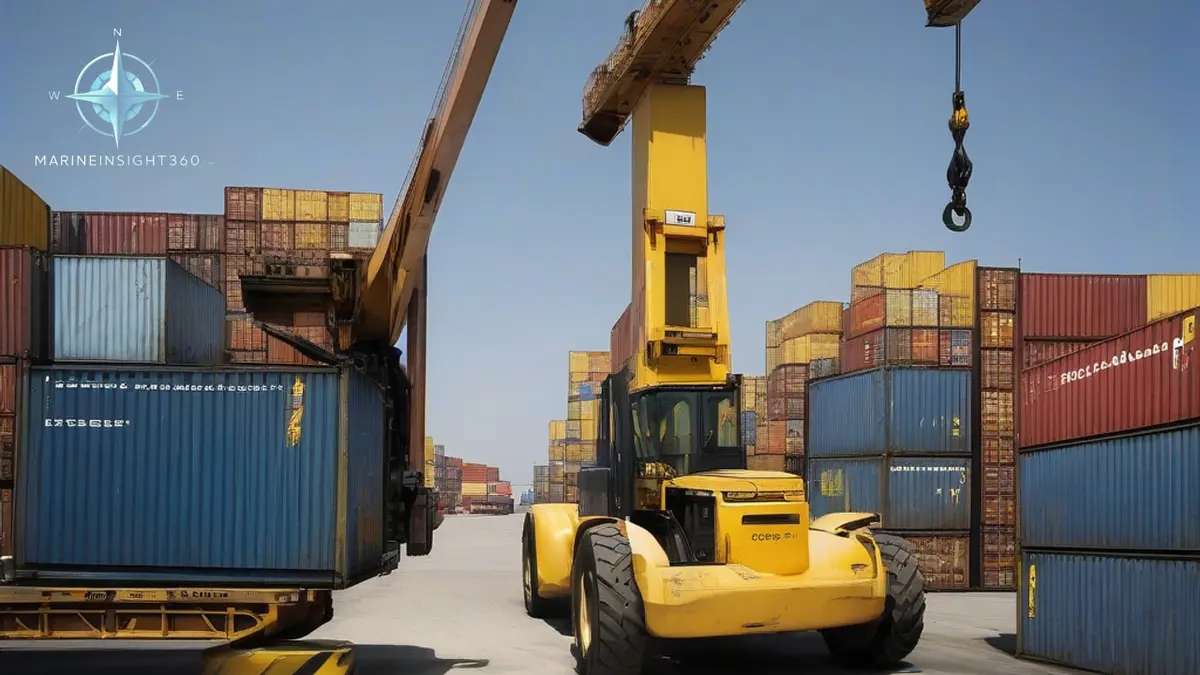
What does MHE stand for? It stands for materials handling equipment , sometimes written material handling equipment. In ports, terminals, warehouses and freight forwarding, MHE is the collective term for the powered machines used to lift, move, stack and position cargo between the ship, the yard, the shed and the truck or railcar. Forklifts, reach stackers, empty container handlers, terminal tractors, straddle carriers and yard gantry cranes all sit under the label.
The acronym turns up most often in three places: terminal operating budgets, where MHE is a capital and maintenance line separate from quay cranes; job adverts, where an MHE operator license is the qualification being asked for; and cargo damage claims, where the MHE involved is named in the incident report. If a document refers to MHE availability, it is talking about how many machines are serviceable and crewed on a given shift.
The main categories of MHE in a marine terminal
Terminal fleets are usually described by what the machine does to the box or the cargo unit rather than by manufacturer.
Container handling
- Reach stackers. Wheeled machines with a telescopic boom and a spreader, able to stack laden containers several high and to reach over the first row into the second or third. Their flexibility is why they have displaced heavy forklifts for laden boxes at many mid-size terminals.
- Empty container handlers. Similar in layout but designed for empties, with higher stacking capability and lighter rated capacity.
- Straddle carriers. Machines that straddle a container, pick it from the ground and carry it at speed, combining transport and stacking in one unit.
- Rubber tyred and rail mounted gantries. Yard cranes that stack containers in blocks, giving higher density than reach stackers at the cost of flexibility.
- Terminal tractors. Short wheelbase units with a fifth wheel and a lift, shuttling trailers and chassis between quay and yard.
General cargo, project and warehouse handling
- Counterbalance forklift trucks, from small electric units for shed work up to heavy diesel machines handling steel coils, paper reels and timber packs.
- Powered pallet trucks and stackers used inside transit sheds and on ro-ro decks.
- Order pickers and very narrow aisle trucks in the distribution centers behind the port.
- Conveyors, tippers and hoppers on bulk terminals, where the handling chain is fixed rather than mobile.
- Attachments that change what a machine can do: clamps, rotators, coil rams, fork positioners and spreaders.
How terminals choose between machine types
The decision is driven by throughput and land, not by preference. A terminal with limited yard area and steady volume gains from gantry cranes stacking boxes four or five high in dense blocks. A terminal with irregular volume, mixed cargo or frequent shifting of individual boxes gains from reach stackers, because a mobile machine can be redeployed and does not depend on a fixed block layout.
The trade-offs operators weigh up include:
- Stacking density against access. Higher stacks cut land cost but raise the number of unproductive moves needed to dig out a buried container.
- Capital cost against flexibility. Rail mounted gantries carry heavy civil and capital costs; wheeled machines are cheaper to buy and easier to resell.
- Pavement loading. A laden reach stacker concentrates very high point loads through its front wheels, and pavement design has to match the fleet.
- Fuel and power. Electric and hybrid machines cut emissions and noise in urban ports, but they need charging infrastructure and shift planning around it.
- Maintenance burden. Booms, spreaders, twistlocks and hydraulics are the components that take a terminal out of service, so spares holding is part of the equipment choice.
Safety around MHE
Terminal fatalities cluster around interactions between MHE and people on foot. Sight lines from a laden reach stacker or a container handler are poor, the machine is quiet relative to the surrounding noise, and stopping distances on a wet apron are long. The controls that reduce the risk are consistent across ports:
- Physical separation of pedestrian routes from machine routes, with marked crossings and high visibility clothing enforced.
- Operator training and certification. In the United States, powered industrial truck operators must be trained and evaluated under the OSHA rules for the equipment they use. In the United Kingdom and much of Europe, employers work to the PUWER and LOLER duties for equipment provision, inspection and lifting operations.
- Pre-use checks recorded at the start of every shift, covering brakes, hydraulics, tyres, spreader locking indication and load charts.
- Speed limits and traffic management plans that separate truck movements from stacking runs.
- Rated capacity discipline. Every machine has a load chart that reduces the safe load as reach and lift height increase, and overturning is the outcome when that chart is ignored.
Where MHE meets the ship
Ship staff meet MHE most directly on ro-ro and general cargo vessels, where forklifts and terminal tractors work on the vehicle decks and in the holds. Two failure points recur. Deck loading limits are exceeded by a laden machine whose axle load is far higher than the deck was designed for, and lashing points or deck coatings are damaged by tyres and forks.
The deck officer's job is to have the tank top and deck strength figures to hand before stevedores drive machines into the hold, and to stop the operation if the machine is heavier than the plan assumed.
For the cargo-side detail behind those decisions, work through the stowage and lashing material in the Marine Insight 360 Shipboard Operations section before the next ro-ro or break-bulk call.
Two bodies give the port side its written standards. The ILO publishes a code of practice on safety and health in ports that national inspectorates draw on. The CTU Code, issued jointly by the IMO, the ILO and UNECE, covers packing and securing cargo transport units. On the ship, deck and tank top loading limits come from the classification society, DNV or Lloyd's Register among them.
Damage claims follow the same short list. Fork tines punched through a container floor or side panel. Spreader twistlocks not fully engaged before a lift. Tyres crushing lashing sockets on a ro-ro deck, and coil rams slipping on wet steel. Each one is recorded against the terminal, and a ship's letter of protest has to name the machine and the operator to stand up later.
Sources and further reading
- What types of MHE are there? (Materials Handling Equipment)
- Reach stacker: container handling in ports and terminals
What to read next
Recommended Reading
How Many Ports Are There in Oman, and Which Ones Matter to Shipping
Oman has eight ports of commercial weight, but three carry the trade. A guide to Sohar, Duqm, Salalah and the terminals behind them.
What the US Maritime Blockade of Iranian Ports Means for Merchant Shipping
The US naval blockade of Iranian ports, the Hormuz closure and war risk premiums explained for shipowners, charterers and crews planning Gulf transits.
VOC Meaning in Shipping: Volatile Organic Compounds on Tankers
VOC means volatile organic compounds. What they are on a tanker, how MARPOL Annex VI Regulation 15 controls them, and what a VOC plan requires.