
What the US Maritime Blockade of Iranian Ports Means for Merchant Shipping
The US naval blockade of Iranian ports, the Hormuz closure and war risk premiums explained for shipowners, charterers and crews planning Gulf transits.
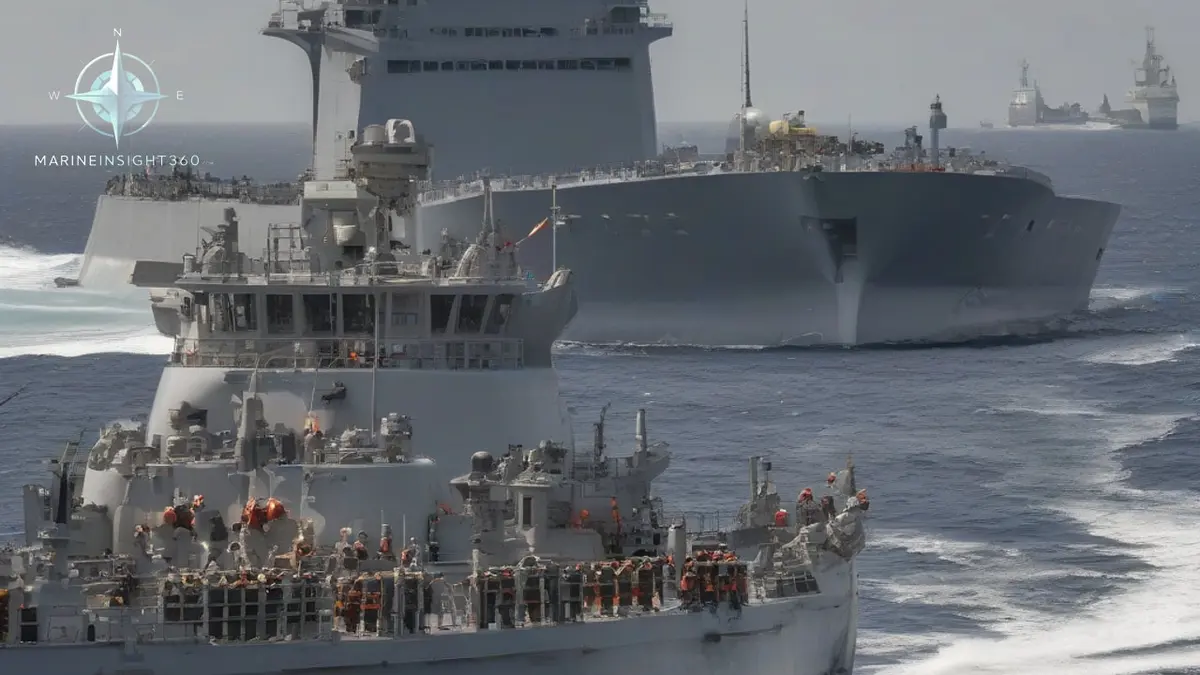
What a US maritime blockade of Iranian ports means in practice
A maritime blockade means warships may stop, question and if necessary divert or seize merchant ships bound to or from the blockaded ports. Flag makes no difference. For operators the effect is blunt. A voyage to an Iranian port cannot be lawfully completed. Nor can it be insured, once United States, United Kingdom and European sanctions and the Lloyd's market war risk listings are read together. Neutral traffic passing nearby should expect challenge, boarding and delay.
The US military announced a blockade of all Iranian ports with effect from 13 April 2026, after talks in Islamabad ended without agreement. It was suspended under the subsequent ceasefire and formally lifted by a memorandum signed on 17 June 2026, which also set out Iranian arrangements for the safe passage of commercial vessels. That arrangement broke down, and the blockade was reimposed in July 2026 following renewed attacks on commercial ships.
Blockade, sanctions and interdiction are three different things
Operators keep treating these as one legal problem. They are not, and the difference decides what a master must do.
- Sanctions are domestic or UN measures enforced through banks, insurers and port entry rules. The risk sits mainly with the cargo owner, charterer and financing chain.
- A blockade is a belligerent measure in an armed conflict. Under customary law reflected in the San Remo Manual it must be declared, notified, applied impartially to all flags and effectively maintained. A neutral merchant ship that breaches it may be captured, and one that resists visit and search risks being treated as a lawful target.
- Interdiction or quarantine is narrower, aimed at designated cargo categories rather than all traffic.
The operational consequence is that during a declared blockade a boarding party has a legal basis to come aboard a ship of any flag in the affected area. The correct response from the bridge is compliance, careful logging and immediate reporting to the company and flag state.
The Hormuz picture the blockade sits inside
The blockade is one layer of a wider closure. Iran shut the Strait of Hormuz to normal commercial traffic on 28 February 2026, and transits collapsed by roughly 95 percent from a pre-war average of about 178 ships a day. Reporting through 2026 has put war risk premiums at 3 to 10 percent of hull value against roughly 0.25 percent before the war, which turns a $100 million tanker's war risk cost into several million dollars for a single transit.
Around 6,000 seafarers have been reported stuck in the region, with the IMO working on evacuation and safe routing.
The contract clauses that decide who pays
War risk cost is not automatically anyone's by default. It is allocated by the charterparty, and the wording matters more than the headline rate.
- CONWARTIME and VOYWAR clauses give owners the right to refuse a voyage into a war risk area. Check which edition is incorporated, because the tests differ.
- Additional war risk premium and crew war bonus are usually for charterers under time charters, but only where the clause says so.
- Breach of a declared blockade will normally void hull and war risk cover, and can expose owners to capture and condemnation of cargo.
- Seafarer rights. ITF-approved agreements give crew the right to refuse to sail into a designated warlike operations area, with repatriation at company cost, plus doubled compensation terms while in the area.
- Safe port warranties. A port closed by blockade is not a safe port, and orders to proceed there are not lawful orders.
What crews on Gulf transits should be doing now
- Report to UKMTO and the relevant naval coordination center before entering the reporting area, and maintain the reporting schedule.
- Raise the ship security level per the ship security plan, rig hardening measures, pressurize fire mains and run a citadel drill before, not during, the transit.
- Follow company and flag state policy on AIS rather than switching it off unilaterally, because an unexplained gap invites the wrong kind of attention.
- Log every naval query, boarding and instruction with times, positions and names, and send it ashore the same day.
- Brief the crew on insurance, bonus and refusal rights before sailing into the area, so nobody is negotiating terms at the entrance to the strait.
Why this matters beyond the Gulf
Crude, LPG and container tonnage that would normally transit Hormuz has been rerouted or idled, and the diversions add sea miles that tighten vessel and seafarer supply everywhere else. Owners should be reviewing war risk wording and crew agreements on every fixture that touches the region, not only on the voyages that plan to enter it. Our Ports and Shipboard Operations sections track the routing and security consequences as they develop.
Sources and further reading
- US military threatens to blockade all Iranian ports starting on Monday
- The Strait of Hormuz: Security Developments and Impacts on Oil, Gas, and Other Commodities (CRS)
- Middle East shipping insurance costs rise on Hormuz risks: Marsh
- Shipping insurance surges again as attacks intensify over Strait of Hormuz
What to read next
Recommended Reading
Strait of Hormuz Blockade: What Closure Really Means for Merchant Ships
How a blockade of the Strait of Hormuz actually stops merchant traffic: war risk insurance, UKMTO reporting, AIS decisions and the pipelines that bypass it.
What Does MHE Stand For in Ports and Shipping?
MHE stands for materials handling equipment. What counts as MHE in ports and terminals, how the main machines differ, and how operators choose.
NEOM Oxagon, the World's Largest Floating City: What It Means for Shipping
NEOM Oxagon is planned as a floating industrial city on the Red Sea with a 3.5 million TEU port. What is real, what is untested, and what to watch.