
How Many Ports Are There in Oman, and Which Ones Matter to Shipping
Oman has eight ports of commercial weight, but three carry the trade. A guide to Sohar, Duqm, Salalah and the terminals behind them.
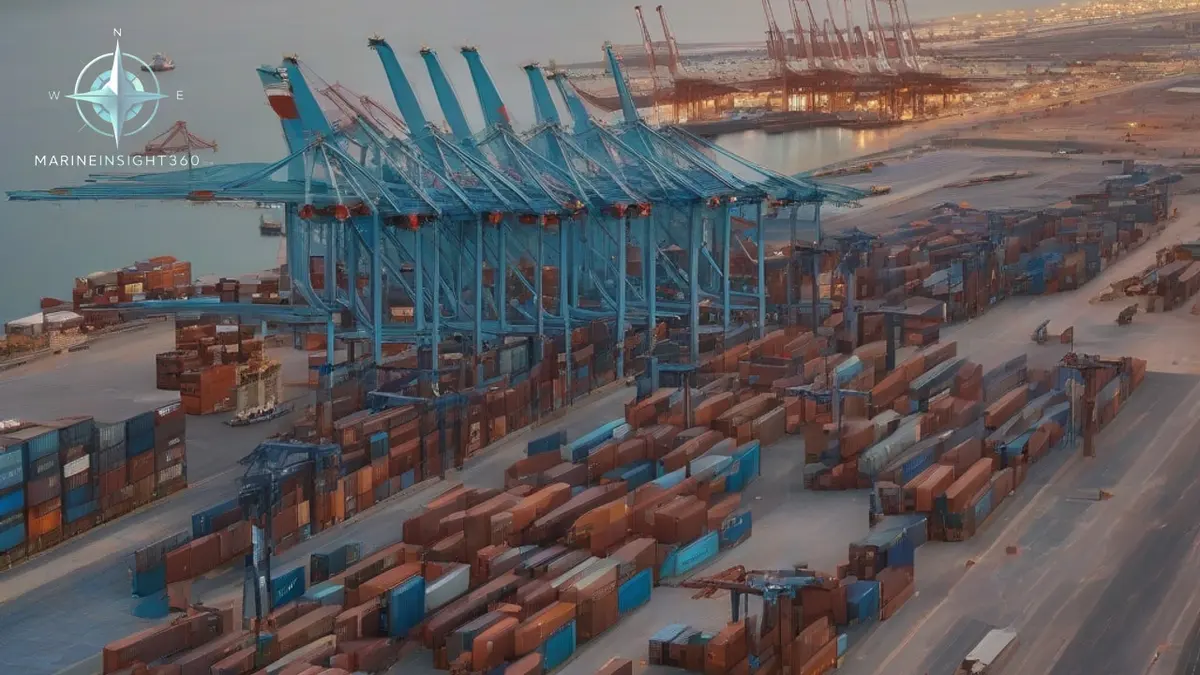
How many ports are there in Oman? Eight carry commercial weight, and three of them handle almost all the trade that matters to shipowners: Sohar, Duqm and Salalah. The other five are Port Sultan Qaboos in Muscat, the small northern ports of Khasab and Shinas, the crude oil terminal at Mina al Fahal and the LNG terminal at Qalhat near Sur.
Counting them is less useful than knowing which one a cargo, a bunker stem or a drydock booking actually belongs in.
The single fact that shapes the whole picture is geography. Salalah and Duqm sit on the Arabian Sea, outside the Strait of Hormuz. Sohar, Muscat, Shinas and Khasab sit inside or at the mouth of the Gulf of Oman. That split explains why Oman keeps attracting cargo that could otherwise move through the upper Gulf.
The three commercial gateways
Salalah, the transshipment hub
Salalah sits close to the main Asia to Europe trunk route, which is why it works primarily as a relay port rather than a gateway for Omani cargo. Container capacity is in the region of five million TEU, alongside general cargo and liquid berths. For a liner operator the attraction is a short deviation from the trunk lane and a hub that can feed East Africa, the Red Sea and the Indian subcontinent without entering the Gulf.
Sohar, the industrial port
Sohar lies north of Muscat and pairs a deep-water port with an adjoining freezone. It took over the container and general cargo traffic that Muscat once handled, and it serves petrochemical, metals and agri-bulk industries built around the port itself. Container capacity has grown steadily, though it stays well below Salalah's. Sohar is the port to plan for when the cargo has an Omani origin or destination in the north of the country.
Duqm, the greenfield project
Duqm is the newest of the three, developed on the central Arabian Sea coast inside a special economic zone. Its distinguishing asset for ship operators is the drydock complex, which gives owners a repair option in the region that does not involve transiting Hormuz. Cargo volumes remain modest against Salalah and Sohar, but Duqm is the name that comes up first in contingency planning discussions.
Port Sultan Qaboos, the port that changed job
Muscat's Port Sultan Qaboos was for decades the country's main container and general cargo port, with a multi-berth commercial quay. That traffic was transferred to Sohar, and Port Sultan Qaboos was redeveloped around cruise calls, tourism and the waterfront. A cruise operator still plans for Muscat. A box operator does not.
The energy terminals that never appear on a liner schedule
Two Omani terminals move more tonnage than most of the general cargo ports combined, and neither takes a container.
- Mina al Fahal , near Muscat, is the crude oil export terminal for Omani crude, loading through offshore moorings rather than a conventional quay.
- Qalhat , near Sur on the eastern coast, is the LNG export terminal serving Oman's liquefaction trains.
Both are berth-limited, weather-sensitive and run on nomination windows rather than liner schedules. Crews joining tankers on Oman rotations spend far more time at these two terminals than at any of the container ports.
Khasab and Shinas, the small northern ports
Khasab sits in the Musandam exclave at the top of the Strait of Hormuz and handles ferry traffic, small coastal trade and government craft. Shinas, on the Batinah coast near the UAE border, is a small multi-purpose and fishing port. Neither takes deep-draught commercial tonnage, and neither belongs in a voyage estimate for an ocean-going vessel.
Why Oman's geography matters more than its port count
The commercial argument for Oman rests on the Strait of Hormuz. A cargo landed at Salalah or Duqm never enters a chokepoint that can close on short notice, and never pays the war risk premium that a Gulf transit can attract. Charterers building resilience into a supply chain look at Arabian Sea discharge for exactly that reason, even when the inland leg is longer.
The same logic applies to repairs. Duqm's drydock gives owners a regional alternative for hull work, and Salalah is an established bunkering point on the way past. Both reduce the number of Hormuz transits an owner has to accept in a year.
Practical notes for masters and operators calling Oman
- The three main commercial ports are managed under a single national ports and logistics group, so agency arrangements and documentation are broadly consistent across Sohar, Duqm and Salalah.
- Pre-arrival notices, crew and passenger lists and security declarations should go through the local agent well ahead of the ETA, and pilotage is compulsory at the commercial ports.
- Salalah is the practical bunkering call on an Arabian Sea passage. Confirm grade availability and delivery mode with the supplier before committing to the deviation.
- Crew changes are workable at all three main ports but depend on visa arrangements made by the agent in advance, not on arrival.
- Summer conditions on the Salalah coast are dominated by the southwest monsoon, which can affect berth productivity and small craft services between roughly June and September.
For port-by-port operational detail on this region and the wider Indian Ocean network, work through the Marine Insight 360 Ports section before fixing a voyage.
Two bodies shape a call in this region more than the port operator does. UKMTO runs the voluntary reporting area covering the Gulf of Oman, the Strait of Hormuz and the northern Arabian Sea, and masters report their transit and any suspicious approach to it. The USCG international port security programme assesses foreign ports' security arrangements and can impose conditions of entry on ships arriving in the United States afterwards.
What goes wrong at Omani ports is mostly weather and fuel. The southwest monsoon puts swell and wind into Salalah between roughly June and September, and berth productivity drops or vessels are pushed off the quay. Bunker stems lifted anywhere in the region should be sampled and tested before use: off-spec fuel shows up later as clogged filters, seized fuel pumps and damaged injectors, long after the supplier has gone.
Sources and further reading
- ASYAD Ports and Terminals: Sohar, Duqm and Salalah
- Port Sultan Qaboos
- Port Sultan Qaboos port information
- Port of Duqm Commercial and Oman Dry Dock
What to read next
Recommended Reading
10 of the World's Greatest Natural Harbors, and Why They Matter
What makes a natural harbor, and ten of the world's greatest: Sydney, San Francisco, New York, Rio, Halifax and more, with the geography that shelters them.
What Does MHE Stand For in Ports and Shipping?
MHE stands for materials handling equipment. What counts as MHE in ports and terminals, how the main machines differ, and how operators choose.
The Gulf of Oman: Geography, Shipping Lanes and What Transiting Crews Plan For
The Gulf of Oman links the Strait of Hormuz to the Arabian Sea. Here is its geography, traffic separation scheme, ports and the transit risks crews plan for.