
What Is a Frigate? Role, Size and Modern Frigate Classes
A frigate is a mid-sized escort warship built for anti-submarine and general escort work. How frigates differ from destroyers and corvettes.
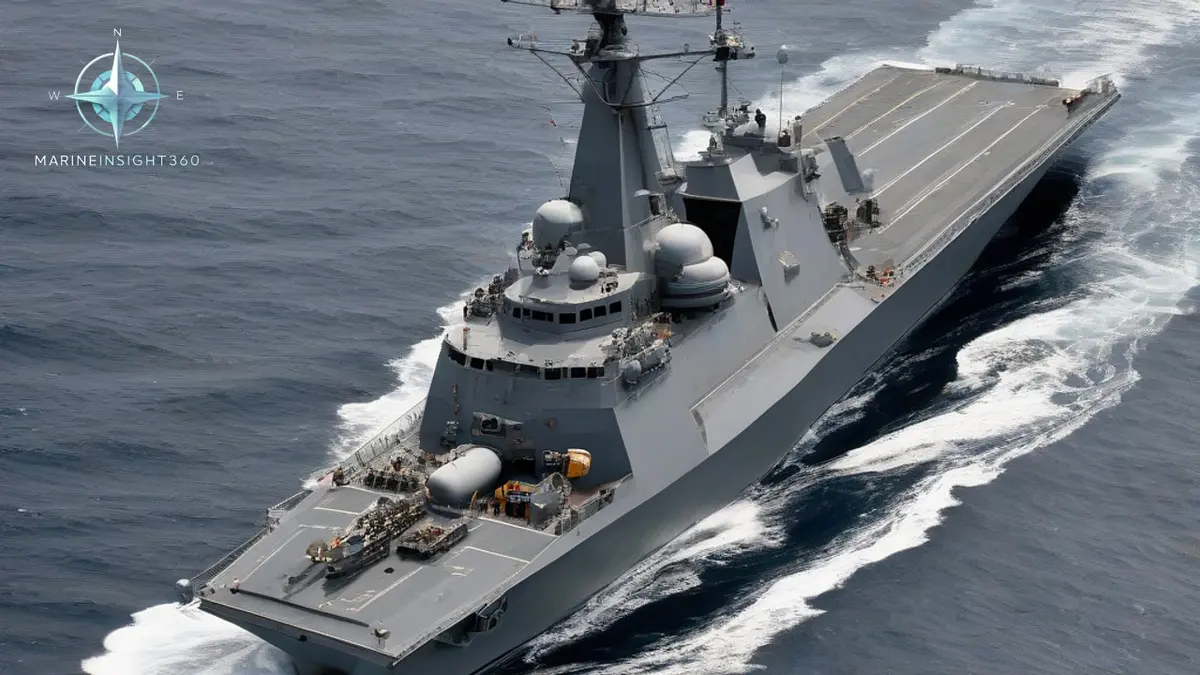
What is a frigate? It is a mid-sized surface warship built mainly for escort work: protecting merchant convoys, amphibious groups and carrier task groups against submarines, aircraft and surface threats. In current navies it sits below the destroyer in size and area air defense capability, and above the corvette in range, endurance and aviation facilities. The defining characteristic is not armament but role, because a frigate is designed to screen something else rather than operate alone.
The word has meant different ships in different centuries, which is why the definition seems slippery. Understanding the three main eras makes the current usage clear.
How the meaning of frigate changed
In the age of sail a frigate was a fast, single gun deck cruising ship, too light for the line of battle and used for scouting, commerce raiding, convoy escort and independent patrol. Speed and endurance mattered more than weight of broadside.
The type effectively disappeared with steam and armor, then returned in the Second World War. The Royal Navy revived the term for ocean escorts larger than a corvette and built for Atlantic convoy protection against submarines. That anti-submarine escort function is what carried the name into modern service.
Post-war navies then diverged. NATO hull classifications settle on FF for a frigate and FFG for a guided-missile frigate, but there is no international standard for where a corvette ends, a frigate begins or a destroyer takes over. Displacement bands overlap, and some ships classed as frigates in one navy would be rated destroyers in another.
What a modern frigate is built to do
A contemporary frigate is a multi-mission platform with a strong anti-submarine bias. The standard capability set covers four areas.
- Anti-submarine warfare: hull-mounted and towed array sonar, a quiet hull and propulsion arrangement, embarked helicopter, and lightweight torpedoes.
- Air defense: a medium-range surface-to-air missile system and radar, sized for local or task group defense rather than the wide-area role a destroyer performs.
- Surface warfare: a medium-caliber gun, anti-ship missiles and close-range guns for small craft.
- Presence and constabulary tasks: boarding parties, counter-piracy patrol, maritime security and disaster relief, which occupy far more sea days than any combat role.
Aviation is central. A flight deck and hangar for a medium helicopter extend the ship sensor and weapon reach far beyond the horizon, and it is the presence of that hangar that most reliably separates a frigate from a corvette.
Two current frigate programs
The Type 26 is a large anti-submarine warfare frigate, 149.9 meters (492 ft) long with a beam of 20.8 meters (68 ft) and an official displacement of about 6,900 tonnes. It has been selected by the Royal Navy, the Royal Australian Navy, the Royal Canadian Navy and the Royal Norwegian Navy, making it a shared platform across several English-speaking navies with a common design baseline and differing combat systems.
The US Navy Constellation class, designated FFG 62, is a guided-missile frigate intended as a multi-mission ship covering air warfare, anti-submarine warfare, surface warfare and electromagnetic maneuver warfare. It marks a return to a dedicated frigate in US service after the littoral combat ship programs.
Both illustrate the same design pressure: displacement has grown steadily because sonar arrays, missile silos and aviation facilities all take volume, so today a frigate can outweigh a Cold War destroyer while keeping the frigate name and the escort role.
Frigate, destroyer and corvette compared
- Corvette: smallest of the three, usually under about 2,000 tonnes, limited endurance, often no hangar, built for coastal and regional patrol.
- Frigate: ocean-going escort with a hangar, balanced sensor fit and a medium-range air defense system. Optimized for anti-submarine work.
- Destroyer: larger, with long-range air defense radar and missiles, and often ballistic missile defense. Built to defend a task group over a wide area.
National practice overrides these bands. Several navies label ships according to political and budgetary convenience rather than capability, so the class name alone should never be read as a capability statement.
Why frigates matter to commercial shipping
Merchant crews meet frigates in three settings. Naval escort and counter-piracy operations in high-risk areas are usually built around frigates and similar escorts, and group transit schemes rely on them. Maritime security patrols that board and inspect vessels are frequently frigate-based. And in search and rescue coordination, a frigate with a helicopter is often the most capable asset within reach of a casualty offshore.
For merchant officers, the operational point is the communications procedure: naval escorts publish reporting formats and VHF channels for group transits, and following them exactly is what makes the escort effective. Voyage-specific guidance should always come from the current industry best management practice in force for that region.
For vessel type comparisons and ship design fundamentals, see the Ships and Vessels section of the Marine Insight 360 Knowledge Base.
Naval hulls are certified, just under different rules. The US Navy builds to the ABS naval vessel rules, and Lloyd's Register, DNV and Bureau Veritas publish equivalents used by European and Commonwealth programmes. That is why a frigate's structure and stability are surveyed against a written standard rather than asserted.
For a merchant bridge team the practical bodies are elsewhere. Reporting for escorted transits in the Indian Ocean region runs through UKMTO. A close-quarters incident with a warship is examined afterwards by the flag state's investigator, the MAIB or the NTSB among them. Log the VHF exchange, the time and the position, because that log is the evidence.
Sources and further reading
What to read next
Recommended Reading
VLCC and ULCC Tankers: Capacity, Size and How Supertankers Work
VLCC capacity in barrels, tonnes and meters: what separates a VLCC from a ULCC, how supertankers load at sea, and why giant tankers dominate crude shipping.
What Is a Naval Corvette? Size, Role and How It Differs From a Frigate
A naval corvette is the smallest ship rated as a warship, typically 500 to 3,000 tonnes. Here is what corvettes do and how they differ from frigates and OPVs.
What Is a Corvette Ship? Size, Role and Modern Naval Use
A corvette is the smallest vessel navies rate as a full warship. Here is how corvettes compare with frigates and patrol vessels, and what they do at sea.