
What Is a Naval Corvette? Size, Role and How It Differs From a Frigate
A naval corvette is the smallest ship rated as a warship, typically 500 to 3,000 tonnes. Here is what corvettes do and how they differ from frigates and OPVs.
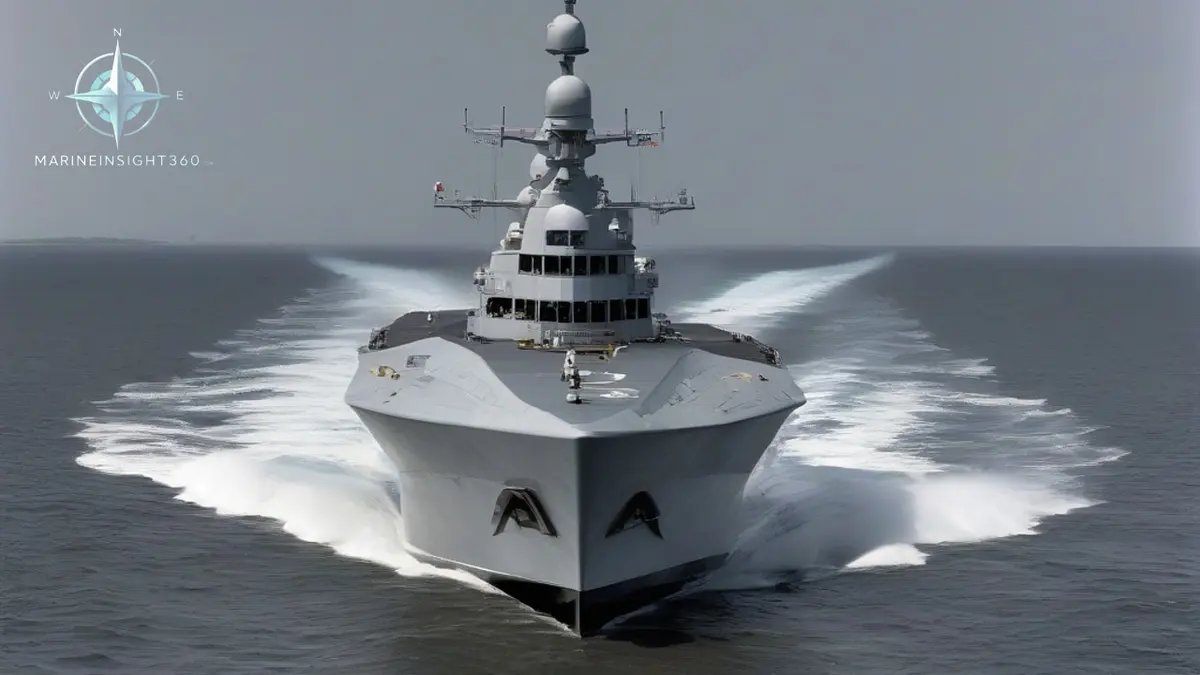
A Corvette Is the Smallest Ship Still Rated as a Warship
What is a naval corvette? It is a small, fast, lightly armed surface combatant, traditionally the smallest vessel a navy rates as a warship rather than a patrol craft. Most corvettes displace between 500 and 2,000 tonnes, and recent designs push toward 3,000 tonnes with a helicopter hangar built in.
They are made for coastal and regional water: patrolling an exclusive economic zone, escorting traffic, anti submarine work in shallow littoral areas, and anti surface engagement with missiles at a cost a small navy can actually sustain.
Merchant crews meet corvettes more often than they meet destroyers, because corvettes are what most navies can afford to keep at sea continuously in their own waters.
The Boundary With a Frigate Is National, Not Technical
Frigates generally run from around 3,000 tonnes up to 7,500 tonnes, but no international standard fixes the line. The same hull can be commissioned as a corvette in one navy and a frigate in another, and several navies avoid the word altogether. Displacement alone will not tell you which you are looking at.
Three practical differences hold up better than the label.
- Endurance and sea keeping. A frigate is designed for sustained ocean deployment, with the fuel, stores, habitability and stabilisation to operate weeks from base in heavy weather. A corvette is usually built for shorter patrols closer to home, and her crew feel every bit of a rough transit.
- Sensor and weapon fit. Frigates typically carry area air defence, a larger vertical launch magazine, a towed array and a hangar for one or two helicopters. Corvettes carry point defence, a smaller missile load and often only a flight deck with no permanent hangar.
- Crew and cost. A corvette puts a credible missile armed warship to sea for a fraction of the build cost and manning of a frigate, which is the entire commercial argument for the type.
Where the Word Came From
In the age of sail a corvette was a flush decked warship carrying a single tier of guns, ranked below a frigate and above a sloop, used for scouting, escort and carrying dispatches. The term was revived in the Second World War for the Flower class corvettes, small escorts adapted from a whale catcher design and built in large numbers by yards that could not build destroyers.
Those ships were slow, wet and punishing to serve in, and they escorted North Atlantic convoys because they existed in quantity. Modern corvette design inherits the same logic: hulls you can build many of, rather than a few very capable ones.
How a Corvette Differs From an Offshore Patrol Vessel
An offshore patrol vessel does constabulary work: fisheries protection, counter smuggling, search and rescue, and simple presence in an exclusive economic zone. OPVs are usually built to commercial or hybrid classification standards, with a medium calibre gun, a boat and a flight deck, but without significant missile armament, hull mounted sonar, shock hardening or warship damage control arrangements.
A corvette is built to naval survivability standards and carries a combat management system tying sensors to weapons. Several recent designs deliberately blur the boundary to sell into both markets, so comparing the armament fit and the build standard tells you far more than comparing the type name in a press release.
What Merchant Crews Actually Encounter
The type shows up in commercial operations in specific ways.
- VHF challenges. A corvette or OPV calling on channel 16 for vessel name, flag, cargo, last and next port is routine in many EEZs. Answer plainly, log the call with time and position, and inform the company if the questioning goes beyond routine identification.
- Escort and group transit. Naval escort in the Gulf of Aden and off West Africa has often been provided by corvettes and OPVs rather than large combatants, because contributing navies deploy what they can sustain.
- Boarding. Compliant boardings by a naval party happen under coastal state authority or an international mandate. The master retains command of the ship, the boarding goes in the log with names and times, and the company and flag state should be told.
- Exercise and firing areas. Corvettes operate close inshore, which puts them inside coastal traffic separation schemes and across fishing grounds. Navigational warnings for firing areas are worth reading properly during passage planning.
- Unpredictable manoeuvring. A warship conducting flight operations, replenishment or towed array work may be constrained, but naval vessels do not consistently display the shapes and lights a merchant officer would expect. Give a wide berth and do not assume the collision regulations will be signalled the way the book describes.
Why Navies Keep Building Small Combatants
Missile technology broke the old link between displacement and striking power. A 1,500 tonne hull carrying eight anti ship missiles is a genuine threat to a much larger vessel, which is why corvettes are attractive to smaller navies buying sovereignty capability and to larger navies needing presence in confined seas such as the Baltic, the Gulf and the South China Sea.
The cost of that bargain is real. A small hull has limited reserve buoyancy, a crew too small to fight serious damage for long, restricted fuel and stores, and a hard time keeping station in heavy weather. Corvettes are effective within their design envelope and exposed outside it.
Telling One From Another at Sea
A corvette is usually under about 100 meters (330 ft) long, with one main gun forward, a compact superstructure, a flight deck and often no hangar. A frigate is generally over 120 meters (394 ft), with a distinct hangar structure aft and a much larger mast and sensor arrangement. Pennant numbers on the hull identify the individual ship.
In practice AIS resolves it faster than recognition by eye, with the caveat that naval vessels transmit selectively and may switch off entirely. For a deeper comparison of naval hull types and where they sit against merchant classes, the Ships and Vessels section covers the family in more detail.
Warships sit outside the merchant assurance system. They are excluded from SOLAS and immune from port state control, so nothing equivalent to a Paris MoU inspection applies to them. Standards come instead from the navy's own authority and from classification societies that publish naval rules, among them Lloyd's Register, DNV and Bureau Veritas, which builders commonly use for hull, machinery and survivability requirements on export corvettes.
For merchant watchkeepers the failure mode is predictable. NTSB investigations into collisions between warships and merchant ships have found lookout and radar use wanting on both bridges. Naval vessels also run with AIS silent much of the time, so the contact may not appear on the screen the mate is watching. Treat a warship as a vessel whose next manoeuvre is unadvertised, and plot it on radar.
Sources and further reading
What to read next
Recommended Reading
What Is a Corvette Ship? Size, Role and Modern Naval Use
A corvette is the smallest vessel navies rate as a full warship. Here is how corvettes compare with frigates and patrol vessels, and what they do at sea.
VLCC and ULCC Tankers: Capacity, Size and How Supertankers Work
VLCC capacity in barrels, tonnes and meters: what separates a VLCC from a ULCC, how supertankers load at sea, and why giant tankers dominate crude shipping.

Naval Engineer: What the Role Covers and How It Differs From Marine Engineering
What a naval engineer does, how the role differs from marine engineering and naval architecture, and the qualifications, clearances and employers involved.