
What is a Triple Hull Vessels?
What is a Triple Hull Vessels?: technology, equipment and fleet context for US, UK, Canada, Australia, Singapore and European maritime readers.
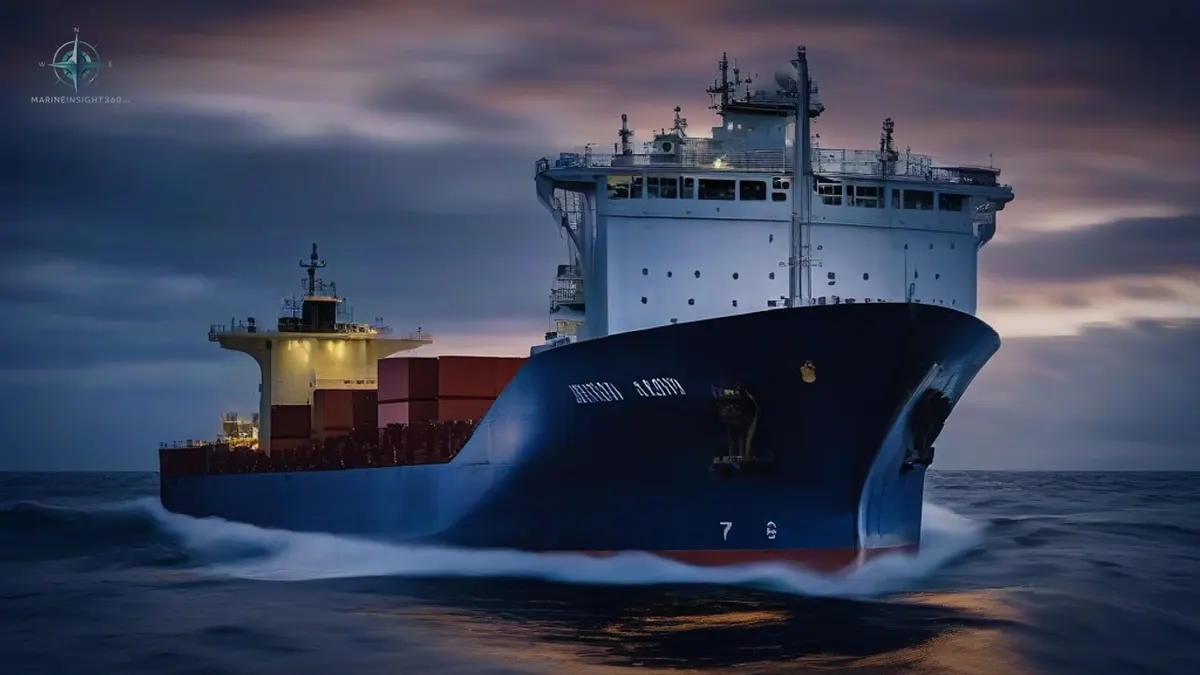
A triple hull vessel, or trimaran, is a ship built with three hulls, a larger central hull supported by two smaller side hulls, joined by a connecting structure to gain speed, stability and capacity.
What is a Triple Hull Vessels?
Triple Hull Vessels have always been and will always be synonymous with ships. This is due to various reasons, including convenience and simplicity, low cost and large capacity, ease of construction, and user acceptance. However, over the years, there has been a growing demand to explore non-traditional design types in pursuit of refinement.
Despite the various effective designs of monohulls, they cannot still go high speed and resist large waves. In addition, the foundation of a monohull is directly related to the buoyancy factor, which means that to increase the size and capacity, the displacement must be increased. In addition, for all monohulls, there will always be some risks or problems in terms of stability and buoyancy characteristics, even if these risks or problems are very small for very safe designs.
The concept of Triple Hull Vessels was proposed to meet these challenges, and it delves into the field of unconventional designs to improve practicality. Multihulls are characterized by the construction of multiple hulls, two or three, known as catamarans and trimarans, respectively. The emergence and application of multihulls is the combined result of three main requirements: 1) speed, 2) stability, and 2) capacity.
The catamaran or double hull design is a direct result. This design accommodates two hulls, mostly symmetrical and identical, connected primarily by the main deck or some basic structural elements. The superstructure or deckhouse of almost every ship is mounted above the main deck.
Catamarans
The advent of multihulls contrasts with the development of high-speed planing ships, which use the interesting concept of hydrodynamic planing and partial displacement to travel through the water at high speeds and improve propulsion efficiency. The combination of these two developments was a fundamental turning point, and small and medium-sized ships for defense or passenger transport flourished. These high-speed ships are known for their versatile planning characteristics and hydrodynamic efficiency.
In addition, it can meet higher payload and capacity requirements with a smaller displacement.
Multihull structures
The lower displacement required per unit load, combined with high-speed planing characteristics and efficient propulsion, leads to a significant reduction in resistance, including wave resistance and friction (due to the smaller wetted surface area of each hull).
However, along with the many advantages, there are also some disadvantages. One is that the pressure on the transverse deck is very high, especially in rough sea conditions. This is mainly due to the torsion and lateral behavior caused by the tendency of the two structures to behave independently. Furthermore, these catamarans exhibit high levels of motion, including impacts such as collisions and shocks.
In addition, the problem of hydrodynamic drag at low speeds has not been mitigated. Fatigue issues are also very important for the transverse decks, especially when the distance between the two halves of the structure exceeds a certain limit.
However, catamarans or double-hull structures have become increasingly popular over the past few decades and their number has increased. A few years later, the appearance of trimarans further simplified the problem.
A balanced hull is a ship that is basically composed of three hulls.
These three structures are connected by a surface called an intersecting surface. For practical purposes, there is a larger main structure in the middle, which in turn is supported by two smaller side structures, called pillars. However, there are designs that also have the same hull dimensions as a catamaran.
The main design concept of a trimaran does not differ much from the general concept of a multihull: a higher tonnage or deadweight to displacement ratio. This basically means that they are able to meet a higher carrying capacity in terms of weight and space volume without significantly increasing the required displacement. It’s a win-win situation for any type of design, because you can perfectly optimize everything you envision:
- Speed
- Hydrodynamic performance
- Properties of stability and sea stability
- Capacity
- More surface area
- Drag and thrust characteristics
- Less displacement required
- Lower fuel consumption
- Improved load and stress distribution
- Trimaran design concept
- The design of the trimaran is based on the following design goals, which will further improve the reliability expectations of multihulls.
Trimaran Design Concept
The design of the trimaranis based on the following design goals, which will further confirm the reliability expectations of multihulls.
Improved resistance management, especially that caused by slow speeds and large ship movements, further improving speed characteristics. Energy requirements also increase dramatically.
Further reduction of wetted surface area at similar displacement. This basically means that a smaller displacement results in an increase in payload as well as usable space and surface area. Therefore, by further simplifying the individual structures, higher load values can be maintained. This in turn further improves endurance and propulsion characteristics.
The stability of the vessel is related to the previous point. It is obvious that the triangular structural configuration provides greater stability. Therefore, we not only increase the payload, but also improve stability while improving endurance. Triangular structure
Therefore, the sea survival characteristics of the vessel are also improved, especially in rough seas.
Design flexibility . With more space and more surface area, there is greater freedom to expand the composition. Structural resistance . This is one of the most important aspects of trimaran design. The triangular structure increases the transverse and longitudinal structural strength of the ship's manifold.
Difference Between Nautical Mile & Statute Mile
How Does The Marine Boilers Works?
Marine Steam Engine – How it Works?
All loads acting on the ship are distributed more efficiently between the three hulls. As a result, the ship's endurance in all sea conditions and motions is increased. This also results in more compensation for higher loads. Safety and reliability are closely related to durability. Therefore, the greater the resistance, the greater the survivability.
Finally, due to the above advantages, the ship is also less expensive due to the lighter hull and lower material requirements, which leads to a better design.
Although the trimaran is similar to a conventional ship in general, its initial design process involves the following important aspects:
Define stability criteria, such as the center height. Since the ship itself has high stability, the height of the wheelhouse can be increased. In addition, according to regulations, if the height of the main deck (and therefore the head height) of the transverse deck relative to the height of the bridge itself exceeds 5% of the length of the ship's waterline, then movements such as rolling are significantly reduced.
Therefore, trimarans have more freedom to increase the height of the wheelhouse than conventional ships.
Determine the dimensions of the side structures. This is also closely related to the damage stability criteria. The design of the stern plate is important, as it is a catamaran. Its sufficient rigidity is also crucial. Separate the structures according to strength, stiffness and ship utility.
Finally, careful allocation of interior space improves design and requirements. However, as vessel size increases, multihulls become less feasible due to a variety of factors such as lack of planning, low design feasibility, and complex construction. However, many designs, especially within the scope of defense ships, passenger ships, and other special ship types, have explored the feasibility of multihull design, and multihull designs have been developed for many years. These have been important successes, albeit at a greater cost.
Recommended Reading
Understanding Cruise Ship Hull Design
Cruise ships rely on hull shapes that blend form with function. Designers pick shapes to cut through water with less effort. This boosts speed and cuts…
Hull of A Ship - Types, Structure, Material
Hull of A Ship - Types, Structure, Material: ports, trade and shipping-market context for US, UK, Canada, Australia, Singapore and European maritime...
What Are The Parts Of The Ship Hull?
What Are The Parts Of The Ship Hull?: technology, equipment and fleet context for US, UK, Canada, Australia, Singapore and European maritime readers.