
What Is the ISM Code? Safety Management on Ships Explained
The ISM Code is the IMO standard for safe ship management under SOLAS Chapter IX. What it requires, how DOC and SMC certification works, and where audits fail.
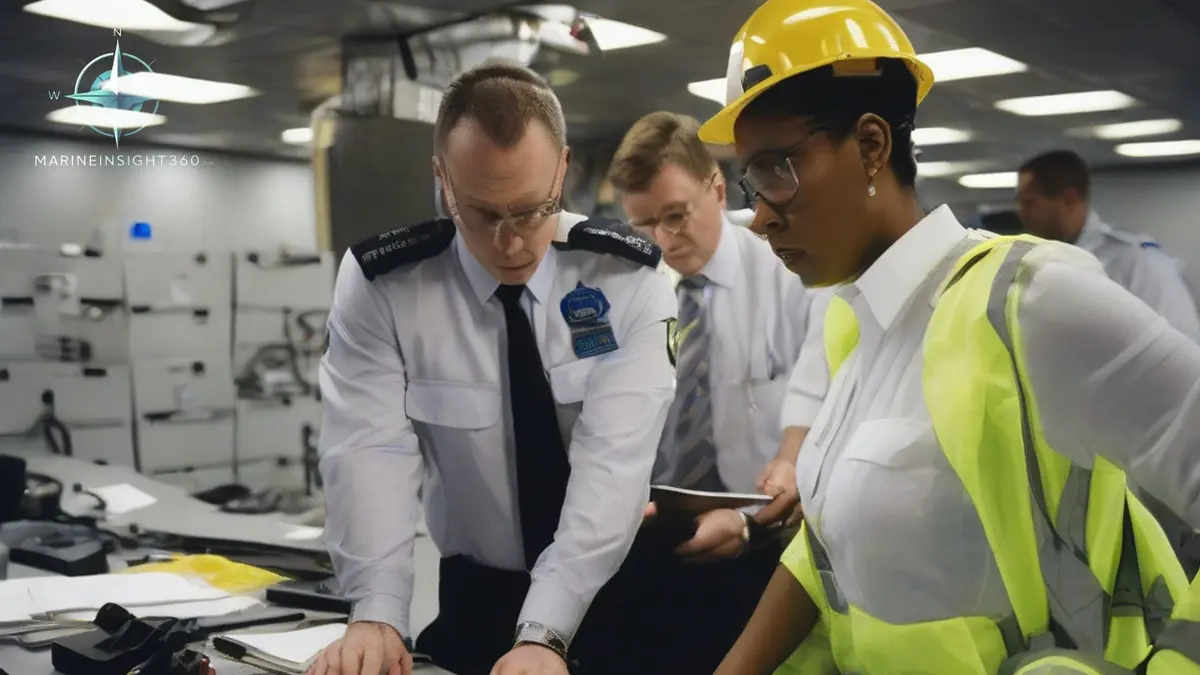
The ISM Code, short for the International Safety Management Code, is the IMO standard requiring every shipping company to run a documented Safety Management System (SMS) covering the safe operation of its ships and the prevention of pollution. It was adopted by IMO resolution A.741(18) in 1993 and became mandatory on 1 July 1998, when a new Chapter IX entered into force in the SOLAS Convention. So what is ISM Code compliance in practice?
Two certificates: a Document of Compliance for the company ashore and a Safety Management Certificate for each ship, both issued after audit by the flag state or a recognised organisation such as Lloyd's Register or ClassNK.
The Code exists because investigators kept finding the same root cause. Casualties were traced less often to a failed component than to unclear responsibility, missing procedures, untrained crew and shore management that had no visibility of what happened on board. The ISM Code attacks that by making the management chain itself auditable.
Which ships and companies the ISM Code applies to
SOLAS Chapter IX applies the Code to passenger ships including high-speed passenger craft, and to oil tankers, chemical tankers, gas carriers, bulk carriers and cargo high-speed craft of 500 gross tonnage and above, from 1 July 1998. Other cargo ships and mobile offshore drilling units of 500 gross tonnage and above were brought in from 1 July 2002.
The obligation sits with the Company, defined as the owner or whoever has assumed responsibility for operating the ship, which is what makes a third-party technical manager fully accountable.
What the Safety Management System must contain
The Code sets out functional requirements rather than a template, which is why no two SMS manuals look alike. Every system has to cover:
- A safety and environmental protection policy, with the Company committed to implementing it.
- Defined responsibility, authority and lines of communication between shore staff and ship staff.
- A designated person ashore (DPA) with direct access to the highest level of management, providing a route for the ship to raise safety concerns without passing through the operational chain.
- The master's overriding authority to make decisions for safety and pollution prevention, stated in writing.
- Procedures for key shipboard operations, drawn up as plans and instructions with checklists where useful.
- Emergency preparedness, with identified scenarios, drills and exercises.
- Reporting and analysis of non-conformities, accidents and hazardous occurrences, including near misses.
- Planned maintenance of ship and equipment, with critical equipment identified and tested.
- Document control, so that valid versions are on board and obsolete ones removed.
- Company verification, internal audit, management review and continual improvement.
Amendments that took effect in 2010 added an explicit duty to assess all identified risks to ships, personnel and the environment, and to establish appropriate safeguards. That is why formal risk assessment sits inside modern SMS manuals rather than alongside them.
How DOC and SMC certification actually works
The flag State, or a recognized organization acting for it, audits the company office and issues a Document of Compliance valid for five years, with the shore-side system verified annually within three months either side of the anniversary date. A copy of the DOC must be carried on board.
Each ship is then audited and issued a Safety Management Certificate , also valid for five years, with one intermediate verification between the second and third anniversary dates. A new company or a newly delivered ship can operate on an Interim DOC valid for up to 12 months and an Interim SMC valid for up to six months while the full system is proved.
The certificates are linked. An SMC cannot stand if the company holds no valid DOC for that ship type, and losing the DOC puts every ship in the fleet at risk of detention.
Non-conformities, major non-conformities and detention
An audit finding is a non-conformity when an objective observation shows the SMS requirement has not been met. It becomes a major non-conformity when the deviation poses a serious threat to personnel, the ship or the environment, or when there is a lack of effective and systematic implementation of a Code requirement. A major non-conformity found by a port state control officer is a normal route to detention, and it usually needs corrective action before the ship sails.
Inspectors rarely open with the manual. They open with evidence: are drills actually run and recorded, does the planned maintenance system show overdue critical jobs, were near misses reported in the last quarter, is the DPA name posted and does the crew know who it is. A tidy manual with an empty near-miss log is the pattern that draws the most attention.
Where ISM implementation goes wrong on board
The most common failure is volume. Systems grow every time an incident happens somewhere in the fleet, and a new checklist is added rather than an old one revised. Crews then sign forms they have not read, which is worse than having no form. Auditors call this checklist culture, and it destroys the audit trail the Code was built to create.
The second failure is the near-miss report that is treated as a disciplinary trigger. Where reporting carries a penalty, the reports stop, and shore management loses the only early warning it has. The third is management of change: a new bunker supplier, a new cargo, a new watch pattern or a fresh crew is introduced without touching the risk assessment behind the affected procedure.
Before the next external audit, run an honest internal one against the areas that generate real detentions: critical equipment testing, emergency drill records, familiarization for newly joined crew and the closure evidence for the last cycle of non-conformities. The Marine Insight 360 Shipboard Operations section covers the underlying procedures in detail.
Sources and further reading
- IMO: The International Safety Management (ISM) Code
- Maritime and Port Authority of Singapore: International Safety Management (ISM) Code
What to read next
Recommended Reading
What Is SMS in Maritime? The Safety Management System Explained
SMS in maritime means Safety Management System, required by the ISM Code. Here is what it contains, how the DOC and SMC work, and how audits actually go.
Marine Fire Safety: What the FSS Code Requires on Every Ship
How marine fire safety works under the FSS Code: fire mains and pumps, fixed gas and sprinkler systems, detection, escape gear and the drills that bind it all.
Safety Management System (SMS): The Rulebook Every Ship Runs On
What a safety management system is in shipping: the ISM Code framework of procedures, drills, audits and the DPA that turns safety from intention into system.