
What to know about Clippers Ship?
Clipper, a vessel that travels very fast. The term, probably derived from the verb clip (to move quickly), was first used in the United States shortly…
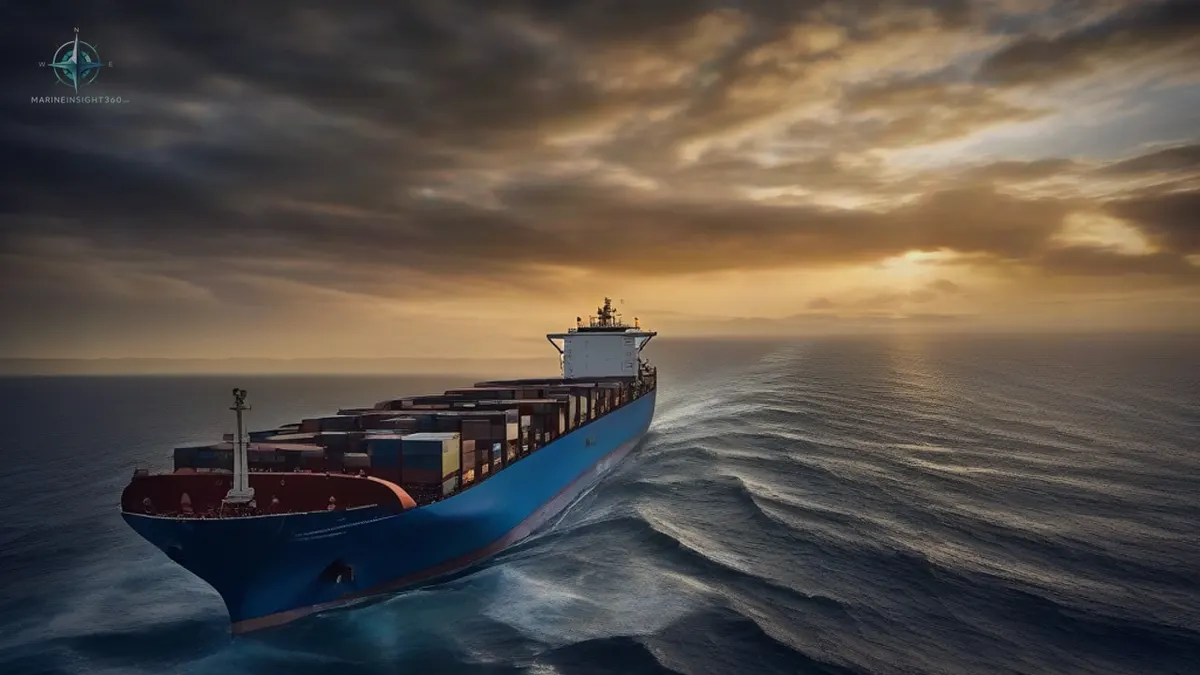
History of Clippers Ship
Clipper, a vessel that travels very fast. The term, probably derived from the verb clip (to move quickly), was first used in the United States shortly after the War of 1812 to refer to a type of vessel previously described as Virginia-built or pilot-built. After the 1830s, the word "clipper" came to refer to any fast vessel.
Although their origins are unclear, the Baltimore Clippers were probably a natural evolution of the design principles of the famous clipper ships popular in England in the 16th century. The basic hull features a heart-shaped midsection, a short keel, a canted stern and bottom, a low hull, and a steep bow.
This modified form of construction is known to have been used in England in the 16th, 17th. Early 18th centuries, and in Jamaica and Bermuda from the late 17th to the late 19th centuries.
The Bermuda model was introduced to the American colonies in the early 18th century, particularly in the Chesapeake Bay region. The first true clipper, the Baltimore, appeared sometime before the American Revolution, probably on the eastern shore of the Gulf of Mexico.
Baltimore schooners were originally called "Virginia-made" and "pilot boat builders" because they were used as pilot boats in Norfolk, Virginia. They were usually schooners or double-rigged schooners, but some ships with this type of sea rigging were built as early as the American Revolution.
These topsail schooners first attracted European attention at the end of the American Revolutionary War, as they proved extremely fast against pirates. By the early 19th century, the Baltimore Clipper had become an internationally renowned fast sailing ship suitable for offshore service, illegal trade. Light cargo transportation. Its performance in the Napoleonic Wars and the War of 1812 enhanced its reputation. Thereafter, most slave traders, smugglers, and pirate ships in the West Indies were Baltimore Clippers.
The most common example of this type during the first quarter of the 19th century was the topmasted ketch or schooner. These vessels had heavy canvas-covered steel rigging, steep-bill masts, low sides, a steeply raked bow. A relatively deep draft at the heel of the rudder. Displacement was modest relative to hull size, enabling the vessel to carry a small amount of cargo.
Pilot boats began to be built along the Atlantic coast after 1800, and were copied outside the United States, particularly in France and the West Indies. Since the Baltimore was not designed primarily to carry cargo, her name was only used for pilot boats popular in the American maritime trade in the 1840s and 1850s. However, the vessel long served as the basic model for many small, fast sailing vessels, such as fishing boats, pilot boats, and yachts.
Things You Should Know About Clipper Ships
By 1830, the term "pilot" had become synonymous with fast sailing in general usage, although there was no specific type of hull or rigging. After about 1845, the term began to be used in conjunction with the noun to refer to the area of cargo or services carried by clipper ships, often referring to a specific type of rigging and fittings. The most common types were the California Clipper, China Clipper, Coffee Clipper, Opium Clipper, and Tea Clipper.
The California Clipper, China Clipper, and Tea Clipper were ships with pointed bows designed for fast sailing. Coffee and opium clippers varied in size and could be schooners, schooners, sloops, barques, or rigged. They were characterized by a flat, pointed bow, adapted for fast sailing. As early as 1832, the enlarged Baltimore clipper Ann McKim was fitted with square rigging.
It is generally accepted that the first large sailing ship designed for fast sailing was the Rainbow, built in New York in 1845. The discovery of gold in California in 1848 and in Australia in 1850 increased the demand for faster routes to both countries, while the repeal of the British Navigation Act in 1849, which opened the tea trade from China to London to foreign ships, led to a boom in the American sailboat manufacturing industry.
Ships with pointed bows, that is, ships that sacrificed maximum cargo capacity for speed, were called clippers. These ships were all built between 1850 and 1856. Midi-speed ships were able to carry a greater load than clippers and were therefore called clippers. Ships with less cargo capacity but with a pointed bow to provide a higher speed were called midi-speed or mid-speed. Only a small fraction of the American sailboats in California and China were clippers. Mid-speed prevailed.
The American clipper era lasted from about 1845 to 1859. Not many American clippers were launched before 1850, and very few were built after 1857. In Britain, clipper construction continued until the late 1870s, because for a long time after that, the British tea trade depended on fast ships. Similar trade was no longer profitable for American clippers. Most British clippers were advanced models, but on average smaller than the early American clippers.
Some armored clippers were built in Britain, but not in the United States.
Between 1850 and 1860, about 15 or 16 clippers were built in Quebec, New Brunswick, and Nova Scotia, Canada. Most Canadian clippers were used for maritime service between Britain and Australia. France, Germany, the Netherlands, Denmark, and Sweden built a small number of clippers. Construction of medium-sized or semi-sailing ships generally continued from 1845 to 1860. Some of these vessels built for the coffee trade after 1860 were planked but smaller than the earlier California and China schooners.
Between 1850 and 1860, many pointy-rigged schooners and sloops were built in the style of the larger schooners. These vessels replaced the earlier Baltimore schooners in both the coastal and ocean-going trades.
Sailboats came in many shapes and sizes, and it is almost impossible to generalize about their appearance, whether large, wooden, or small. In the 1850s, the common conception of a clipper was a large, seagoing sailing vessel characterized by a graceful keel (the line of the hull curved upward when viewed from the side), a simple, high-bowed bow, a sleek bow, a square or rounded stern, low free rigging when fully loaded, a very sharp bow.
A very large sail area. The beauty of an American clipper depended on proportion and line rather than sculpture and external decoration.
The Clipper was very fast for an ocean-going cargo ship. Its speeds ranged from 16 to 18 mph, with a top speed of 20 knots recorded.
American clippers of the 1850s were built by Boston naval architect Donald Mackay and ranged from about 46 to 76 meters (about 150 to 250 feet) in length. Only six American clippers were longer than 76 meters (250 feet), the longest being Mackay's Grand Republic, which at 92 meters (302 feet) was the largest ever built. Of the approximately 370 ships classified as American clippers, only 30 were longer than 64 meters (210 feet).
The most common length was about 56 meters (about 185 feet).
American sailing ships, which typically carried 25 to 50 sailors, set many impressive records, including Mackay's ships Yankee and Lightning, which set a world record of 436 nautical miles in a day; James Baines, which set a transatlantic record of 12 days and 6 hours from Boston to Liverpool, and a world record of 133 days; Flying Cloud, which sailed from New York City to San Francisco around Cape Horn in 89 days. Other sailing time records were set by Nightingale, which sailed from Shanghai to London in 91 days; Sea Witch sailed from Guangzhou to New York in 81 days, and Challenge sailed from Hong Kong to San Francisco in 33 days.
American sailing ships were generally of solid construction. In many cases, iron was fastened to the frame and the sides of the inner beams (or transoms). Although sailing ships suffered extensive damage to masts, rigging, sails. Top rigging due to difficult sailing, making maintenance expensive, sailing ships had a long service life. Some of the record-breaking sailing vessels were between 23 and 48 years old.
The race, held mainly in the United States, stimulated the activity of British shipowners and shipbuilders. Although Alexanor Hall & Sons of Aberdeen had been building sailing vessels since 1839 to carry passengers from England to Scotland, with one vessel, the Scots Maid, reaching London from Leith in 33 hours, they were mainly pleased with the improved seaworthiness of the Blackwell frigates. The same company also built two of Britain's first short-masted sailing vessels, the Stornoway and Chrysolette, for the tea trade, while R & H Green of Blackwell produced the Challenger.
Other British shipyards, especially Scottish ones, also began to build short-masted vessels. The most notable of these was Robert Steel &. Co. Of Greenock, which completed a number of small but highly successful vessels between 1855 and 1859. The financial depression of 1857 and the American Civil War (1861-1865) led to the decline of American merchant shipbuilding, which triggered a resurgence in Britain and ushered in the Golden Age of Tea Ships.
At the time, Chinese tea was a very profitable commodity, and many sailing ships were built specifically for this trade. The first of the new harvest that arrived in London each year brought the highest prices.
Robert Steele built famous ships for this trade, such as the Taiping, Ariel and Sir Lancelot. In 1866, the most famous annual tea boat race was held: on May 29, the Fairy Cross set out from Fuzhou, the Ariel, Taiping. Selica set out on the 30th, and the Taicang set out on the 31st.
The Taiping arrived in London at 9:45 pm. On September 6, the Ariel arrived half an hour later, followed by the Selica at 11:45 pm, having sailed 26,000 miles from Fuzhou. Two days later, both the Fiery Cross and the Taitting arrived in London. In 1872, two other sailing ships took part in another famous race in Fuzhou. The two ships, the Thermopylae and Cutty Sark, built in 1868, were in almost identical condition, but the latter had lost its rudder in a storm off the Cape Province of Good Hope, South Africa.
The era of small sailing ships came to an end with the advent of steam engines, which reduced freight rates and affected ocean voyages. From then on, only sailing ships capable of carrying large weights could operate profitably. The opening of the Suez Canal in 1869 marked the end of the era of small sailing ships, making the long voyages around the Cape of Good Hope unprofitable for transporting special cargoes. For a time, ships were used to transport wool from Australia, but these soon became obsolete in the trade, as large cargoes, small crews, and slow speeds were more economical; steel-hulled, four- and five-masted ships better met these needs, and the era of sailing ships came to an end.
Recommended Reading

Iran retaliates with missiles and drones, defying Trump’s warning
Learn iran with practical maritime context, safety checks, operational guidance and related resources for global shipping readers.
Hapag-Lloyd Invests in APM Terminals Rotterdam to Drive Growth
Hapag‑Lloyd’s new stake in APM Terminals Rotterdam aims to expand capacity, improve hinterland links and enhance crew efficiency in Europe’s busiest port.
Saildrone Completes Missile Launch Test Aboard its Sail-Powered Surveyor
Saildrone’s autonomous vessel successfully launched a missile‑type payload, showing new possibilities for armed surveyors and implications for shipping operator