
Where is Yellow Sea? Location & Significance
The Pacific Ocean is the world's largest and deepest ocean, with a total area of 165.2 million square kilometers and an average depth of approximately…
Where is Yellow Sea? Location & Significance
The Pacific Ocean is the world's largest and deepest ocean, with a total area of 165.2 million square kilometers and an average depth of approximately 4,280 meters. The vast Pacific Ocean is composed of numerous marginal seas located along the coasts of Asia, Oceania, and the Americas. The Yellow Sea, one of the marginal seas of the western Pacific, covers an area of 380,000 square kilometers.
Its name derives from the yellow sand that rises to the surface in the Gobi Desert, giving it a golden color. Many rivers in China also discharge their sediment-laden waters into the sea. With the exception of the Yellow Sea, other oceans in the world, such as the Red Sea, the Mediterranean Sea, and the Black Sea, are named after common colors in English. The Yellow Sea is also known as the "Huang Hai" in China and the "West Sea" in North and South Korea.
Where is the Yellow Sea located?
The Yellow Sea is located in the northern part of the East China Sea. It borders mainland China to the northwest and North Korea and South Korea to the east.
Geography
The Yellow Sea stretches approximately 960 kilometers from north to south and 700 kilometers from east to west. It is one of the world's largest underwater continental shelf areas. Its maximum depth is approximately 152 meters, with an average depth of only 44 meters. The major rivers flowing into the Yellow Sea include the Cheongcheon River, Haihe River, Liaoyang River, Datong River, Yalu River, and Yellow River.
Moreover, the Yellow Sea receives over 1.6 billion tons of sediment annually, most of which comes from the surging Yellow and Yangtze Rivers. The northern and western coasts of the Yellow Sea are relatively low, while the eastern coast is steeper, more rocky, and higher in elevation than the western coast. There are also numerous bays, such as Bohai Bay, Laizhou Bay, Liaodong Bay, and Korea Bay.
Famous Korean islands in the Yellow Sea include Anma Island, Baengnyeong Island, Dokguk Island, Daepo Island, Ganghwa Island, Chido Island, Heksan Island, Jeju Island, Silmido Island, and Yeongjeong Island.
Yellow Sea Map.
The Yellow Sea has a temperate monsoon climate. Cold, dry northwesterly winds prevail in winter, while summers are relatively warm and humid. Average temperatures in January range from -10°C to 3°C from north to south, and in July from 23°C to 26°C. The north monsoon occurs from late November to March, and typhoons are frequent from June to October. Sea fog is also common in coastal areas.
What flora and fauna are found in the Yellow Sea?
The Yellow Sea is rich in algae and a variety of invertebrates, such as crustaceans, oysters, cephalopods, and clams. Important fish species here include cod, ostrich, goby, eel, Japanese mackerel, lizardfish, Pacific herring, and sea bream. The Yellow Sea's tidal mudflats provide a crucial habitat for migratory birds along the East Asian-Australasian Flyway.
Additionally, these important migratory birds include the black-faced spoonbill, Dalmatian pelican, and little gull. The Yellow Sea is also an important breeding ground for the endangered black-headed gull. The Yellow Sea is also home to numerous marine mammals, including harbor seals, finless porpoises, killer whales, minke whales, and false killer whales.
- Is Sea Of Galilee Turning Red?
- How do ships generate power in sea?
- Icon Of The Seas: Crew Of World’s Largest Cruise Liner Rescue 14 People Stranded at Sea
- Allure of the Seas – Biggest cruise Ship
- Things To Do At Enchantment Of The Seas
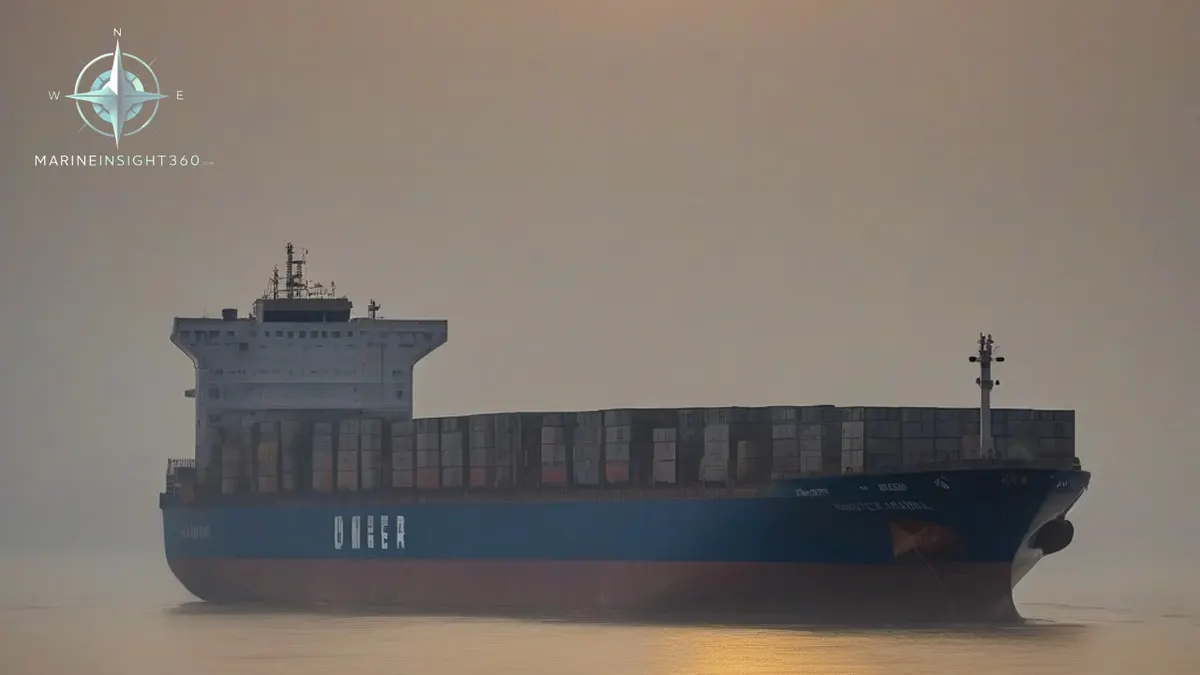
Cargo ships queue up to dock on the Yellow River.
For years, large Chinese, Japanese, and South Korean vessels have commercially exploited the rich fishing grounds of the Yellow Sea. Thousands of tons of oil have also been successfully discovered in the waters of China and North Korea. The Yellow Sea coastline is densely populated, with over 600 million people living within the basin. Major ports along the Yellow Sea coast include Dalian, Qinhuangdao, Qingdao, and Tianjin in China; Mokpo, Gunsan, and Incheon in South Korea; and Nampo in North Korea.
Geopolitical Hotspot Significance Of The Yellow Sea
Recently exposed Chinese construction projects in the Yellow Sea serve as a stark reminder of the region's neglected strategic importance and suggest China is working to shift the strategic balance in its favor, which could have implications for the broader Western Pacific region.
On January 9, South Korean intelligence revealed that China had constructed a steel structure in the Yellow Sea's Provisional Measures Zone (PMZ). The PMZ is a temporary area where the exclusive economic zones of China and South Korea overlap. While further details, including its location, have not been disclosed, the steel structure is reportedly over 50 meters in diameter and 50 meters in height. Reports indicate that China plans to build 12 such structures.
This is not the first time China has constructed such structures in the PMZ. Since 2022, China has constructed one or two structures annually, claiming they are fishing facilities, although some experts suspect they may be oil platforms. Regardless of their nature and purpose, these actions violate agreements between the two countries.
The Mediterranean and the Yellow Sea in Asia
The Yellow Sea is a shallow area with an average depth of 44 meters and an area approximately 1.5 times the size of the United Kingdom, located between the Korean Peninsula and mainland China. Like many other coastal waters bordering neighboring countries, the Yellow Sea's limited width prevents South Korea and China from fully claiming the 200-nautical-mile exclusive economic zone permitted by the United Nations Convention on the Law of the Sea.
In 2015, the two countries agreed to continue negotiations on boundary demarcation. Despite deteriorating relations since 2016 and the impact of the COVID-19 pandemic, negotiations have continued, but with little progress. The most recent round of talks was held in Shanghai in November 2024. The timing of the talks and the announced structure raise questions about China's sincerity in these negotiations.
From a Chinese strategic perspective, strengthening coastal defenses and expanding its freedom of movement zone are crucial to its security.
Although insufficient information is currently available to paint a clearer picture of this incident, it serves as a reminder that the Yellow Sea's geopolitical significance far exceeds the limited attention it has previously received. It forms part of a rimland, a region crucial to controlling the fate of Eurasia and, according to N.J. Speakman, the world.
The Bohai Sea, in particular, and the Yellow Sea more broadly, lie within China's first island chain and directly connect to its center of gravity. This region reflects China's geopolitical vulnerability while also serving as a corridor to the wider external seas, including the East China Sea and beyond.
From a Chinese strategic perspective, strengthening coastal defense and expanding freedom of action are crucial to its security. Incrementalism is a key cultural principle in Chinese politics, economics, and military affairs. We are likely witnessing a shift in China's approach: a transition from close-in coastal defense to a true blue-water navy. While the image of China's blue-water navy is often associated with the Indo-Pacific region, or at least the South China Sea, from a Chinese incrementalist perspective, its foundation lies in the establishment of a robust coastal defense system.
China's strategic value of the Yellow Sea is grounded in historical experience, suggesting that this view is deeply entrenched and difficult to change. Since the 19th century—a period that China considers a slight deviation from its historical trajectory—most decisive battles in Northeast Asia have been fought over the Yellow Sea. The Second Opium War, the Sino-Japanese War (1894-1895), and the Russo-Japanese War (1904-1905), which erupted after the Arrow Incident (1856), and their subsequent resolutions, all reflected a struggle for strategic supremacy in the Yellow Sea. In some ways, they can be compared to the Turkish Straits between the Mediterranean and the Black Sea. Access to and control of the Yellow Sea constitutes a key element of strategic competition and significantly influence the strategic balance, much as the Turkish Straits played a role in 19th-century European diplomacy.
Strategic Significance
The geopolitical importance of the Yellow Sea extends not only to China but also to South Korea and its allies and partners. For example, South Korea's capital, Seoul, is connected to the Yellow Sea via the Han River, which flows through the city center before emptying into the sea. Two of South Korea's three major naval commands are located along the Yellow Sea coast. Furthermore, Camp Humphreys, one of the largest U.S.
National Guard bases, is located less than 16 kilometers from the coast and less than 640 kilometers from the People's Liberation Army's Northern Fleet Command in Qingdao.
Since 2013, China has unilaterally insisted on demarcating its maritime operational boundary with South Korea along the 124th parallel north. Despite South Korean objections, China's military activities in the Yellow Sea have continued to increase, including the deployment of anti-ship cruise missiles and the installation of structures and buoys. These actions, exemplified by recent incidents, continue to form part of China's broader strategy to ensure security in its adjacent waters and control disputed areas.
Unless Beijing's strategies are decisively contained, the strategic balance in the region will ultimately shift in China's favor, restricting the freedom of action of its allies in parts of the Yellow Sea.
Given the power disparity between the two countries, South Korea is unlikely to be able to effectively counter China's strategy of establishing a fait accompli in the Yellow Sea on its own. In this regard, whether the recent incident is related to South Korea's domestic political situation or whether the construction of artificial structures will have legal effect in the future demarcation of the Sino-Korean border is irrelevant.
What matters is that unless Beijing's strategy is decisively contained, the strategic balance in the region will eventually shift in China's favor, restricting the freedom of action of its allies in a small portion of the Yellow Sea.
This gradual shift would first weaken the defensive posture of key military assets on the west coast of the Korean Peninsula, then gradually weaken Kyushu, Okinawa, and ultimately Taiwan, creating a cascading effect that would pave the way for further PLA expansion into the Western Pacific. In this sense, while the specific details of this incident remain unclear, it serves as a reminder of the Yellow Sea's enduring geopolitical importance.
Recommended Reading
Cape of Good Hope: History and Significance
Cape of Good Hope: History and Significance: ports, trade and shipping-market context for US, UK, Canada, Australia, Singapore and European maritime...
Iran retaliates with missiles and drones, defying Trump’s warning
Learn iran with practical maritime context, safety checks, operational guidance and related resources for global shipping readers.
Hapag-Lloyd Invests in APM Terminals Rotterdam to Drive Growth
Hapag‑Lloyd’s new stake in APM Terminals Rotterdam aims to expand capacity, improve hinterland links and enhance crew efficiency in Europe’s busiest port.