
Which Side Is Starboard? A Working Guide to Port and Starboard
Starboard is the right side of a vessel when facing the bow. Learn the origin, the navigation light colors and the collision rules built around it.
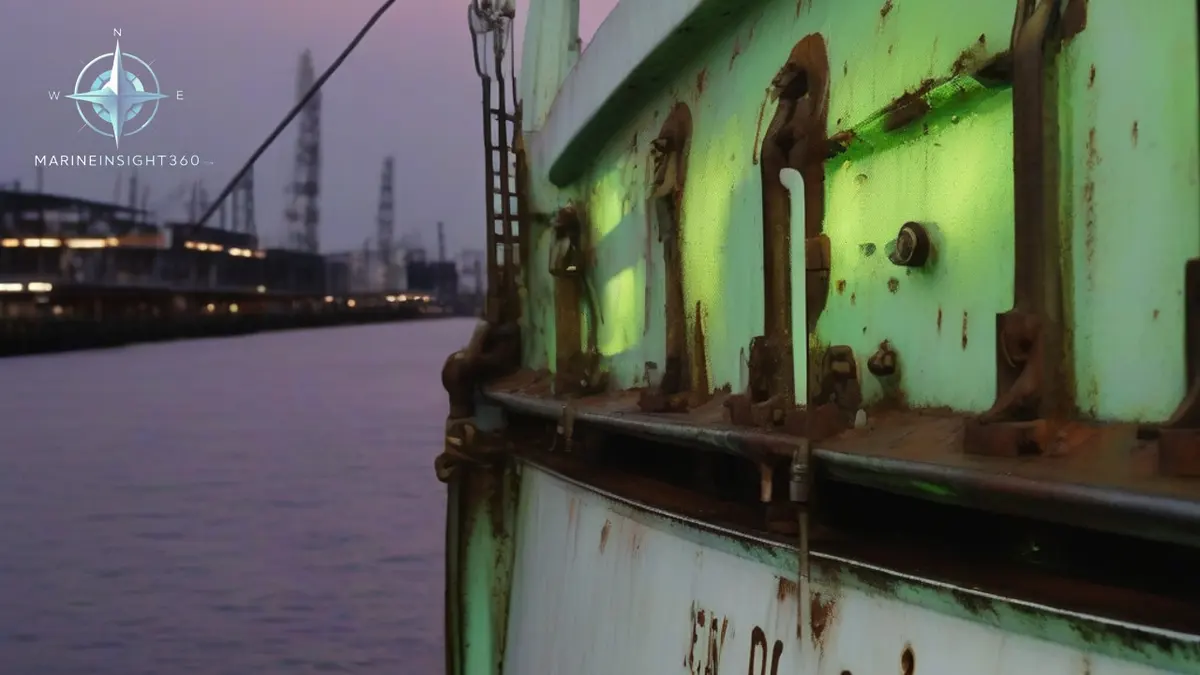
Starboard is the right-hand side of a vessel when you face forward, toward the bow. Port is the left-hand side. The terms are fixed to the ship rather than to the observer, so the starboard side stays the starboard side whether you are looking forward, aft or standing on the quay. That permanence is exactly why mariners use them instead of left and right.
Which side is starboard: quick ways to remember
- Port and left both have four letters. If port is left, starboard must be right.
- Port wine is red. The port sidelight is red, so the starboard light is green.
- Two Rs: staRboaRd is the Right side.
Use whichever aid sticks. Once the sidelight colors are fixed in memory, the rest of the system follows from them.
Where the words starboard and port come from
Early vessels in northern Europe steered with an oar mounted on the right-hand side of the stern, since most steersmen were right handed. Old English called that side steorbord, the steering side, which became starboard. NOAA's National Ocean Service traces the term directly to those two words for steer and ship's side.
With the steering oar on the right, crews berthed with the left side against the quay to protect it. That side became the loading side, larboard. Because larboard and starboard were too easily confused when shouted into wind, port replaced it, and navies formalized the change during the nineteenth century.
Why mariners never say left and right
Left and right change with the speaker's orientation. A lookout facing aft who reports something to the left means the opposite side from a watchkeeper facing forward. Port and starboard remove that ambiguity because they refer to the ship, not the person. In an emergency report, a helm order or a VHF exchange with another bridge, an unambiguous side reference is a safety tool, not a tradition kept for its own sake.
Red and green: reading a ship at night
The convention is worldwide. A vessel shows a red sidelight on her port side and a green sidelight to starboard, each visible over an arc of 112.5 degrees from right ahead to just abaft the beam. A white sternlight covers the remaining arc astern.
That cut-off is 22.5 degrees abaft the beam on each side, and the sternlight's 135 degree arc picks up exactly where the sidelights stop, so nothing is left dark. Range matters too: on a vessel of 50 meters or more, sidelights must show at 3 nautical miles and the masthead light at 6, so a distant masthead light resolves into a colored sidelight only as the range closes.
The colors let you read another vessel's heading in the dark. Green alone means you are looking at her starboard side. Red and green together means she is heading straight at you. Every night-time collision assessment starts from this simple color logic.
Starboard in the collision regulations
The International Regulations for Preventing Collisions at Sea build directly on the starboard convention. When two power-driven vessels cross, the one that has the other on her starboard side gives way. When two power-driven vessels meet head on, each alters course to starboard so they pass port to port. A useful pairing for new watchkeepers: the give-way vessel in a crossing is usually the one seeing the other ship's red sidelight.
The rules also govern how the give-way vessel acts. The alteration must be large enough to be readily apparent to the other ship visually and by radar, and crossing ahead is to be avoided, so the natural answer is a substantial early alteration to starboard, passing under the other vessel's stern.
Sound signals carry the same convention between vessels in sight of one another: one short blast means "I am altering my course to starboard", two short blasts means "I am altering my course to port", and three means "I am operating astern propulsion".
Starboard in the buoyage system
Lateral buoyage uses the same starboard reference, with one large regional catch. Under the IALA system, lateral marks are named for the side they should be left on when proceeding in the conventional direction of buoyage, normally entering from seaward. In Region A, covering Europe, Africa, most of Asia and Australasia, the starboard hand mark is green and the port hand mark red.
In Region B, covering the Americas, Japan, South Korea and the Philippines, the colors are reversed, the origin of the phrase "red right returning".
Shape and topmark carry the same message when a light has failed, so they are the safer cue in an unfamiliar port. Checking the chart's buoyage region note belongs in the passage plan, because habits built in one region read a channel exactly backwards in the other.
How the terms are used on board every day
Helm orders are given as starboard ten or port twenty, never right or left. Berthing plans specify starboard side alongside or port side alongside, which decides fender and mooring preparations hours in advance. Pilot ladders are rigged on whichever side the pilot requests, passed by VHF before arrival.
Helm orders follow a fixed protocol: the officer gives the order, the helmsman repeats it back word for word, executes it and reports when the wheel is on, so a bridge team drawn from several nationalities handles every order the same way. A high-sided ship also needs an accommodation ladder rigged in combination with the pilot ladder rather than a long rope ladder alone.
The convention runs through the ship's structure too. Lifeboats are numbered odd on the starboard side and even on the port side, and many operators apply the same odd-even logic to compartments and equipment. None of it works unless everyone on board shares the same fixed reference.
To build the rest of your bridge vocabulary, the Glossary on Marine Insight 360 defines the core terms a deck officer or new crew member needs.
The color and arc conventions are not local custom. The collision regulations are an IMO instrument, and compliance is checked on foreign ships by port state control officers working to the Paris MoU in Europe and the Tokyo MoU in Asia Pacific, and by the USCG in American ports. Class surveyors from DNV, Lloyd's Register and ABS verify the light arrangement and its screening at survey.
Navigation lights are among the deficiencies inspectors record most often, and the findings are mundane. A sidelight screen painted over or missing, so the red bleeds across the bow. A burnt out bulb with no spare aboard. A lantern whose filter has faded toward white. Each is written up, and a ship is normally required to repair it before she is allowed to sail.
Sources and further reading
- Why do ships use port and starboard instead of left and right? - NOAA
- Fast Facts: Why Ships Use Port and Starboard - The Maritime Executive
- Port and starboard - Wikipedia
What to read next
Recommended Reading
Port and Starboard: The Ultimate Guide for Working Mariners
Port and starboard explained for working mariners: origins, sidelight colors, COLREGs crossing rules, and the errors that cause collisions.
How to Remember Port and Starboard?
How to Remember Port and Starboard?: ports, trade and shipping-market context for US, UK, Canada, Australia, Singapore and European maritime readers.

Port And Starboard In The Modern Navy
Port And Starboard In The Modern Navy: ports, trade and shipping-market context for US, UK, Canada, Australia, Singapore and European maritime readers.