
Port and Starboard in the Modern Navy
Why navies replaced larboard with port in the 1840s, how helm orders changed, why the US Navy says right and left rudder, and port and starboard watches.
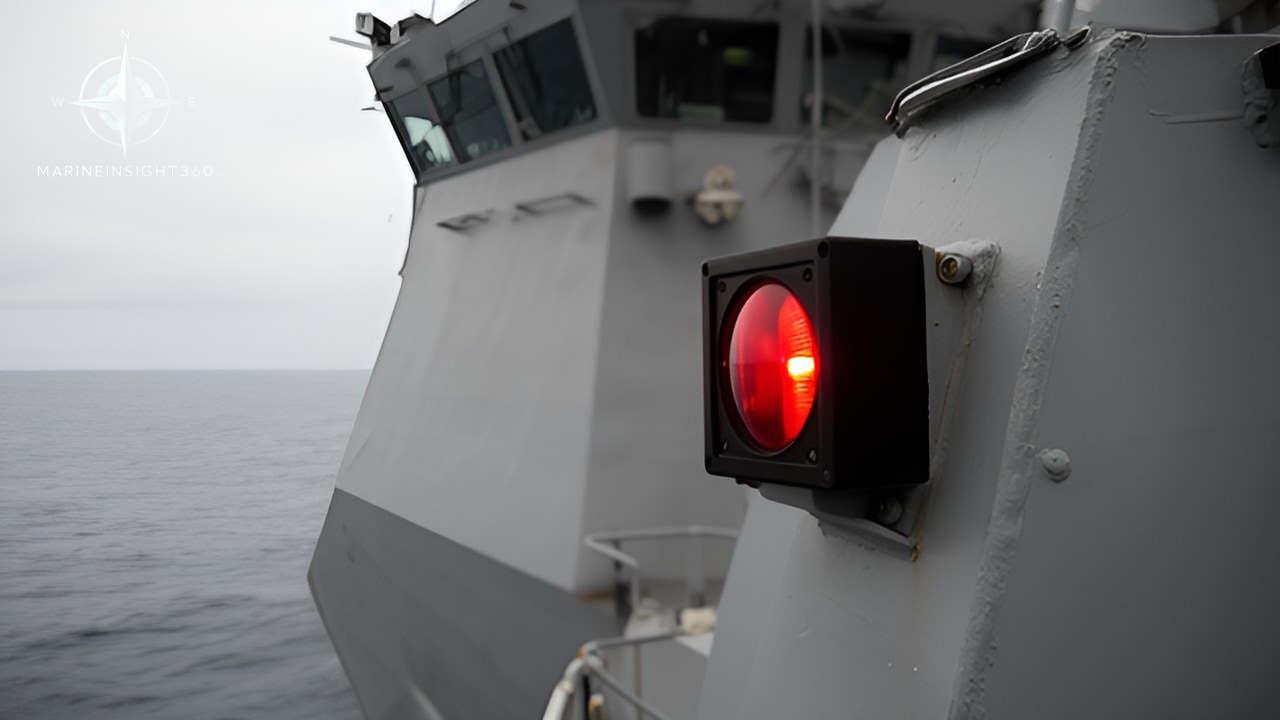
Navies use port for the left side of a ship and starboard for the right, looking forward, just as merchant ships do. The words were made official in the nineteenth century: the Royal Navy replaced "larboard" with "port" in 1844, and the US Navy followed in 1846, because larboard and starboard sounded too alike when shouted in wind and noise.
Today the terms are built into naval watch systems, compartment numbering and ship handling, with one notable exception: the US Navy gives rudder orders as right and left.
Where starboard and larboard came from
Before ships had a rudder hung on the sternpost, they were steered with a large oar or steering board over the side near the stern. On northern European ships it was normally on the right-hand side, probably because most steersmen were right-handed. Old English called that side the steorbord, the steering side, which became starboard.
A ship with a steering oar on the right could not easily lie with that side against a quay without damaging the oar, so the left side was the one that went alongside.
English sailors called that left side "larboard" for several centuries. The origin is usually traced to the Middle English ladeborde, the loading side, though the etymology is not certain. Other languages kept a different word: Old English had bæcbord, the side behind the steersman's back, which survives as Backbord in German, bakboord in Dutch and bâbord in French.
"Port" was already in use by seamen as an alternative long before it became official. The most likely explanation is that it was the side facing the port, or the side with the loading port in the hull, when a ship was alongside, but nobody can be sure which.
How navies made port official
Larboard and starboard differ by only one syllable at the start, and in a gale, over gunfire or along a crowded deck, the difference could be lost. The Royal Navy settled the matter with an Admiralty order of November 1844, which directed that "port" be used instead of "larboard" in all of Her Majesty's ships.
The US Navy issued its own general order on 18 February 1846, signed by Secretary of the Navy George Bancroft, giving the same reason: repeated confusion between the two words. Merchant seamen adopted the change over the following decades.
Helm orders: from tiller orders to right and left rudder
For most of the age of sail, helm orders described the movement of the tiller. "Port the helm" meant push the tiller to port, which turns the rudder and the ship's head to starboard. When wheels replaced tillers, many ships kept the tiller convention in their orders, so the order and the turn were opposite.
The best-known example is the Titanic: First Officer Murdoch's order "hard a-starboard" on sighting the iceberg was a tiller order, intended to turn the ship to port.
Navies and merchant fleets moved to direct orders at different times:
- The US Navy stopped using "starboard" and "port" for rudder orders in 1913 and confirmed it in General Order No. 98 of 1914. Rudder orders became "right" and "left", and the word "helm" was dropped from steering orders altogether.
- British ships changed to direct orders, which name the way the ship's head is to turn, on 1 January 1933, under the Merchant Shipping (Safety and Load Line Conventions) Act 1932.
- The US merchant marine changed in the mid-1930s.
The result is a split that still exists. A Royal Navy officer of the watch orders "Starboard twenty" or "Port fifteen", and merchant ships use the same form, which is set out in the IMO Standard Marine Communication Phrases. A US Navy conning officer orders "Right standard rudder", "Left fifteen degrees rudder" or "Rudder amidships", and the helmsman repeats the order word for word. Standard rudder and full rudder are set angles that vary by ship class.
Everywhere else on a US warship, the ship's sides are still port and starboard: lookouts report contacts "on the starboard bow" and the ship berths "port side to" or "starboard side to".
The steering gear moves the rudder the same way whichever form of words is used, so the risk lies with people: a sailor moving between navies, or a pilot boarding a US warship, has to know which convention the bridge team uses.
Port and starboard watches
Sailing warships divided the crew into two watches, the starboard watch and the larboard (later port) watch, which took turns on deck. In "watch and watch" the two watches alternated four hours on and four off, with the dog watches in the evening breaking the pattern so that men did not stand the same hours every day.
The phrase has lasted. In the modern US Navy, standing "port and starboard" means a two-section watch rotation, one watch on and one off, which is a hard schedule to keep up for long. Ships usually go to port and starboard watches only when they are short of qualified watchstanders or during sustained high-tempo operations, and move to three or more sections as soon as they can.
Odd numbers to starboard, even to port
US Navy ships number their compartments with a four-part code: deck, frame, position relative to the centreline, and a letter for the use of the space. The position number is zero for a space on the centreline, odd for spaces to starboard and even for spaces to port, increasing outboard. A compartment numbered 2-75-1 is on the second deck at frame 75, the first space to starboard of the centreline; 2-75-2 is its counterpart to port.
The number plate on the door, often called the bullseye, lets a sailor find a space in smoke or darkness and tells a damage control team which side of the ship it is on.
Merchant ships commonly number their lifeboats the same way, with odd numbers on the starboard side and even numbers on the port side.
Lights, colours and modern warships
Warships show the same red port and green starboard sidelights as other ships. The COLREGs (Rule 1(e)) allow a ship of special construction or purpose, which includes many warships, to carry lights in positions that comply as closely as possible when full compliance is impracticable, but the colours stay the same.
The convention has spread beyond the sea: aircraft carry a red light on the left wingtip and a green light on the right, and both aviation and spaceflight use port and starboard for the sides of the craft.
Naval training still treats instant recall of port and starboard as basic seamanship. Our article on how to remember port and starboard covers memory aids, sidelights and buoyage for anyone learning them for the first time, and the wider differences between naval and commercial seafaring are set out in our comparison of the merchant navy and the defence navy.
Recommended Reading
How to Remember Port and Starboard?
Knowing nautical terms like starboard and port is essential for any sailor.
Maritime Cybersecurity in 2026: Why Every Ship and Port Must Prepare
Practical measures for ships and companies A robust maritime cybersecurity programme does not have to start with costly hardware.
Shipping Agent Role: Port Call Duties Explained
Learn how a shipping agent coordinates vessel clearance, port services, documents and communications before, during and after a port call.