
Port and Starboard: The Ultimate Guide for Working Mariners
Port and starboard explained for working mariners: origins, sidelight colors, COLREGs crossing rules, and the errors that cause collisions.
Port and starboard defined: two sides that never move
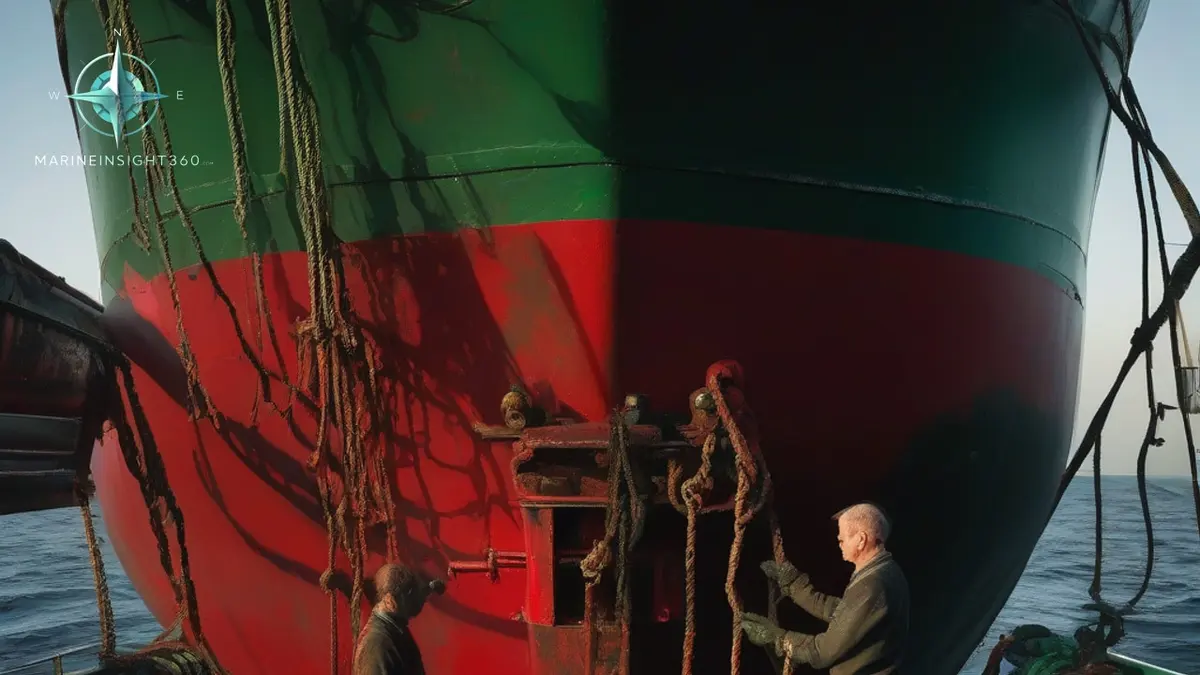
Port is the left side of a vessel and starboard is the right, both judged while facing the bow. The terms are fixed to the hull, not to the person speaking. A helmsman, a bridge wing lookout and a rating working aft all mean the same physical side of the ship. Left and right change with whoever is talking. Port and starboard never do.
USCG, MCA and AMSA examiners still test the distinction, because the COLREGs crossing rules turn on it.
That fixed reference is why the words survived from steering oars into integrated bridge systems. A helm order to starboard means the same thing under every flag and in every language, at three in the morning in a snow squall. Everything else in shipboard geography, from tank numbering to muster lists, hangs off the same two words.
Where the terms came from, and why larboard was abolished
Starboard comes from the Old English steorbord, the steering board. Before the stern-hung rudder became normal in the fourteenth century, vessels were steered by a large oar hung over the right quarter, placed there because most helmsmen were right handed. A ship carrying her steering oar on the right could not lie alongside on that side without crushing it, so she berthed with her left side to the quay.
The left side was called larboard, from Middle English forms tied to loading cargo. Larboard and starboard are close enough in sound to be confused when shouted across a deck in weather, and the Admiralty said so. A circular of 22 November 1844 abolished larboard in the Royal Navy and made port the standard term, on the reasoning that starboard and port are far easier to tell apart by ear.
Red to port, green to starboard: reading a ship at night
The 1972 Collision Regulations fix the colors. A red sidelight marks the port side and a green sidelight marks the starboard side, each showing an unbroken light over an arc of 112.5 degrees, from right ahead to 22.5 degrees abaft the beam. The white stern light covers the remaining 135 degrees. Vessels under 20 meters (66 ft) in length may combine both sidelights in a single lantern on the centerline.
The arcs are the useful part. If another power-driven vessel shows you her red sidelight, you are looking at her port side and she has you somewhere on her starboard side. Green means you are off her port side. Red and green together, with masthead lights in line, means she is coming at you close to head-on.
What the collision regulations do with the two sides
The steering and sailing rules are deliberately biased toward starboard.
- Rule 14, head-on: when two power-driven vessels meet on reciprocal or nearly reciprocal courses with risk of collision, each alters course to starboard so they pass port side to port side.
- Rule 15, crossing: the vessel that has the other on her own starboard side keeps out of the way and, if circumstances permit, avoids crossing ahead.
- Rule 16: the give-way vessel takes early and substantial action to keep well clear.
- Rule 17: the stand-on vessel holds course and speed, but may maneuver alone as soon as it becomes apparent the give-way vessel is not acting.
Put together, a crossing vessel on your starboard bow showing her red light is your problem to solve. One on your port bow showing green is not, until she makes it one.
Why an alteration to port invites hard questions
Rule 17 tells a stand-on vessel that when she finally acts alone she should not alter course to port for a vessel on her own port side. Casualty investigators look closely at port alterations for the same reason the rules discourage them: the other bridge is not expecting it, and two vessels each turning the wrong way close the range instead of opening it.
A bold alteration to starboard is visible by eye, obvious on radar and consistent with what the other watchkeeper was trained to expect.
Port and starboard away from the bridge
The convention runs through the whole ship.
- Cargo and stability: tanks and holds carry a P or S suffix, so 3P and 3S are the port and starboard tanks of the third pair. A list is reported to port or to starboard, never to the left.
- Port operations: the berthing plan states port side alongside or starboard side alongside, which sets the mooring winch loads, the gangway rigging, the manifold reach and the side for the pilot ladder.
- Safety equipment: lifeboats, liferafts and embarkation stations are designated port and starboard on the muster list, so a crew member knows the side before an alarm sounds.
- Machinery: twin-screw vessels have port and starboard main engines, shafts and pitch control systems, and generators are commonly identified the same way.
The rest of the reference frame
Port and starboard sit inside a fuller set of terms. Forward and aft run along the vessel, athwartships runs across her, and amidships is the middle in either sense. A contact broad on the starboard bow is roughly 45 degrees from ahead; one on the port quarter is roughly 45 degrees from astern on the left.
Many fleets give relative bearings as green to starboard and red to port, so green 20 sits 20 degrees to the right of the heading. All of it depends on the same fixed frame.
Where crews still get caught out
- Mixing left and right into helm orders. Companies that permit left and right in conning orders recreate the confusion the Admiralty removed in 1844. Keep helm orders in port and starboard, and repeat back every one.
- Reading a single light at long range. A light glimpsed briefly is not a positive identification of aspect. Confirm with radar plotting before acting on color alone.
- Assuming the other vessel knows the rules. Rule 15 says what should happen, not what will. Small craft, fishing vessels working gear and vessels with a distracted watch routinely fail to give way.
- Color vision and LED sidelights. Some LED units shift perceived hue at low intensity or off-axis. Treat an ambiguous color as unresolved and act early.
- Teaching by mnemonic only. Port has four letters like left, and port wine is red. Useful for a cadet on day one, useless for deciding whether you are the give-way vessel.
Why the two words still carry so much weight
Almost every collision report contains a moment where one bridge team believed it had the other vessel on the correct side. Getting port and starboard right is not vocabulary, it is the input to Rule 15. Officers preparing for an oral examination or a company navigation audit should work through the lights and shapes material in the Marine Insight 360 Knowledge Base alongside the full text of the Collision Regulations, then practice calling aspect from sidelights on a live watch.
Sources and further reading
- Convention on the International Regulations for Preventing Collisions at Sea, 1972 (COLREGs)
- IMO: COLREG, preventing collisions at sea
- COLREGs: Give Way or Stand On
- port / larboard / starboard
What to read next
Recommended Reading
Which Side Is Starboard? A Working Guide to Port and Starboard
Starboard is the right side of a vessel when facing the bow. Learn the origin, the navigation light colors and the collision rules built around it.
How to Remember Port and Starboard?
How to Remember Port and Starboard?: ports, trade and shipping-market context for US, UK, Canada, Australia, Singapore and European maritime readers.

Port And Starboard In The Modern Navy
Port And Starboard In The Modern Navy: ports, trade and shipping-market context for US, UK, Canada, Australia, Singapore and European maritime readers.