
How to Remember Port and Starboard (and Use Them on Board)
Simple ways to remember port and starboard, and how the terms are used in COLREGs sidelights, IALA buoyage, helm orders and everyday work on board.
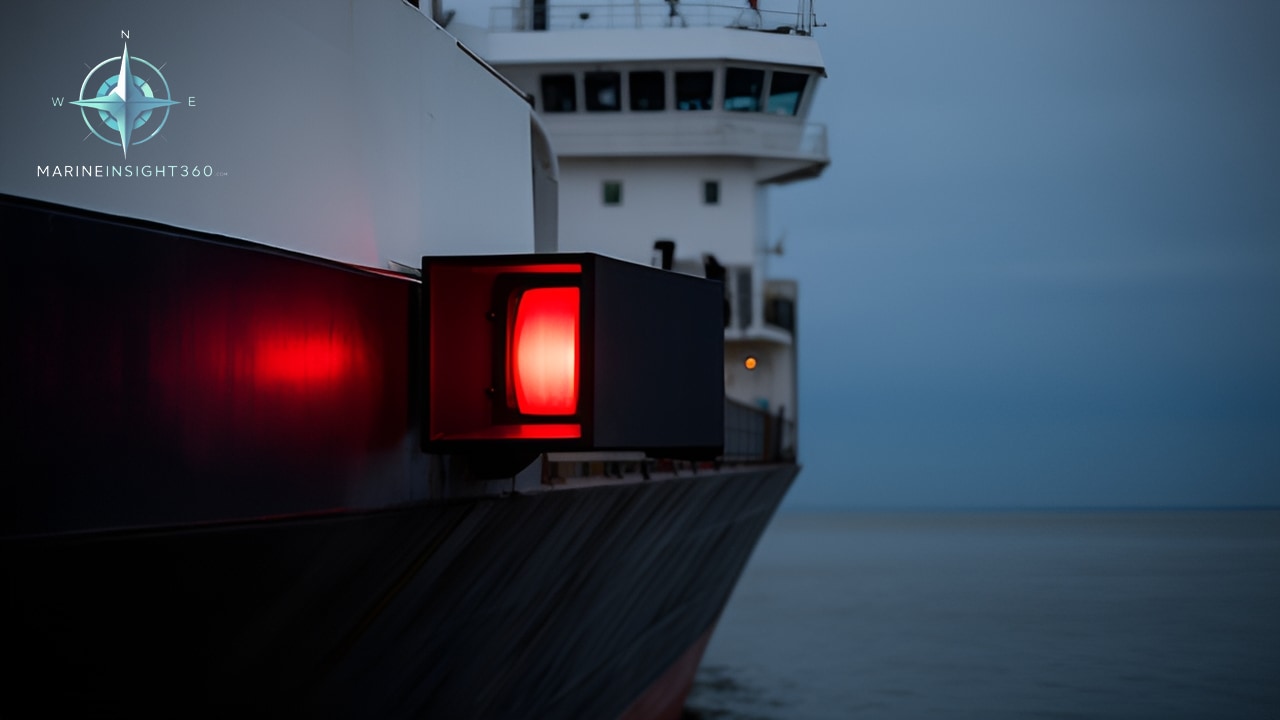
Port is the left-hand side of a vessel and starboard is the right-hand side, for someone on board facing the bow. The quickest way to remember it is that "port" and "left" both have four letters. The port sidelight is red and the starboard sidelight is green, and the old question "is there any red port left?" links the colour to the side.
Why sailors use port and starboard
Left and right depend on which way the speaker is facing. A seaman at the stern facing aft and an officer on the bridge facing forward would point to opposite sides of the ship if they used them. Port and starboard belong to the ship, so the port side stays the port side whichever way you face, whether you are in the engine room, on the forward mooring deck or in a boat alongside looking up at the hull.
A lookout's report, a mooring order or a message about a fire means the same thing to everyone who hears it.
The words themselves are old. Starboard comes from the Old English for the steering side, because early ships were steered with an oar over the right-hand side, and the left side was the one put against the quay. How "larboard" became "port", and why the US Navy still gives rudder orders as right and left, is covered in our article on port and starboard in the modern navy. This article is about remembering the terms and using them.
Memory aids that work
Most people need a trick only for the first few weeks. Any of these will do the job:
- "Port" and "left" both have four letters. "Starboard" and "right" are the longer words.
- In the alphabet, P comes before S and L comes before R. Port goes with left, starboard with right.
- "The ship left port." The two words that go together are in the same sentence.
- "Is there any red port left?" Port wine is red, the port light is red, and the port side is on the left.
On small boats, some instructors put a strip of red tape on the port side of the cockpit and green tape on the starboard side until beginners stop hesitating. On a ship, the quickest way to fix it is to stand on the bridge facing forward and look at the sidelight on each wing: red on the port wing, green on the starboard wing.
Reading another vessel's lights at night
Under the International Regulations for Preventing Collisions at Sea (COLREGs), Rule 21, a power-driven vessel under way shows a red sidelight on her port side and a green sidelight on her starboard side. Each sidelight shows from right ahead to 22.5 degrees abaft the beam on its own side, an arc of 112.5 degrees. A white masthead light shows forward over 225 degrees and a white sternlight covers the remaining 135 degrees astern.
Knowing which colour belongs to which side tells you how another vessel is heading:
- Red only: you are looking at her port side.
- Green only: you are looking at her starboard side.
- Red and green together, with her masthead lights in line or nearly so: she is heading straight at you. If both vessels are power-driven, Rule 14 requires each to alter course to starboard so that they pass port to port.
- A single white light and no sidelights: you are looking at her stern.
When two power-driven vessels are crossing so as to involve risk of collision, Rule 15 says the vessel which has the other on her own starboard side must keep out of the way. So if you are in a power-driven vessel, see another power-driven vessel's red light on your starboard bow and its compass bearing is not changing, you are the give-way vessel. Sailing vessels follow different rules (Rules 12 and 18).
An old rhyme often quoted to cadets puts it as "If to starboard red appear, 'tis your duty to keep clear." A green light on your port bow means the other vessel is the one required to give way, though you must still keep watching her and act if she does not.
Port and starboard in buoyage
Lateral marks show the two sides of a channel, and they follow the direction of buoyage, which is normally the direction you travel when approaching a harbour from seaward. The IALA system, agreed internationally in 1980, uses two regions with opposite colours:
- IALA Region A (Europe, Africa, most of Asia, Australia and New Zealand): port-hand marks are red and can-shaped, and starboard-hand marks are green and conical. Coming in from sea, you keep red marks on your port side.
- IALA Region B (North and South America, Japan, South Korea and the Philippines): the colours are reversed. Port-hand marks are green and starboard-hand marks are red, which is the origin of the American phrase "red right returning". The shapes stay the same: cans to port, cones to starboard.
The shapes are a useful check when colours are hard to see. Both regions are explained in more detail in our guide to the IALA buoyage system.
Port and starboard in orders on board
On merchant ships, helm orders name the side the ship's head should turn towards. "Starboard ten" means put the rudder 10 degrees to starboard, so the bow swings to starboard. "Hard a-port" means full rudder to port, and "midships" brings the rudder back to the centreline. These are the standard wheel orders in the IMO Standard Marine Communication Phrases. The helmsman repeats each order back and reports when the rudder has reached the ordered angle, so that a mix-up between port and starboard can be caught at once. The steering gear then moves the rudder to match.
The terms appear in everyday work too:
- Berthing: "port side to" means the ship lies with her port side against the quay.
- Pilot boarding: the pilot station may ask for the pilot ladder on the port or starboard side, usually the lee side.
- Bearings by eye: an object can be "fine on the starboard bow", "abeam to port" or "on the port quarter". A lookout reports sightings this way, and on many ships the lookout traditionally struck the bell once for an object on the starboard bow, twice for one on the port bow and three times for one right ahead.
- Machinery and equipment: twin installations are named by side, such as the port main engine or the starboard anchor.
Related directions worth learning at the same time
Port and starboard are only two of the words used to describe position on a ship. The bow is the front and the stern is the back. Forward and aft mean towards the bow and towards the stern. Amidships is the middle of the ship, both lengthways and across. Abeam means at right angles to the ship's centreline, the quarter is the area between abeam and astern on either side, and athwartships means across the ship from side to side.
A cadet who can use all of these without thinking will follow orders on deck and on the bridge far more easily.
Recommended Reading

Port And Starboard In The Modern Navy
While "left" and "right" can confuse, "port" and "starboard" are unambiguous for sailors. At sea, emergencies can occur at any time, so it is vital that everything on board is clear and can be described quickly.
Maritime Cybersecurity in 2026: Why Every Ship and Port Must Prepare
Practical measures for ships and companies A robust maritime cybersecurity programme does not have to start with costly hardware.
Shipping Agent Role: Port Call Duties Explained
Learn how a shipping agent coordinates vessel clearance, port services, documents and communications before, during and after a port call.