
Why a Viken JV Tanker Was Auctioned in Gibraltar Over Russian Sanctions Links
A Viken joint venture aframax was sold by court auction in Gibraltar to clear US sanctions links. How judicial sales give a tanker clean title.
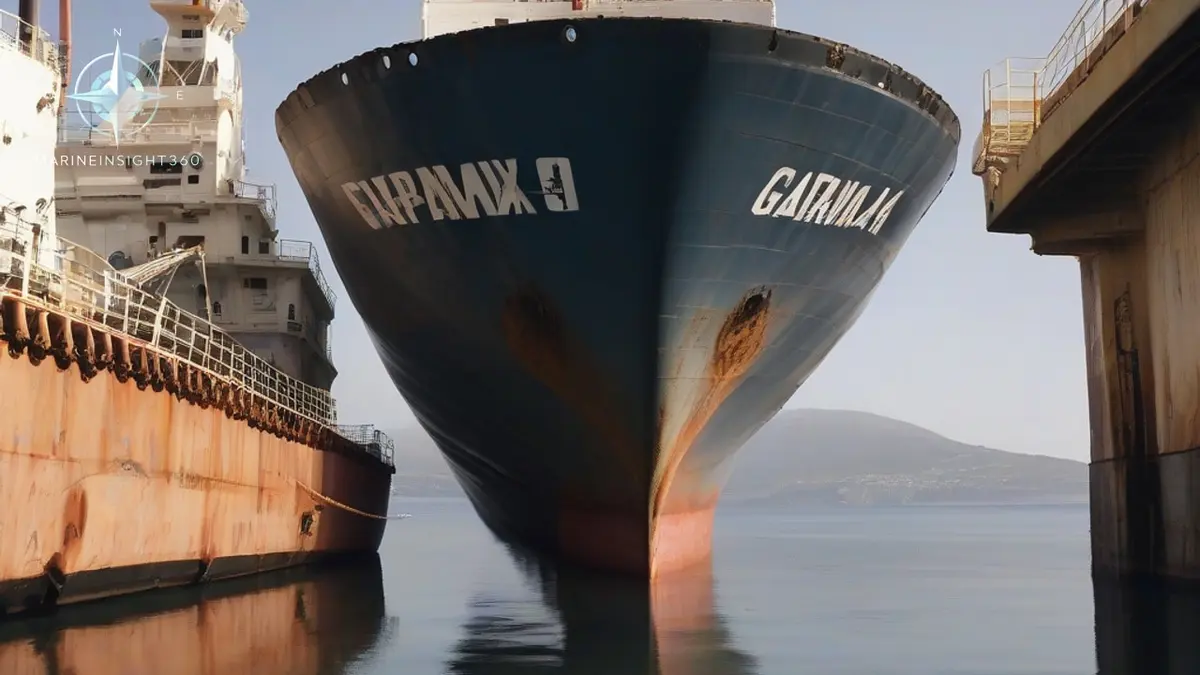
A five-year-old aframax tanker held through a Viken joint venture was sold at judicial auction in Gibraltar after its ownership structure brought it inside United States sanctions on Russia. TradeWinds reported in April 2024 that bidders paid around 73 million dollars for the scrubber-fitted, 112,800-dwt vessel, which had been laid up. Gibraltar is a British overseas territory, so the sale ran through an admiralty court applying English law, a route European owners and their mortgagee banks use regularly.
The auction achieved what a private sale could not. It moved the ship to a new owner with title free of the encumbrances and the ownership taint that had frozen it commercially.
The case is a worked example of something the market now sees regularly. Sanctions do not only catch designated vessels. They catch ships whose corporate parents cross an ownership threshold, and the cleanest exit is often a court rather than a broker.
How a joint venture stake makes a ship sanctioned
The US Office of Foreign Assets Control applies what the market calls the fifty percent rule. An entity owned 50 percent or more, directly or indirectly, in the aggregate, by one or more blocked persons is itself treated as blocked, even if it is never named on a list. A tanker held in a joint venture company can therefore become blocked property because of who sits behind the other half of the shareholding.
The practical effect is immediate. US persons cannot deal with the ship. Dollar payments stop. Banks decline, insurers withdraw, class societies review the entry, and charterers walk away. The vessel is not arrested in the ordinary sense, but it becomes commercially frozen, which is why so many of these ships end up laid up rather than trading at a discount.
Why a court sale rather than a private sale
A private buyer taking such a ship inherits doubt. Was the seller entitled to sell? Did the proceeds reach a blocked party? Are the mortgages discharged? A judicial sale answers those questions with a court order instead of a warranty.
Under the admiralty practice used in Gibraltar and other common law jurisdictions, the ship is arrested, appraised and sold by the court. The purchaser takes clean title, and existing maritime liens and mortgages attach to the sale proceeds rather than the hull. The court then distributes those proceeds by priority, and that is where sanctions screening bites: the payment out can be blocked or licensed while the ship itself sails on.
What the Beijing Convention adds
Clean title used to stop at the border. The United Nations Convention on the International Effects of Judicial Sales of Ships, adopted on 7 December 2022 and known as the Beijing Convention, sets one rule: a judicial sale conducted in a state party that confers clean title has the same effect in every other state party.
For a buyer, that cuts the risk of a foreign creditor arresting the ship in the next port over a debt that predates the sale.
The convention preserves domestic procedure and leaves a public policy exception, so it is not an unconditional guarantee. It does remove the most common commercial objection to buying at auction, which was never price but recognition.
What buyers check before bidding
- The ownership chain, not the registered owner. Screening the single-ship company is not enough when the exposure sits two levels up.
- License position. Whether an OFAC or UK OFSI license is needed for the sale, the payment or the distribution, and who holds it.
- Registry and mortgage status. Whether the flag will accept deletion, and whether financiers will lend against a former sanctions-linked hull.
- Insurance appetite. P and I entry and hull cover after a sanctions history often takes longer to arrange than the sale itself.
- Condition after lay-up. Cold lay-up damages machinery, coatings and cargo systems, and reactivation cost is real money against the hammer price.
What it means for crews and operators
Seafarers on ships caught this way carry the cost first. Wage payments run through banks that may refuse the transfer, relief crews struggle to get visas and flights to a laid-up berth, and repatriation stalls while lawyers argue over who may lawfully pay. Anyone joining a vessel with a complicated ownership history should confirm how wages will be routed and which entity is the contractual employer before signing on.
For operators, the lesson from the Gibraltar sale is procedural. Ownership structures that looked like ordinary joint venture planning became sanctions exposure almost overnight, and unwinding them took a court. Reviewing the beneficial ownership behind every joint venture vessel, and keeping a documented screening trail, is far cheaper than an auction.
Where the second-hand market sits now
Judicial sales of sanctions-linked tonnage have become a recognized route back into the mainstream fleet. The price reported in Gibraltar showed there is a real bid for a modern, scrubber-fitted aframax once the legal history is cleared. Buyers are pricing the legal clean-up, not discounting the steel.
Readers tracking sanctions and vessel ownership questions will find related coverage in the Marine Insight 360 Ports and Knowledge Base sections.
A sale order settles title but not the ship's operating paperwork. The buyer still needs a registry willing to flag her and a society willing to class her, and the mainstream societies, DNV, Lloyd's Register and Bureau Veritas among them, withdrew class from sanctioned tonnage rather than carry the exposure themselves. Reinstatement means a full entry survey, not a transfer of the old certificates.
A change of flag also resets how port state control sees her. Under the Paris MoU risk profile a recent flag change and a thin inspection history push a ship up the selection list, so her first European calls are likely to be inspected. Deficiencies after a long lay up are predictable: lifeboat engines that will not start, corroded fire lines, expired certificates, emergency generators that fail to run up.
Sources and further reading
- TradeWinds: Viken JV tanker auctioned in Gibraltar to shake off Russian links
- UNCITRAL: Beijing Convention on the Judicial Sale of Ships
- Comite Maritime International: The Beijing Convention on the Judicial Sale of Ships
- ICLQ: A Newcomer to Maritime Law, the Beijing Convention on Judicial Sales of Ships
What to read next
Recommended Reading
Shadow Fleet Tanker Detained in Gibraltar After Russian Crew Left Unpaid
A shadow fleet tanker was detained in Gibraltar after its Russian crew went unpaid. What counts as abandonment under MLC 2006 and what seafarers should do.
Why the Rescue Effort for a Russian Tanker off Oman Failed
A rescue effort for a Russian tanker off Oman stalled for weeks. What the Caroline Bezengi grounding shows about shadow fleet salvage and liability.
How Five Caspian Sea Ports Prosper Despite Russian Sanctions
Construction of ships and ports is currently underway in the Caspian Sea. With sanctions over the Ukraine war hitting regular trade routes. In the…