
Why the Rescue Effort for a Russian Tanker off Oman Failed
A rescue effort for a Russian tanker off Oman stalled for weeks. What the Caroline Bezengi grounding shows about shadow fleet salvage and liability.
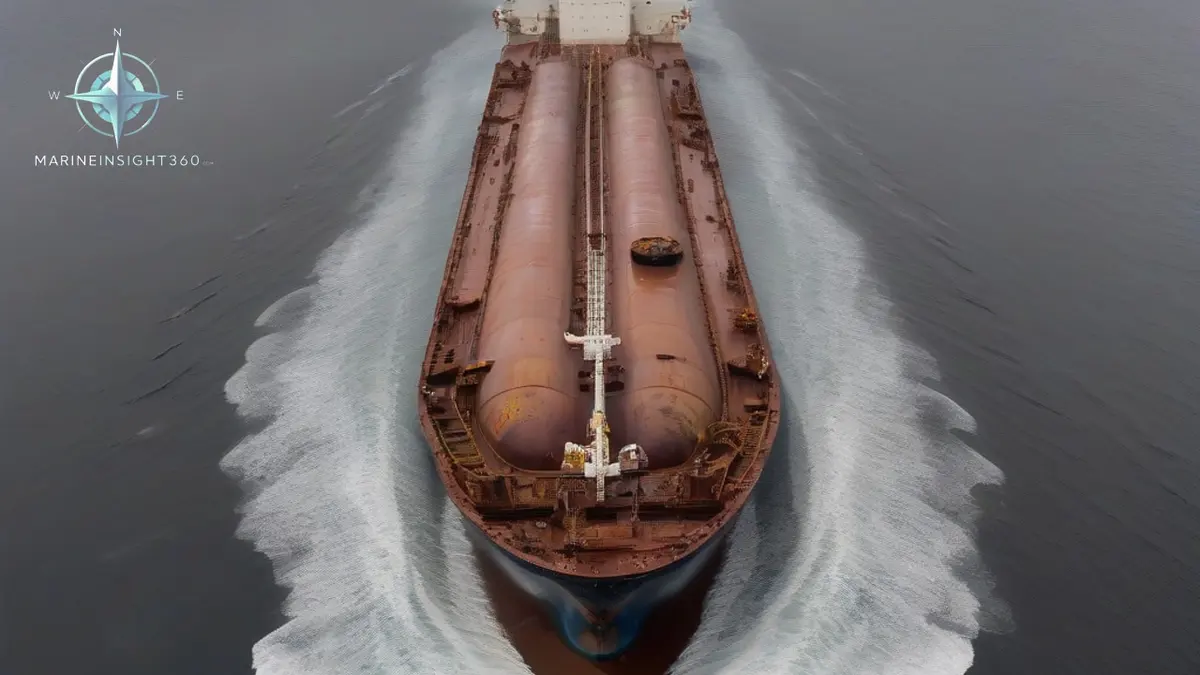
The rescue effort for the Caroline Bezengi failed for three reasons. The response began weeks after the casualty. The ship had no working commercial safety net behind it. The monsoon then closed the operating window. The Caroline Bezengi is a sanctioned shadow fleet tanker carrying about 130,000 metric tons of Russian crude, roughly 800,000 barrels. She grounded on 30 June 2026 some 22 nautical miles off Sharbithat, Oman. Salvors did not board until August.
For owners and charterers working under EU, UK and US sanctions, the case shows what happens when no International Group club stands behind a hull.
The sequence of the casualty
- 8 June 2026: the vessel reported difficulties off Yemen after what maritime sources described as an apparent blast.
- 30 June 2026: the ship grounded in the Arabian Sea near Al Qibliyyah Island, close to a marine nature reserve that supports Arabian Sea humpback whales and Socotra cormorants.
- Weeks of leakage followed with no coordinated intervention on scene.
- By mid-August 2026: seven of the twelve cargo tanks were breached, the hull was sitting progressively lower in the water, and the slick had spread across more than 2,000 square kilometers (about 770 square miles) according to satellite imagery reviewed for Reuters by an oil spill specialist.
Oil reached beaches around Ras Madrakah, and Oman's Environment Authority warned that pollution could extend along 40 kilometers (25 miles) of coastline.
Why the rescue effort for the Russian tanker started so late
A conventional tanker casualty triggers a chain within hours. The owner declares, the protection and indemnity club appoints, a salvor is engaged under Lloyd's Open Form, and the coastal state opens a place of refuge discussion. Every link in that chain assumes a known owner, a recognized flag and a real insurer.
The Caroline Bezengi had none of that functioning. Reporting indicates the ship's registration had expired and its flag status was unclear, while responsibility for a salvage bill running into many millions of dollars stayed unresolved with oil already in the water. Ambrey, the British maritime risk company, was appointed to coordinate the salvage and contracted an international oil spill response firm, with personnel boarding using support from the Royal Air Force of Oman.
The insurance gap that shadow fleet trading creates
Under the 1992 Civil Liability Convention, a tanker carrying more than 2,000 tons of persistent oil must hold insurance and carry a certificate evidencing it. The convention channels liability to the registered owner and gives the coastal state a direct claim route. It works because the certificate stands behind an insurer the market recognizes.
Vessels trading outside the mainstream sanctions perimeter often carry certificates issued by providers with no claims record, no reinsurance depth and no incentive to fund an emergency response. The paperwork exists. The money does not. That is the practical difference between a casualty that gets a salvage tug inside 24 hours and one that sits aground for a month.
Monsoon conditions closed the operating window
The grounding site sits on the Dhofar coast, which takes the full khareef, the southwest monsoon season running roughly June to September. Ambrey's director of global response, Ed Wollaston, described the situation as extremely challenging and compounded by adverse weather associated with the khareef.
Reported conditions of around 40 knots of wind and four meter (13 ft) swells rule out most of the response toolkit. Boom will not hold in that sea state, skimmers cannot work safely, lightering alongside a grounded hull is impossible, and helicopter transfers become marginal. The operation was reported to involve aircraft, salvage vessels and more than 100 tons of specialist equipment, but equipment on scene is not the same as a workable sea state.
Seasonal timing is a planning input rather than an excuse. Any casualty on that coast between June and September faces a three month period in which offshore intervention is close to impossible.
The Mediterranean case that ended the same way
Earlier in 2026 the Russian gas tanker Arctic Metagaz was abandoned after a series of explosions and drifted in the Mediterranean near Italian and Maltese waters. Libyan authorities reported that attempts to tow the vessel failed because of bad weather. All crew were rescued, but the hull stayed adrift. The pattern repeats: the crew get off, the ship remains a hazard, and no commercial party is clearly on the hook for removing it.
What this changes for masters, coastal states and salvors
- Coastal states cannot wait for the owner. The Nairobi Wreck Removal Convention and IMO guidance on places of refuge both assume a counterparty exists. Where there is none, a state that delays inherits the cleanup.
- Salvors need funding certainty up front. Lloyd's Open Form with SCOPIC, the special compensation regime that pays a salvor for environmental work even when no property is saved, only functions if someone stands behind the SCOPIC security.
- Treat drifting casualties as hazards with unreliable reporting. An uninsured, unflagged hull may not be transmitting AIS, may not appear correctly in navigational warnings, and may be under tow by a vessel with no salvage plan.
The useful takeaway for operators is contingency rather than commentary: know the seasonal weather window on the coasts you transit, confirm that your own pollution certificates sit behind an insurer with real claims capacity, and check the response arrangements of the coastal states on your route before you need them. The Marine Insight 360 Shipboard Operations section covers casualty response planning in more detail.
Sources and further reading
- Major Salvage Effort Begins for Grounded Shadow Fleet Tanker Off Oman
- Ambrey Tapped to Salvage Tanker Caroline Bezengi off Oman
- Caroline Bezengi Salvage Operations, Ambrey
- Russian shadow-fleet ship at risk of breaking up off Oman
What to read next
Recommended Reading
IRGC Gunboats Open Fire on a Tanker Off Oman: The Crew Response That Matters
UKMTO reported IRGC gunboats firing on a tanker 20 nautical miles off Oman without a radio challenge. What crews do when a state naval unit closes in.
Shadow Fleet Tanker Detained in Gibraltar After Russian Crew Left Unpaid
A shadow fleet tanker was detained in Gibraltar after its Russian crew went unpaid. What counts as abandonment under MLC 2006 and what seafarers should do.
Why a Viken JV Tanker Was Auctioned in Gibraltar Over Russian Sanctions Links
A Viken joint venture aframax was sold by court auction in Gibraltar to clear US sanctions links. How judicial sales give a tanker clean title.