
Do You Know About Ship's Monkey Island?
Do You Know About Ship's Monkey Island?: technology, equipment and fleet context for US, UK, Canada, Australia, Singapore and European maritime readers.
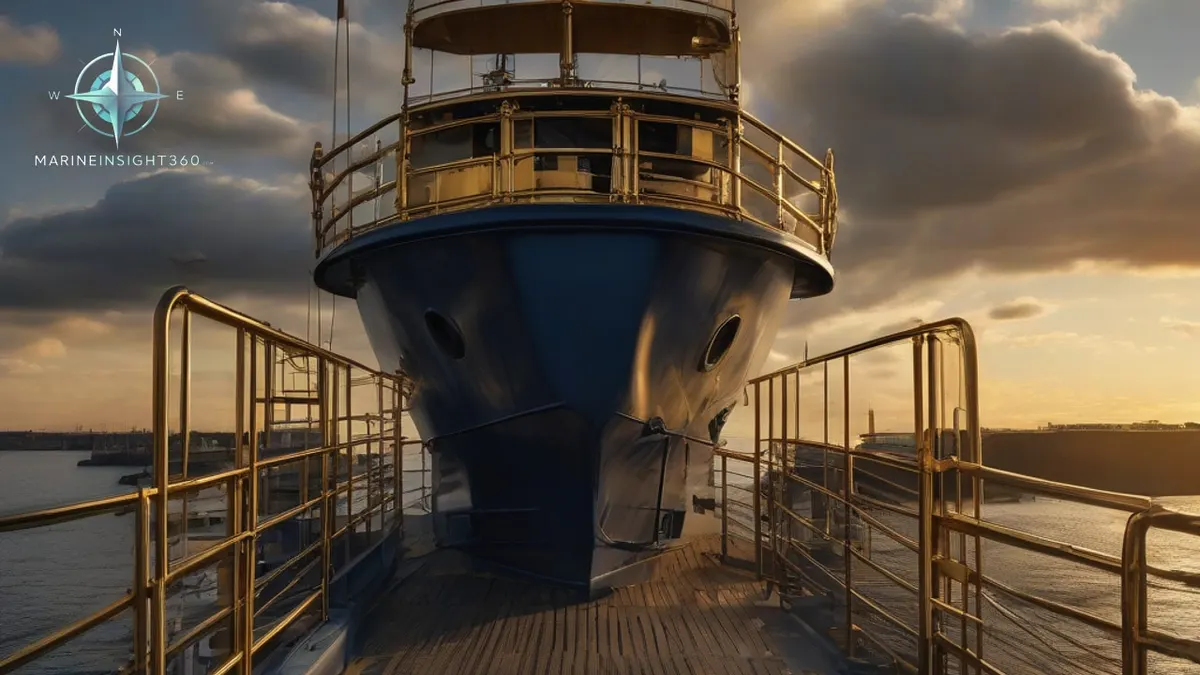
What Is A Ship's Monkey Island?
"Monkey Island" refers to the highest deck on a ship, located directly above the wheelhouse. It is also called the upper deck or wheelhouse, located above the wheelhouse or chart room.
In ancient times, Monkey Island was located about three-quarters of the way up the mainmast of some ships, and sailors used it to observe the sun and stars.
The origin and meaning of the term "Monkey Island" are uncertain. However, there are several theories.
What does the first theory about Monkey Island say?
Monkey Island was located at the top of a sailing ship's mainmast. Sailors climbed there to remove or repair sails, or to search for icebergs, coral reefs, or land. Climbing Monkey Island was likened to climbing a monkey, hence the name.
- What Are The Parts Of The Ship Hull?
- What Are the Parts Of SCBA?
- What are the 10 Parts of a Ship?
- What is the Basic Structure of a Ship? Explain Parts Of A Ship
- Top Dry Docks in the World
The Second Theory
According to this theory, ancient shipboard cannonballs were believed to be stored in a copper box or tray called a "monkey." In extremely cold weather, the copper box would shrink, and the cannonballs would scatter.
As a result, some joked that the weather was cold enough to freeze the cannonballs into a copper monkey.
However, this theory is unreliable for the following reasons:
There is no evidence that this "deck" was ever called a "monkey."
The copper box's shrinking speed would have been incapable of causing the aforementioned effect.
According to records, cannonballs were stored on the deck only during combat. The deck was kept as clean as possible.
Storing cannonballs at this height would have been virtually impossible, as the violent shaking and jolting could have caused them to fall and damage the ship and its crew.
On modern merchant ships, most of the external components of the bridge equipment are stored on the monkey island.
The bridge displays the bridge equipment used by the officer on duty, while the monkey island serves as the electrical control center for each piece of equipment. Some of the equipment on Monkey Island includes:
- Vessel Data Recorder (VDR) pod
- AIS transceiver antenna
- Radar scanner mounted on the radar mast
- SAT C/F77 transceiver antenna
- Communications equipment
- Radar boom lanyard for hoisting the flag
- Wind vane
- Mast for the "Christmas tree" (navigation light)
- Mast for the stern whistle
The magnetic compass is one of Monkey Island's most important pieces of equipment and is required for shipping under the International Convention for the Safety of Life at Sea (SOLAS).
SOLAS stipulates: "All vessels, regardless of size, shall be equipped with a standard, properly calibrated magnetic compass or other means, independent of any power source, for determining the vessel's heading and displaying the reading at the helm." A periscope extends from the base of the compass to the wheelhouse, indicating the magnetic bearing to the officer of the watch.
Maintenance on Monkey Island is crucial, as it houses vital equipment. Therefore, the deck must be kept rust-free, painted, and cleaned according to the ship's schedule to prevent the accumulation of salt and dust and minimize weather damage. In addition, the deck must be washed down with high-pressure fresh water.
Operational context
Recommended Reading
Lakshadweep Escapade: Aboard the M.V. Kavaratti for Ultimate Island Exploration
Lakshadweep Escapade: Aboard the M.V. Kavaratti for Ultimate Island Exploration: safety, training and compliance context for US, UK, Canada, Australia,...
Iran retaliates with missiles and drones, defying Trump’s warning
Learn iran with practical maritime context, safety checks, operational guidance and related resources for global shipping readers.
Hapag-Lloyd Invests in APM Terminals Rotterdam to Drive Growth
Hapag‑Lloyd’s new stake in APM Terminals Rotterdam aims to expand capacity, improve hinterland links and enhance crew efficiency in Europe’s busiest port.