Container Rates Rise as 5,300‑TEU Boxships Enter Market
New 5,300‑TEU orders and a modest charter‑index uptick tighten capacity, while shippers save by rerouting U.S. East‑Coast imports to the West Coast.
Market Snapshot
Larger 5,300‑TEU boxships are being ordered as charter rates climb modestly and shippers discover price differentials between U.S. coasts, indicating tighter capacity and a market shift toward economies of scale; operators must balance higher capital outlay against lower per‑container operating costs.
In the first half of August 2026 the New ConTex charter index edged up 0.4 % to 1,622 points (VHBS). At the same time Xeneta analysts highlighted a cost advantage for shippers moving cargo from the U.S. East Coast to the West Coast, suggesting a rebalancing of trade lanes.
Vessel Ordering Signals
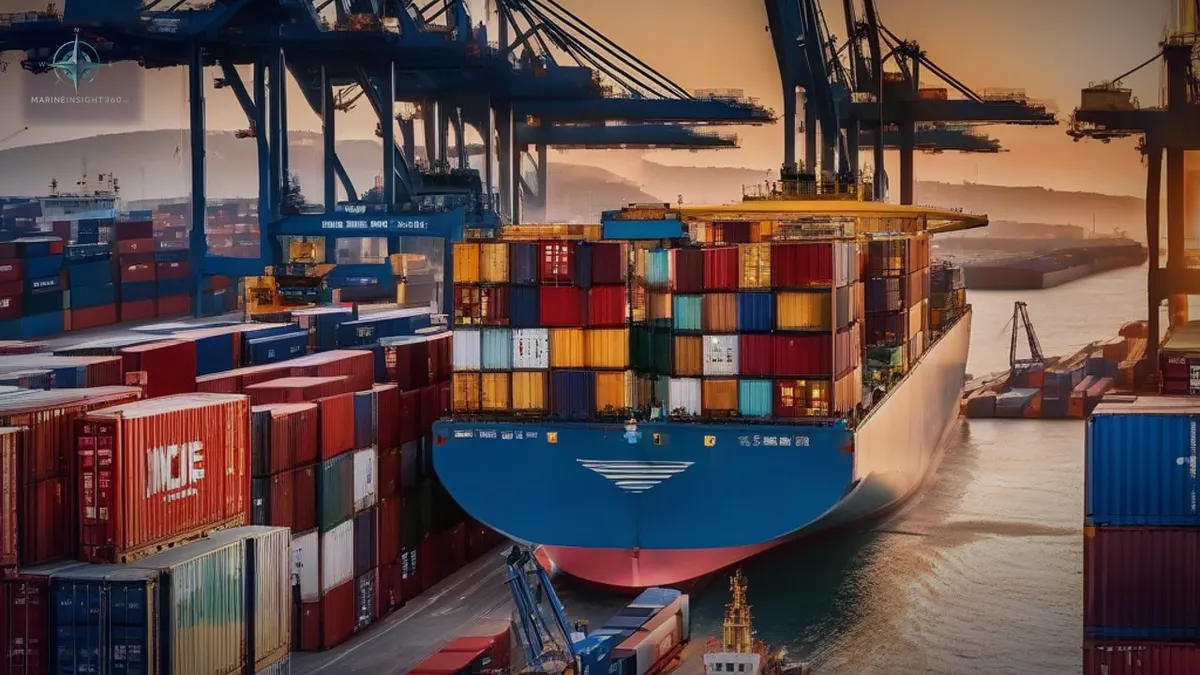
Hong Kong‑based ASL Shipping announced an order for two 5,300‑TEU containerships from CSSC Huangpu Wenchong Shipbuilding, with options for two more. The vessels will be 235 m (771 ft) long, 37.5 m (123 ft) wide and carry roughly 71,500 dwt, positioning them between the 4,000‑TEU feeder‑max class and the emerging 8,000‑TEU ultra‑large segment.
Key calculations driving the order include a 30 % capacity leverage over a typical 4,000‑TEU feeder, continued compatibility with many East‑Coast berths (300 m+), and lower fuel consumption per TEU under the IMO 0.50 % sulfur cap and upcoming carbon‑intensity regulations.
Freight‑Rate Capacity Trends
Xeneta’s weekly update shows shippers can capture “money on the table” by shifting imports to West‑Coast ports, where premium rates persist due to strong Pacific‑origin cargo flows. Spot rates on the Atlantic corridor have softened, while West‑Coast services remain above the Atlantic average.
Carriers are redeploying vessels from the Atlantic to the Pacific, creating temporary gaps on the East Coast that shippers exploit by rerouting, reinforcing the demand for larger ships that can serve both markets efficiently.
Charter Index Momentum
The New ConTex Container Ship Time Charter Assessment Index rose from 1,615 to 1,622 points, a 0.4 % increase for week 34. The modest rise signals a slightly improved earnings outlook for owners and a tightening spot market that may prompt a review of existing charter contracts.
Operational Implications for Shipowners
Owners with sub‑5,000‑TEU fleets should assess the cost‑benefit of retrofitting or replacing with 5,300‑TEU vessels. While capital costs are 20‑30 % higher, per‑container fuel burn and port‑call frequency improve.
Surveyors note accelerated wear on main‑shaft couplings when larger vessels operate near design speed for extended periods; proactive condition monitoring can avoid costly dry‑dock surprises.
Implications for Shippers
Shippers can leverage lower West‑Coast freight rates if inland logistics can handle the longer overland haul. Negotiating longer‑term contracts now may lock in space before larger ships dominate premium lanes.
A common mistake is assuming larger ships automatically lower total logistics cost; higher port‑call fees for deep‑draft berths and specialized handling equipment can offset fuel savings.
Risks and Watch‑Points
Fuel price volatility, upcoming IMO carbon‑intensity (CII) ratings, and East‑Coast berth beam limitations (many terminals cannot accommodate a 37.5 m beam) could disrupt the current trajectory.
Geopolitical shifts affecting Pacific trade would also diminish the West‑Coast premium that underpins the coast‑switching strategy.
Bottom Line
The rise in charter rates, the strategic ordering of 5,300‑TEU boxships, and the cost advantage of West‑Coast imports signal a tightening container market that rewards scale and flexibility. Shipowners must weigh higher capital outlay against fuel savings, while shippers should exploit coast‑switching opportunities and secure longer‑term space.