Container Shipping’s Triple Play: Newbuilds, Arctic Trials, and Merger Scrutiny
Newbuild orders, a daring Arctic route test, and regulatory push‑back on a major merger illustrate how carriers are chasing growth while navigating geopolitical and comp
What happened
Capacity Expansion Through Targeted Newbuilds
Four 1,900‑TEU feeder vessels are now under construction for Ningbo Ocean Shipping (NBOSCO) at China State Shipbuilding Corporation’s Wuchang yard. The Shanghai‑listed carrier has committed RMB 832 million (US $123 million) for the quartet, with each 23,950‑dwt ship priced at RMB 208 million (≈US $30.8 million) (Splash247).
The vessels will be owned by four wholly‑owned NBOSCO subsidiaries, a structure that isolates financial exposure and aligns each ship with specific trade lanes. At 1,900 TEU, the ships sit between ultra‑large container vessels (ULCVs) and the 1,000‑TEU feeders that dominate intra‑Asian routes, offering flexibility for both regional loops and short‑haul trans‑Pacific services.
From an operational standpoint, the newbuilds provide a near‑term capacity boost without the depreciation penalties of older tonnage. Their modern hull forms and engine installations are expected to meet the IMO 2020 sulphur cap and the upcoming EEXI (Energy Efficiency Existing Ship Index) requirements, reducing fuel costs and avoiding costly retrofits.
For shipowners, the timing aligns with a modest rebound in global container volumes after the pandemic slump. Deploying fresh capacity can capture higher freight rates on congested lanes, especially as shippers seek reliability after the 2021‑2022 container shortages. However, the investment also raises the break‑even freight index; operators must ensure the vessels achieve at least the projected average revenue per TEU (ARP‑TEU) to justify the capital outlay.
South Korea’s Arctic Shipping Test: Speed Gains Versus Geopolitical Cost
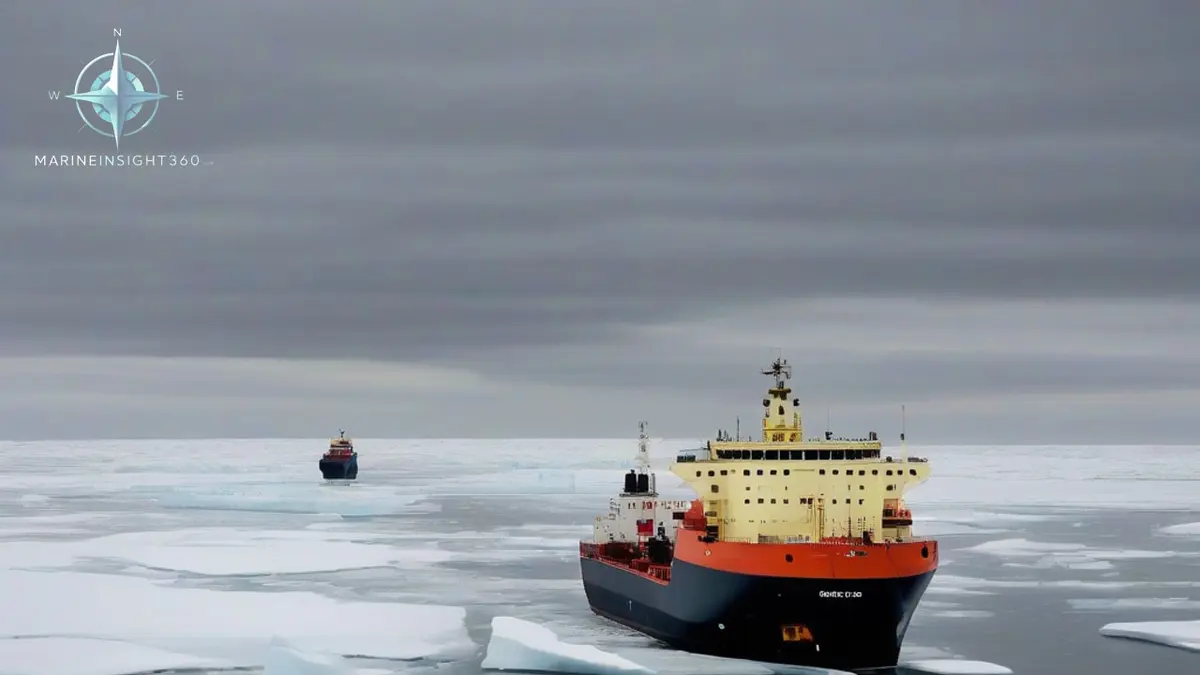
South Korea announced the launch of a container ship bound for Europe via the Arctic, marking the first state‑backed trial of a commercial route that relies on melting sea ice (gCaptain). The voyage will require Russian icebreaker support and navigation through the Northern Sea Route (NSR), exposing the carrier to both operational benefits and diplomatic friction.
The Arctic shortcut can shave up to 10 days off the traditional Europe‑Asia transit, translating into faster delivery windows and lower inventory carrying costs for shippers. For a vessel earning US $12,000 per day, a ten‑day saving represents a US $120,000 increase in net earnings, assuming cargo volumes remain stable.
Nevertheless, the route’s dependence on Russian permits introduces regulatory uncertainty. Western allies have imposed sanctions on Russian maritime services, and any deviation from compliance could trigger penalties for the flag state or the operating company. Moreover, the NSR’s limited port infrastructure and variable ice conditions demand robust hull reinforcement and ice‑class certification, adding to construction or conversion expenses.
Crew safety is another concern. Ice navigation requires specialized training under the STCW (Standards of Training, Certification and Watchkeeping) convention, and crews must be proficient in ice radar interpretation and emergency response in remote waters. Failure to meet these standards can lead to detentions by port state control (PSC) officers under the Paris MoU, especially if the vessel lacks an approved ice class.
In short, while the Arctic trial offers a compelling speed advantage, carriers must weigh the added capital, compliance, and reputational risks against the potential revenue uplift.
Consolidation Pressures and Regulatory Headwinds
Hapag‑Lloyd’s planned acquisition of Zim Integrated Shipping Services has encountered strong objections from Brazil and Israel, reflecting broader resistance to further concentration in the liner market (gCaptain). Forwarders argue that the merger would reduce competition on key East‑West routes, potentially inflating freight rates and limiting service options for shippers.
Brazilian authorities have signaled a willingness to block the deal under antitrust provisions, while Israeli legislators have raised national security concerns tied to Zim’s strategic position in the Mediterranean. Both countries are members of the International Maritime Organization (IMO) and can influence the merger’s approval through their voting power in the organization’s committees.
The regulatory push‑back illustrates a growing trend: governments are scrutinizing liner consolidations more closely than in the past, fearing that a handful of mega‑carriers could dominate global trade flows. For carriers, this means that any future merger or alliance must be accompanied by a robust competition‑law analysis and possibly concessions such as divestitures or service guarantees.
From a market perspective, the stalled Hapag‑Lloyd‑Zim deal keeps the current capacity landscape fragmented, preserving a wider array of service options for shippers. However, it also signals that carriers seeking scale through acquisitions may face longer approval timelines and higher transaction costs.
Operational Implications for Shipowners and Operators
Fleet Planning and Deployment
The NBOSCO feeder order expands the pool of modern, mid‑size vessels that can be redeployed across multiple trade corridors. Operators should evaluate whether to integrate these ships into existing schedules or use them to launch new services that target niche markets, such as intra‑Asia e‑commerce corridors where demand for rapid, reliable delivery is rising.
Cost Management
New vessels built to current emission standards will avoid the need for costly scrubbers or LNG conversions, but they still require compliance with the IMO’s upcoming CII (Carbon Intensity Indicator) framework. Operators must monitor the vessels’ fuel consumption data to ensure they stay within the prescribed carbon intensity band, or risk penalties and higher charter rates.
Crew Training and Certification
The Arctic trial underscores the necessity of ice‑class certification and specialized crew competencies. Companies planning to use the NSR should invest in STCW‑approved ice navigation courses and verify that crew members hold the required endorsements. Failure to do so can result in detentions, cargo loss, or insurance claim disputes.
Legal and Regulatory Strategy
The Hapag‑Lloyd‑Zim case demonstrates that merger approvals now involve multi‑jurisdictional scrutiny. Legal teams should prepare comprehensive competition‑impact assessments, engage early with antitrust regulators in key markets, and consider offering service commitments that mitigate concerns about reduced competition.
Market Positioning
Carriers that can simultaneously expand capacity, explore faster routes, and navigate regulatory landscapes will be better positioned to capture premium freight. However, overextension, such as committing to high‑cost Arctic voyages without secured cargo volumes, can erode profitability.
What to Watch: Emerging Risks and Opportunities
- Arctic Seasonal Viability to Track ice thickness forecasts and Russian policy shifts. A sudden tightening of sanctions could close the NSR to foreign vessels, rendering the route non‑viable.
- Regulatory Outcomes for the Hapag‑Lloyd‑Zim Deal to Monitor statements from Brazil’s Administrative Council for Economic Defense (CADE) and Israel’s Antitrust Authority. A final decision will set a precedent for future liner consolidations.
- Newbuild Delivery Schedules to Verify that Wuchang Shipbuilding adheres to the projected delivery timeline for the NBOSCO feeders. Delays could affect capacity planning for the 2025 peak season.
- Fuel Price Volatility to As new vessels aim for fuel efficiency, sudden spikes in bunker fuel prices could alter the economics of both traditional routes and the Arctic shortcut.
- Port Infrastructure Readiness to Assess whether key European ports along the Arctic corridor have the draught and handling equipment to accommodate feeder‑size containers off‑loaded from larger Arctic‑capable ships.
Strategic Recommendations for Stakeholders
- Shipowners should prioritize securing ice‑class certifications for a subset of their fleet now, rather than retrofitting later under time pressure.
- Liners contemplating mergers must develop a transparent communication plan for regulators and shippers, outlining how service levels will be maintained or improved.
- Charterers and Forwarders ought to diversify routing options, including monitoring the NSR’s operational windows, to hedge against disruptions on the Suez Canal or Panama Canal.
- Investors need to factor in the regulatory risk premium when evaluating consolidation deals, as delayed approvals can affect cash flow forecasts.
- Port Authorities along potential Arctic gateways should explore joint ventures with ice‑breaker operators to offer bundled services, enhancing their attractiveness to carriers.
By aligning capacity growth with innovative routing and a proactive regulatory posture, container shipping firms can capture emerging market opportunities while mitigating the heightened risks that accompany geopolitical shifts and antitrust scrutiny.
---
Why this matters: The convergence of newbuild investment, Arctic route testing, and merger resistance signals a pivotal moment where strategic expansion, operational innovation, and regulatory compliance intersect, shaping the competitive dynamics of global container shipping.