US-Iran War: Oil Tanker EXPLODES In Strait Of Hormuz, Middle East On Alert
An oil tanker has reportedly been struck by an unknown projectile in the Strait of Hormuz region, raising fresh security concerns.
The subject connects ship operators, insurers, charterers and route planners. It ties them to the wider question behind US-Iran War: Oil Tanker EXPLODES In Strait Of Hormuz, Middle East On Alert | Originals.
<strong>Navigating the Strait of Hormuz: A Maritime Perspective on the US-Iran Conflict</strong> Tensions between the US and Iran are escalating. The global shipping industry is still working out what that means. Seafarers, cadets and shipping professionals must stay informed. They need to understand the potential risks and consequences of navigating the Strait of Hormuz.
This article explains the recent incidents and their impact on the maritime community. <strong>The Strait of Hormuz: A Critical Waterway</strong> The Strait of Hormuz is a narrow waterway. It connects the Persian Gulf to the Gulf of Oman, separating Iran from Oman.
It is one of the world's most critical shipping lanes. Over 20% of global oil exports pass through it. The Strait is approximately 90 miles (145 km) long and 2-3 miles (3-5 km) wide. That narrowness makes it a chokepoint for international trade. <strong>Recent Incidents and Their Impact</strong> On , an oil tanker reportedly exploded in the Strait of Hormuz. The tanker also caught fire, and the incident raised fresh security concerns.
It follows a series of attacks on oil tankers in the region. Those attacks include the June 2019 Gulf of Oman incident. Two oil tankers were attacked near the Strait of Hormuz in that incident. They were transiting the Gulf of Oman at the time.
<strong>The US-Iran Conflict: A Maritime Perspective</strong> The US-Iran conflict has escalated in recent months. Both sides have engaged in retaliatory strikes, and tensions have escalated alongside them. The conflict has created a high-risk environment for seafarers and for shipping companies operating in the region. Iranian forces have effectively closed the Strait of Hormuz, which threatens to disrupt global oil supplies. <strong>Impacts on the Maritime Community</strong> The recent incidents and escalating tensions have significant implications for the maritime community.
Shipping companies and seafarers must be aware of the potential risks. They must take necessary precautions when navigating the Strait of Hormuz. This includes: * <strong>Increased security measures</strong>: Shipping companies and seafarers must take additional security measures. Those measures protect their vessels and crew. * <strong>Route changes</strong>: Shipping companies may need to reroute their vessels to avoid the Strait of Hormuz. * <strong>Increased insurance costs</strong>: The escalating tensions and potential risks may lead to increased insurance costs.
Shipping companies would carry those costs.
* <strong>Impact on global trade</strong>: Oil supplies through the Strait of Hormuz could be disrupted. That disruption could have significant impacts on global trade and economies. <strong>Conclusion</strong> The US-Iran conflict and the recent incidents in the Strait of Hormuz carry one lesson. The maritime community needs to stay informed and vigilant. Shipping companies and seafarers must be aware of the potential risks. They must take necessary precautions to ensure safe and secure navigation.
<strong>Next Steps</strong> * <strong>Stay informed</strong>: Shipping companies and seafarers must follow the latest developments. They should also track updates on the US-Iran conflict and the Strait of Hormuz. * <strong>Review security protocols</strong>: Shipping companies and seafarers must review their security protocols. They should take additional measures to protect their vessels and crew. * <strong>Consult with experts</strong>: Shipping companies and seafarers may need to consult experts and authorities. That advice helps determine the best course of action.
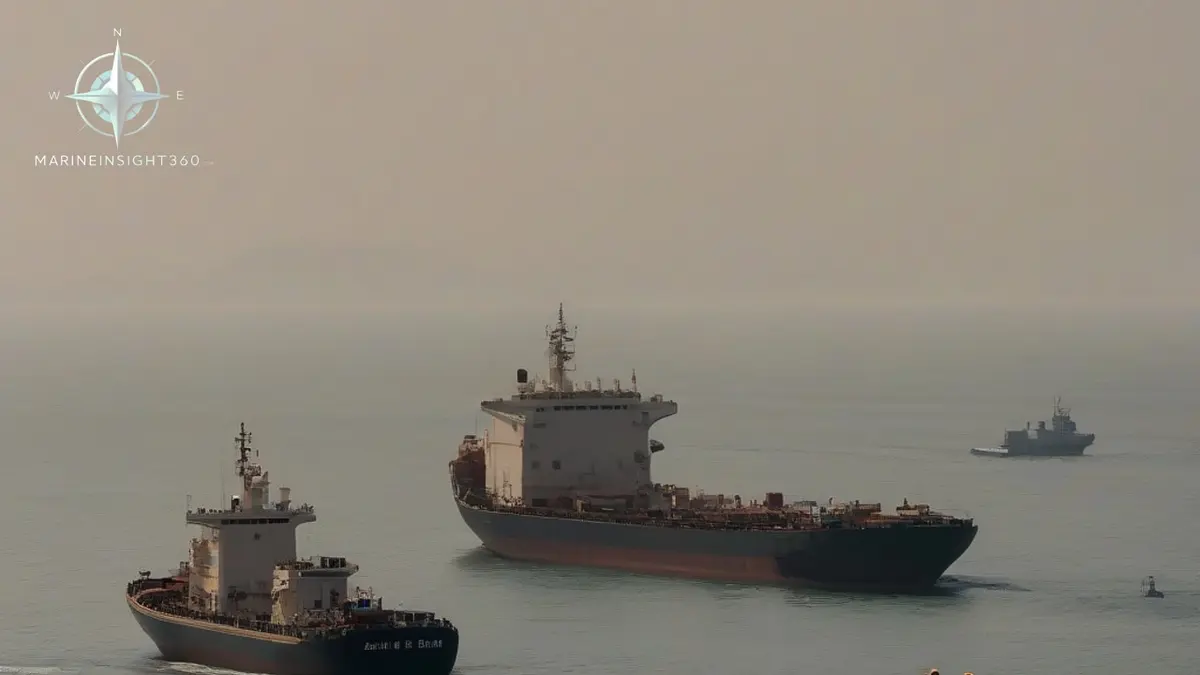
<strong>Verify:</strong> * Date of the recent incident in the Strait of Hormuz. * Number of oil tankers attacked in the June 2019 Gulf of Oman incident. * Impact of the US-Iran conflict on global trade and economies. <strong>Image:</strong> A photo of the Strait of Hormuz.
The image highlights its critical importance as a global shipping lane. <strong>Meta:</strong> * <strong>seoTitle:</strong> "US-Iran Conflict: Navigating the Strait of Hormuz". * <strong>seoDescription:</strong> "The US-Iran conflict and recent incidents in the Strait of Hormuz highlight the importance of staying informed and vigilant in the maritime community." * <strong>imageAlt:</strong> "The Strait of Hormuz, a critical waterway for global shipping".