
Things To Remember In Emergency Anchor Drop
Things To Remember In Emergency Anchor Drop: safety, training and compliance context for US, UK, Canada, Australia, Singapore and European maritime...
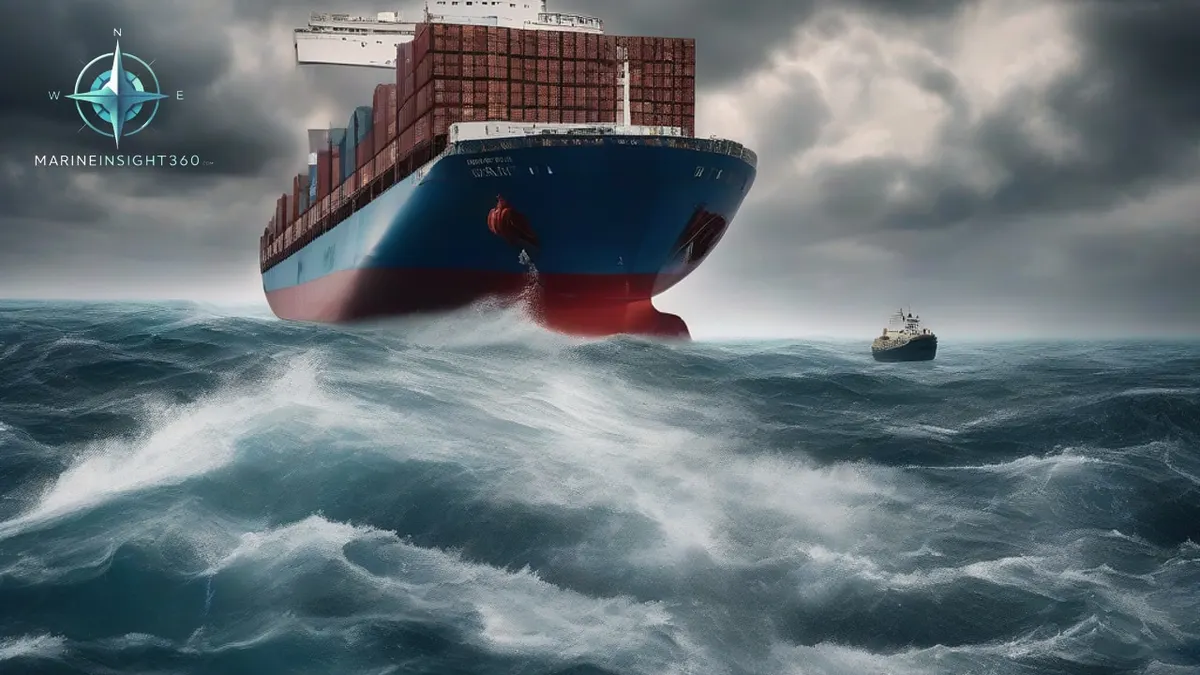
9 Points To Remember When Dropping Anchor In An Emergency
Sea and environmental conditions are one of the important factors that affect the navigation of ships. Emergency dropping anchor may be necessary in the event of a steering system failure, potential collision, shallow water maneuvering, etc.
Dropping anchor is usually done to reduce the speed of the ship as quickly as possible to avoid accidents. When dropping anchor at sea, the time to raise the anchor is limited, which means that the responsible driver must act decisively within the specified time.
Emergency dropping anchor
The following points should be noted when dropping anchor in an emergency:
1. The driver should be at the bow, equipped with a portableVHF radio, a flashlight, and equipment to release the bow fender. During the last anchoring operation, the brakes and bow fender must be checked for proper operation.
2. The side of the ship must be checked for small boats, dinghies, tugboats, barges or similar obstacles, especially under the anchor, to prevent harm to others.
3. The driver must maintain continuous communication with the bridge in order to send and receive instructions from the captain. This includes the location and number of anchors that need to be released, as well as the number of shackles required.
4. After receiving the required information, the driver must open the anchor gate and release the anchor directly from the mooring pipe. In this case, there is no time to re-release the anchor due to the imminent danger.
5. The cables must be constantly checked and the number of shackles passed must be counted according to the instructions from the bridge.
6. If too much cable is released without supervision, the anchor is prone to become taut, causing the cable to break under the momentum of the ship.
7. If too little anchor chain is released, the anchor will not be able to fully contact the seabed, thus defeating the purpose of anchoring.
8. The number of anchors usually set is two to three times the water depth. The purpose of this emergency operation is to enable the anchor to move along the seabed, thereby maximizing resistance to the ship's movement without damaging either the anchor or the ship.
9. The crew performing this operation must always be aware of the availability of other anchors that may be needed.
As with any emergency operation, setting anchors in this situation requires quick action to prevent any imminent danger. The handling of the ship and its anchors varies according to their characteristics, but the above points provide general guidance on the actions required in this situation.
What the anchoring equipment was designed to do
Class rules size the anchors and cable from the vessel's equipment number, a figure calculated from the hull dimensions and the windage of the superstructure and deck cargo. The design case behind that calculation is temporary mooring in a harbour or sheltered water, in good holding ground, with the ship already stopped.
An emergency drop sits outside that case. The gear is being asked to absorb the momentum of a moving ship, which is the one duty it was never sized for. The difference between a routine anchoring and an emergency one is not technique but energy, and that is why the outcome is judged against what was avoided.
Losing an anchor and a shackle of cable is an acceptable price against a grounding or a collision. Using the same action to recover a few minutes on a manoeuvre is not, because the gear may not survive it and the ship then has one anchor for the rest of the voyage.
How the drop fails, and what it leaves behind
The brake decides the outcome. Held against a running cable it heats, and a hot band loses grip, so a drop checked too hard too early can end with the cable running free anyway. Playing water on the brake and the cable during a long run is the standard way of taking that heat out.
If the cable runs to its end, the inboard end is held by a securing arrangement inside the chain locker that can be released from outside the space, so the ship can slip the cable rather than be held by it. Crew stay clear of the bight and out of line with the spurling pipe throughout, because a cable running under its own weight throws sparks, rust scale and sometimes links.
Afterwards the gear is not simply heaved back to the stowed position. Brake linings, gypsy, windlass seating and the cable itself are examined, the event goes into the deck log, and if an anchor has been slipped the position is reported so it can be recovered or promulgated as an obstruction. Damage found at that point is a class matter rather than a maintenance one.
Recommended Reading
What is an Emergency Position Indicating Radio Beacon (EPIRB)?
What is an Emergency Position Indicating Radio Beacon (EPIRB)?: safety, training and compliance context for US, UK, Canada, Australia, Singapore and...
Emergency Generator Operation and Testing Procedures
Emergency Generator Operation and Testing Procedures: regulatory and compliance context for US, UK, Canada, Australia, Singapore and European maritime...
Hydraulic Operation of Emergency Systems
Hydraulic Operation of Emergency Systems: safety, training and compliance context for US, UK, Canada, Australia, Singapore and European maritime readers.