
Angle of Loll: The Tilt That Means a Ship Has Lost Its Stability
What the angle of loll is, how it differs from a list, why a ship with negative stability flops to one side, and the exact order of actions that corrects it.
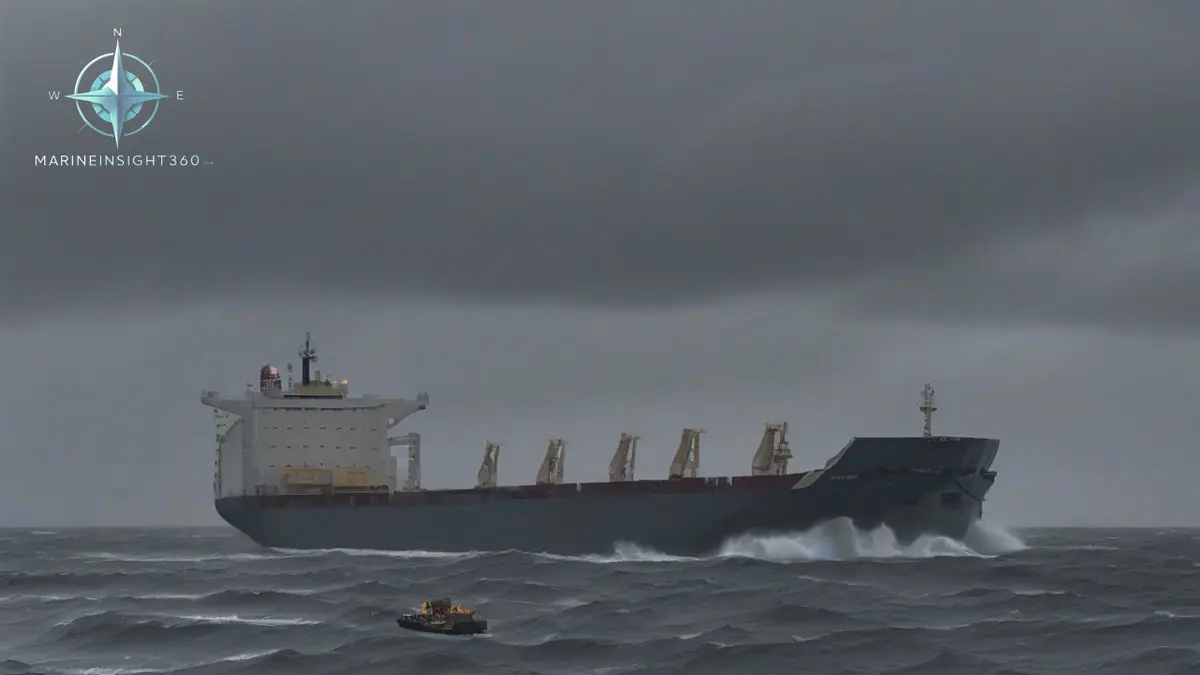
The angle of loll is the tilt a ship settles at when it has become unstable upright: with its initial stability gone, the hull flops a few degrees to one side and rests there. It looks like an ordinary lean. It is not. It is the ship announcing that its center of gravity has climbed too high.
The distinction every officer drills is loll versus list. A list comes from asymmetric weight, more load on one side, and the ship is otherwise stable. Loll comes from negative initial stability, and the weight can be perfectly symmetrical. The two look identical from the quay and demand opposite treatment, which is exactly why examiners love the topic.
The Physics in Plain Language
A stable ship pushed off upright generates a righting lever that pushes her back. When the center of gravity rises above the metacenter, the metacentric height GM goes negative, and the upright position becomes a hilltop instead of a valley: any disturbance tips her off it. As she heels, the underwater shape changes, the waterline widens, and at some angle the geometry claws back enough leverage to stop the roll.
That resting angle is the loll, a new equilibrium a few degrees over, balanced on the edge of much worse.
What Pushes G Too High
- Free surface: part-filled tanks whose liquid sloshes, the classic killer, since slack water effectively raises the center of gravity.
- Burned-off bottom weight: fuel and water consumed from double-bottom tanks late in a voyage removes ballast from exactly the wrong place.
- Ice accretion: tonnes of spray freezing on decks and rigging, high up, a North Atlantic and Bering Sea specialty.
- Wet cargo on deck: timber deck loads soaking up water, or any absorbent cargo gaining weight aloft.
- Bad loading: heavy tiers stowed high in the holds or on deck against the stability booklet's advice.
The Correction, in the Right Order
The procedure is famous because the intuitive move is the fatal one. Trying to shift weight to the high side, or filling ballast on the high side, can lever the vessel past upright so she flops violently to the opposite side, further than before, sometimes past recovery. The drilled sequence is different. First, remove free surface: press up or empty slack tanks one at a time.
Second, lower weight: fill the low-side double-bottom tank first, accepting that the lean briefly worsens while G comes down, then fill the high side to level off. Third, get weight off the top if possible, and slow down in beam seas while doing any of it. The principle beneath every step is the same: fix the cause, the high center of gravity, not the symptom, the lean.
Why It Still Sinks Ships
Casualty reports from the United States and United Kingdom investigators return to the same patterns: fishing vessels icing up, small cargo ships with slack tanks, timber carriers in winter. Stability rules require every ship to sail with positive GM in all planned conditions, and loading computers check it in seconds, but the sea keeps finding crews who trusted a feeling instead of the calculation. The condition is entirely preventable arithmetic, which is what makes each loss so bitter.
How the Bridge Detects It Early
A ship sliding toward instability gives warnings before it flops. The roll goes soft: instead of snapping back upright with a firm rhythm, the vessel hangs at the end of each roll and returns lazily, because the righting levers have gone slack. The rolling period stretches noticeably, a signal experienced masters treat as an alarm bell in itself. She may sit tender in harbor, heeling easily to a crane lift or a crowd of people moving to one rail.
Any of these signs sends an officer to the loading computer to verify GM against the stability booklet, and to the tank sounding log to hunt for slack tanks nobody mentioned.
The discipline that prevents the condition is unglamorous: honest tank records, free surface minimized as a habit, deck cargo weights verified rather than accepted, and the stability condition recalculated whenever the plan changes. Every one of those steps exists because a crew somewhere skipped it.
What to do next
Stability runs through these guides next:
Recommended Reading
Understanding Heavy Lifting and Ship Stability
Understanding Heavy Lifting and Ship Stability: shipboard and port-operations context for US, UK, Canada, Australia, Singapore and European maritime...
10 Myths About The Lost City Of Atlantis
According to the ancient Greek philosopher Plato, Atlantis existed 9,000 years before his time.
Iran retaliates with missiles and drones, defying Trump’s warning
Learn iran with practical maritime context, safety checks, operational guidance and related resources for global shipping readers.