
Ballast Tanks: How Ships Use Seawater to Stay Upright and Efficient
What ballast tanks do: seawater weight that keeps an empty ship stable, trimmed and its propeller submerged, plus the treatment rules that now govern them.
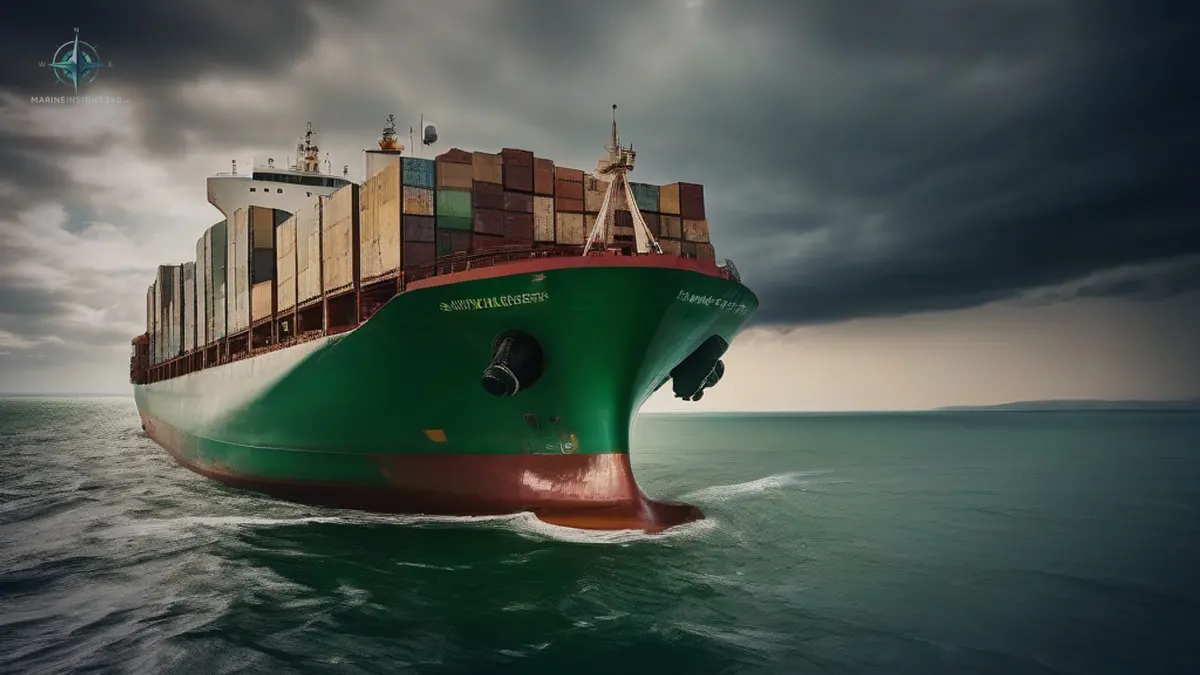
Ballast tanks are compartments built into a ship's hull that fill with seawater to add controllable weight. An empty cargo ship rides too high, rolls too hard and lifts its propeller toward the surface; pumping seawater into ballast tanks brings her back down to a safe, efficient sailing condition.
Cargo is the weight a ship is designed around, and half the time there is none aboard. Ballast is the substitute cargo the ocean provides for free, and managing it well is a daily discipline of the deck and engine departments.
What the Water Weight Actually Does
- Stability: low-placed water lowers the center of gravity, restoring the righting ability an empty hull loses.
- Trim: distributing water fore and aft levels the ship or sets a deliberate stern trim for propeller immersion.
- Propeller and rudder immersion: a half-out-of-water propeller wastes fuel and races in waves; ballast buries it properly.
- Hull stress: spreading weight along the hull keeps bending and shear within the loading computer's limits.
- Draft and air draft: ballast fine-tunes clearances under keels and under bridges.
Where the Tanks Live
Ballast capacity is built into the spaces cargo cannot use. Double-bottom tanks line the hull's floor. Wing and topside tanks flank the holds, the topside sets being a bulk-carrier signature. Fore peak and aft peak tanks sit at the extremities where their trimming leverage is greatest. On modern tankers, segregated ballast tanks are entirely separate from the cargo system, a MARPOL-driven design that ended the era of ballasting into oil tanks.
The machinery is straightforward: dedicated ballast pumps, a piping manifold, and remotely operated valves, all orchestrated from the cargo or engine control room, with tank levels verified by the sounding routines covered in our sounding guide.
The Invasive Species Problem, and the Rules It Made
Ballast water is habitat. A ship loading water in one port and discharging it across an ocean moves larvae, algae and bacteria between ecosystems, and infamous invasions, like zebra mussels spreading through the American Great Lakes, made ballast a regulatory target. The IMO Ballast Water Management Convention now requires ships to meet a discharge standard, in practice by installing treatment systems that filter and then disinfect the water with UV light or electro-chlorination before it leaves the ship.
The United States runs its own parallel Coast Guard type-approval regime, and inspectors on both sides of the Atlantic test compliance records seriously.
Operating Ballast Tanks Safely
- Plan every exchange: ballast operations follow a sequence that keeps stress and stability inside limits at every intermediate stage, not just at the end.
- Watch free surface: a part-full tank's sloshing water raises the effective center of gravity; slack tanks are kept to a minimum.
- Respect the enclosed space: an empty tank is an oxygen-deficient compartment, and entry follows the permit system without exceptions.
- Maintain the coatings: seawater eats unprotected steel, so tank coatings and anodes are survey items with real consequences.
How Much Water, and How Fast
The quantities surprise people. A Capesize bulk carrier sails its empty leg with tens of thousands of tonnes of seawater aboard, often a third or more of what the ship carries as cargo. A large tanker's segregated system holds a comparable share. The ballast legs of world trade move billions of tonnes of seawater around the planet every year, a shadow cargo nobody pays freight on.
The machinery is sized to match. Main pumps on a big ship each move on the order of a few thousand cubic meters per hour, and a full deballasting still occupies most of a working day, which is why the operation is planned against the cargo sequence hour by hour. Gravity helps where it can: compartments below the waterline flood by opening valves, and pumps do the lifting on the way out.
The treatment plant adds its own constraint, since flow has to pass the filters and disinfection stage at the rate the system is certified for, not the rate the schedule would prefer. Officers log every movement, and port state inspectors in the United States check the record book against soundings; a mismatch between the two is treated as a compliance failure rather than a bookkeeping slip.
What to do next
Ballast connects to stability and daily measurement, covered in these guides:
Recommended Reading
Sounding on Ships: How Crews Measure Tanks and the Sea Floor
Sounding means measuring depth: of liquid in a ship's tanks with a tape, or of water under the keel with an echo sounder. How both work and why they matter.
Shipboard Fuel, Diesel, & Lubricant Oil Storage Tanks
Shipboard Fuel, Diesel, & Lubricant Oil Storage Tanks: ports, trade and shipping-market context for US, UK, Canada, Australia, Singapore and...

What Is Ballast Vs De Ballast?
What Is Ballast Vs De Ballast?: career, certification and hiring context for US, UK, Canada, Australia, Singapore and European maritime readers.