
Black Water Flowing Into the Ocean After a Hurricane: What It Means for Ships
What black water flowing into the ocean after a hurricane like Sally really carries, the MARPOL Annex IV sewage limits, and how crews protect ships and health.
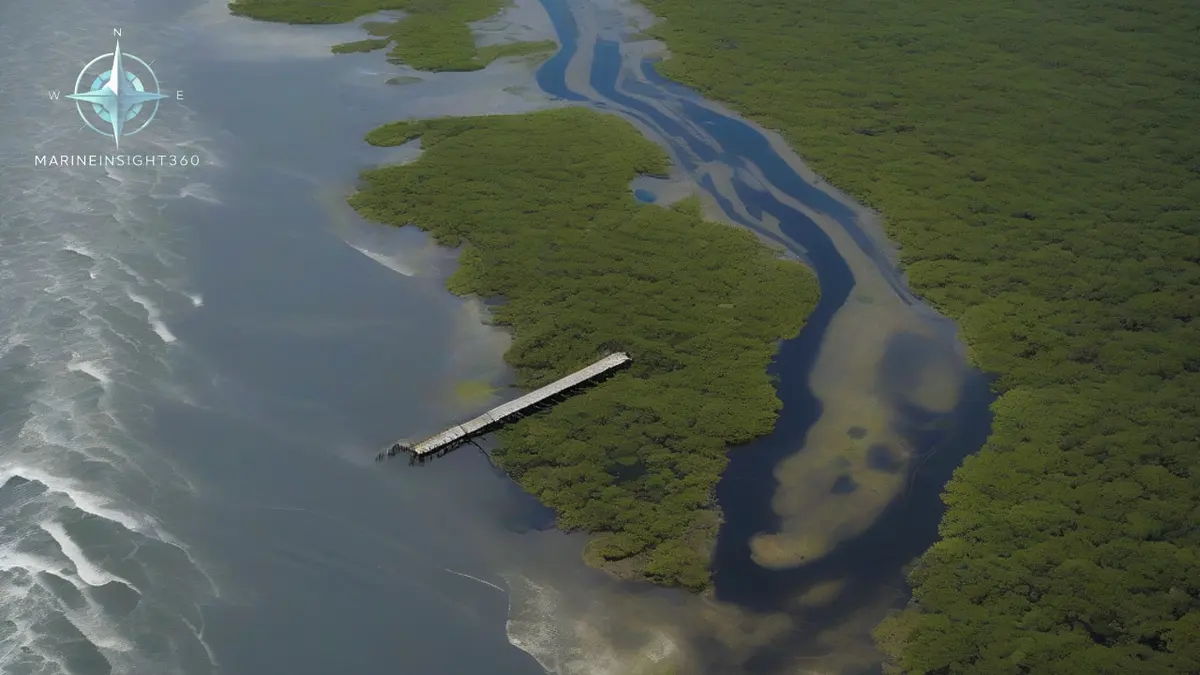
When a hurricane like Sally pushes a wall of floodwater back into the Gulf, the black water reaching the ocean is not simply muddy runoff. It carries stormwater off streets and parking lots, sewage from overwhelmed treatment plants, fuel, agricultural chemicals and heavy debris. Hurricane Sally came ashore near Gulf Shores, Alabama, at 4:45 a.m. local time on 16 September 2020 as a Category 2 storm with maximum sustained winds around 105 mph (169 km/h).
The rainfall behind it sent millions of gallons of contaminated runoff into coastal waterways, and it changed how ships worked those ports for days: USCG captain of the port restrictions, fouled sea chests and suspended fresh water bunkering.
Two different things are called black water
The term means one thing ashore and another afloat, and after a storm both apply at once.
- Ashore, black water is the dark, tannin and sediment stained floodwater draining out of swamps, rivers and flooded streets. Place names such as Blackwater Bay and Blackwater River on the Florida panhandle come from that natural staining, and storm surge of 7 to 9 ft (2.1 to 2.7 m) was recorded in those upper bays during Sally.
- Afloat, black water is the regulatory term for sewage: drainage from toilets, urinals, medical spaces and spaces holding live animals, as defined under MARPOL Annex IV.
After a major storm the two merge, because flooded pump stations and treatment works discharge untreated sewage into the same waterways carrying the flood.
Why a discolored plume is an operational problem, not only an environmental one
Turbid, debris-laden water creates concrete problems for ships alongside, at anchor and on the approaches:
- Sea chests and strainers block. Vegetation, plastic and silt drawn through a low sea chest can starve cooling water and force a slowdown at exactly the wrong moment.
- Ballast water treatment systems foul. Filter-based units clog quickly in high-sediment water and ultraviolet units lose effectiveness as turbidity rises. Many operators simply avoid ballasting inside a post-storm plume.
- Charted depths stop being reliable. Storms move large volumes of sediment. Approach channels shoal, and hydrographic resurvey usually lags the reopening of the port.
- Floating debris damages propellers and rudders. Timber, pontoons, containers and whole small craft end up in the fairway and are almost invisible in dark water.
- Crew health. Contact with sewage-contaminated water carries real infection risk. Deck work in a flooded port needs gloves, boots, eye protection and a strict hand hygiene routine.
The sewage rules still apply when shore reception is down
A flooded port often loses its sewage reception facilities for days or weeks. MARPOL Annex IV does not relax because of that, so crews need the numbers to hand:
- Untreated sewage may be discharged only at least 12 nautical miles from the nearest land, at an approved rate, while the ship is proceeding en route at not less than 4 knots.
- Comminuted and disinfected sewage may be discharged at least 3 nautical miles from the nearest land, subject to the same conditions.
- Sewage treated in an approved sewage treatment plant may be discharged closer, provided the plant meets the required effluent standard.
- Ships of 400 gross tonnage and above, or certified to carry 15 or more persons, must carry an approved treatment plant, a comminuting and disinfecting system, or a holding tank sized for the trade.
- The Baltic Sea is a designated special area with tighter limits on passenger ship sewage, so the international default is not the last word.
During a port closure the answer is holding tank discipline: cut consumption, log tank levels daily, and plan the first offshore leg around a compliant discharge rather than gambling on reception facilities coming back.
The grey water gap
Grey water from showers, wash basins, laundries and galleys is not regulated by MARPOL Annex IV. In practice a ship can discharge it untreated close inshore while its black water is tightly controlled, even though galley and laundry waste carries a real nutrient and bacterial load. Class societies and industry groups have argued for years that the exemption should close, and several US states and cruise regions already apply stricter local rules.
Check the local requirement before assuming the international default is what governs you.
What to do when a port you use floods
- Treat the port as closed until the authority publishes a survey result and a formal reopening notice, not merely a statement that the channel looks clear.
- Ask the agent specifically about sewage and garbage reception, fresh water quality and bunker availability. Those three recover on completely different timelines.
- Move ballasting and tank cleaning offshore, where the water is cleaner and the treatment system has an easier job.
- Inspect and clean sea chest strainers far more often than the planned maintenance schedule calls for, and log each inspection.
- Photograph and record everything. Post-storm claims about hull, propeller and machinery damage are won or lost on contemporaneous logs.
Storm-driven pollution events draw increasing attention from coastal regulators, and a ship that can demonstrate it managed its own discharges properly through a port closure is in a far stronger position when the enforcement questions begin.
Sources and further reading
- Hurricane Sally Pummeled the Florida Panhandle and Alabama Gulf Coasts - The Weather Channel
- MARPOL Annex IV Regulation 11 - Discharge of sewage
- Sewage discharge at sea - NorthStandard
- Blackwater vs Greywater Compliance - Martek Marine
What to read next
Recommended Reading
Container Tracking: How Shippers Actually Follow a Box Across the Ocean
How container tracking works, from free carrier lookups to visibility platforms: what each tool layer does, what it costs, and how to pick for your volume.
The Arabian Sea Heat Crisis: What a Marine Heatwave Means for Ships and Coasts
A maritime minister has urged urgent action on the Arabian Sea heat crisis. What a marine heatwave is, why cyclone risk rises, and what it changes on board.
What Are Fishing Nets Made Of? Materials, Trade-offs and Ocean Impact
What fishing nets are made of today: nylon, polyethylene and polypropylene, why synthetics replaced natural fibers, and the ghost gear problem.