
Do You Know About Hopper Barges?
Do You Know About Hopper Barges?: ports, trade and shipping-market context for US, UK, Canada, Australia, Singapore and European maritime readers.
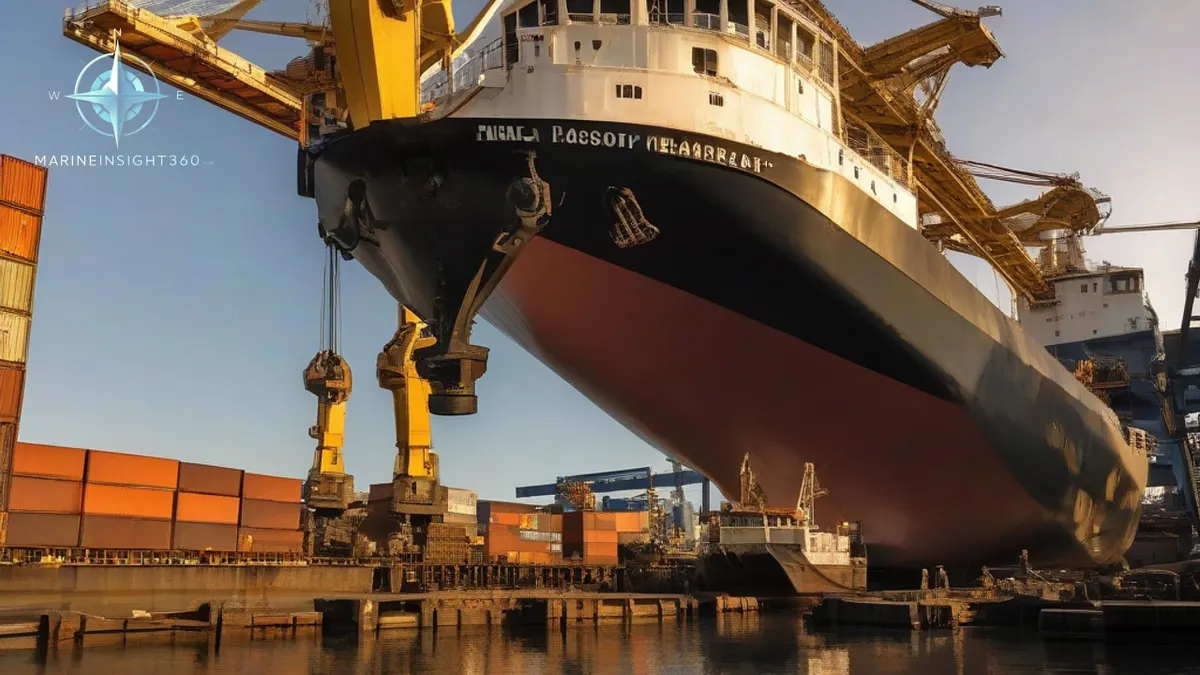
What are Hopper Barges?
Barges are essential tools in maritime trade, particularly for domestic supplies. They often provide additional support for larger merchant ships engaged in transcontinental cargo transport. While most barges are designed for shallow waters, such as inland routes, rivers, and coastal areas, many also operate in deeper waters.
Barges are essential tools in maritime trade, particularly for domestic supplies. They often provide additional support for larger merchant ships engaged in transcontinental cargo transport. While most barges are designed for shallow waters, such as inland routes, rivers, and coastal areas, many also operate in deeper waters.
Barge types vary, depending on their service, configuration, size, and propulsion. Hopper barges are primarily used to support dredging operations or transport cargo such as coal, steel, cement, mud, gravel, stone chips, iron ore, silt sediments, and waste recovered from the seabed or rivers.
Design and Construction of Hopper Barges
Hopper barges are typically simple in design and construction, with a perfectly curved shape, typically with straight, sharp edges and little to no curvature.
The most distinctive feature of these barges is a large central cargo area that serves as a hopper for loading large quantities of cargo. This area is called the bottom barge. The size of the bottom barge determines the load capacity of the bottom barge.
Bunk barges utilize a double-hull design, meaning there's a certain distance between the cargo hold boundary and the outer hull, while the interior area between these two hulls is either void space or ballast tanks. This is consistent with the design philosophy of all modern large conventional bulk carriers, such as bulk carriers or oil tankers.
The distribution of ballast tanks also meets the stability standards of unkempt barges. These vessels must withstand hydrostatic and dynamic pressures, as well as other external influences, during transit and remain upright during loading and unloading operations.
- Types of Barges Used in Shipping
- How Many Types of Barges Are There?
- What Are Prison Barges? How Do They Work?
- Top Dry Docks in the World
- Things To Remember In Emergency Anchor Drop
Draft is a critical issue for unkempt barges operating in shallow waters. When fully loaded, the risk of grounding increases when the barge holds are loaded with heavy cargoes with a low center of gravity, ranging from dredged sediment to sludge to heavy cargoes such as stone or mud.
Thus, despite their simple structure, their basic design parameters require careful optimization to maintain a safe draft. Furthermore, all unkempt barges share a flat bottom design.
Bunkempt barges, like most other barges, require a robust and durable structure, as they are required to carry significant weight and withstand external loads. The reinforcement and construction materials used for bottom barges depend on their size and load.
However, most barges are constructed of mild steel or a corresponding grade of high-quality cast iron, with longitudinal and transverse reinforcement. The material density and distribution of the reinforcement members are carefully evaluated during the design phase to ensure that the overall structural weight of the vessel is not significantly increased.
Classification of Hopper Barges
Based on size, capacity, and design, barges can be categorized as follows:
- Single-bottom barges or single-bottom barges are used for unloading.
- Multi-bottom barges or warehouses are used for separating and storing cargo.
Based on the propulsion method, hopper barges can be categorized as follows:
- Self-propelled
- Silent
Hopper barges are typically towed or supported by other means, such as tugboats. Self-propelled barges are powered by diesel engines and electric motors, but do not require high speed. Hopper barges are rated for propulsion power sufficient to propel them to the vessel's maximum design deadweight.
While hopper barges are simple box-shaped structures, as described above, they can sometimes be equipped with buckets.
- Scoopless barges are completely silent, box-like structures with no unique design features.
- Single-scoop barges have a single bucket, located either at the bow or stern.
- Double-scoop barges are equipped with a bucket at both the bow and stern.
Bottom barges are further categorized as:
- Open
- Enclosed
Open-bottom barges are uncovered barges; cargo is simply unloaded into the bottom hopper or stored similarly to bulk cargo being loaded into railroad cars or trucks. In open barges, cargo volume typically exceeds the upper deck level (and the opening limit) and is accumulated in piles.
Enclosed barges are barges with a covered opening, such as bulk carriers. These barges are typically used to transport cargo that is susceptible to environmental damage, such as heat and cold, snow or rain, and loss during storms or hurricanes.
How is cargo loaded and unloaded on a hopper barge?
Loading and unloading cargo is crucial for bottom barges. These operations can be performed on the barge using various methods, such as conveyors, dredgers, and cranes, and sometimes using deck equipment such as cranes and derricks.
However, some bottom-unloading barges utilize a unique system for unloading. The hull opens from the bottom, releasing the cargo directly into the sea.
Two symmetrical sections of the hull open longitudinally like a handbag, hinged on the upper deck. This hinge system can be operated electrically, mechanically, or hydraulically. After unloading, the hull closes.
This type of vessel is known as a split-hull barge. They are suitable for loading and unloading cargoes such as silt, mud, and uncontaminated sediment.
Recommended Reading
Cargo Barges: Every Major Type and What Each One Carries
The main types of cargo barges, hopper, deck, tank, crane and more, what each carries, and how tug-and-tow economics move bulk freight on inland waterways.
What Are Prison Barges? How Do They Work?
A prison barge is a specialized vessel used as a correctional facility. These floating structures provide alternative or supplemental detention space,…

Iran retaliates with missiles and drones, defying Trump’s warning
Learn iran with practical maritime context, safety checks, operational guidance and related resources for global shipping readers.