
Exhaust Manifold on Marine Engines: What It Does and How It Fails
What the exhaust manifold does on a marine engine, wet versus dry designs, why raw-water cooling corrodes them, and the failures crews learn to catch early.
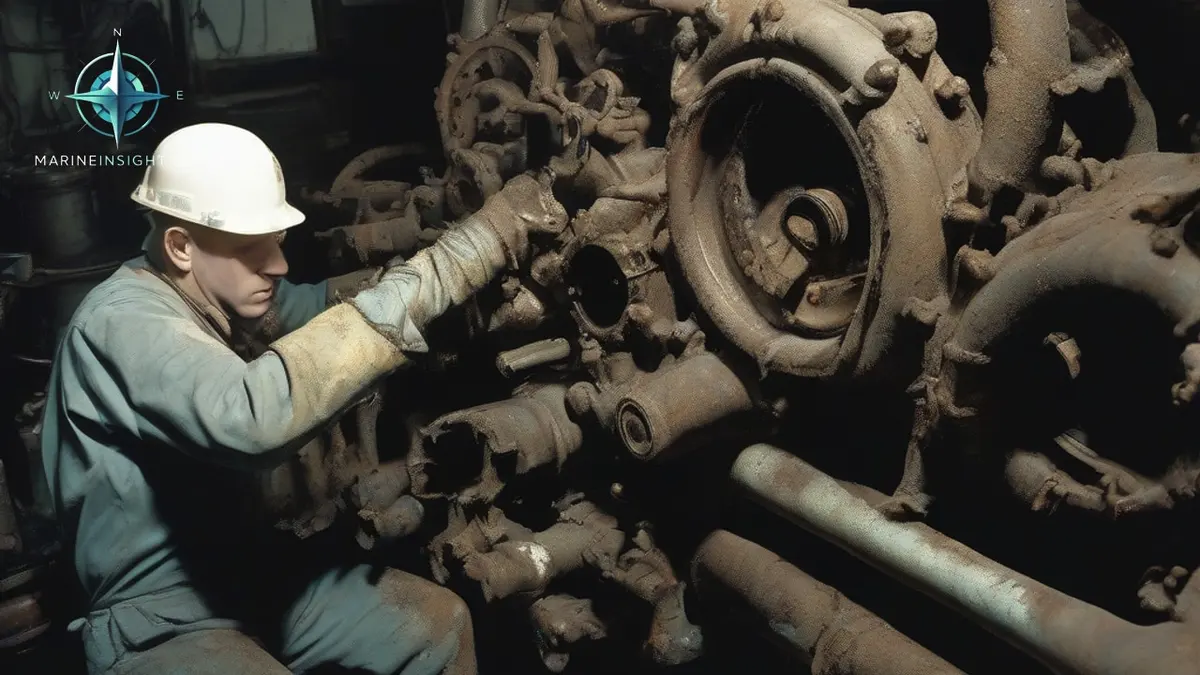
The exhaust manifold is the branched steel or iron casting that collects burnt gas from every cylinder of an engine and merges it into one stream. On a marine engine that stream feeds the turbocharger and then the exhaust line, and the manifold takes the full force of combustion heat while doing it.
Marine service adds a twist the automotive world never faces: many boat engines cool the manifold with the same seawater the vessel floats in. That choice keeps engine rooms and engine boxes survivable, and it also creates the corrosion problem that retires most marine manifolds.
What the Exhaust Manifold Actually Does
- Collects and merges: each cylinder exhausts in its own pulse; the manifold routes those pulses into a common duct without letting one cylinder blow back into another.
- Feeds the turbocharger: on turbocharged engines the manifold delivers the gas energy that spins the turbine, so its shape directly affects boost and fuel economy.
- Contains heat: exhaust gas leaves the cylinders at several hundred degrees Celsius, and the manifold must hold that without warping, cracking or igniting anything nearby.
Wet Manifolds: Cooled by the Sea
Small and mid-size marine engines, the kind in workboats, fishing vessels and yachts, usually run water-jacketed manifolds. Raw cooling water flows through passages cast around the exhaust, holds the surface temperature down, and then mixes into the exhaust stream at a mixing elbow to leave the boat with the gas.
The price is corrosion from the inside out. Salt water eats the jacket passages, scale chokes them, and the mixing elbow rusts at the exact point where hot gas meets wet salt. A failed jacket can also let water run backward into an open exhaust valve when the engine stops, and a cylinder full of seawater hydrolocks the engine at the next start.
Surveys treat wet manifolds and elbows as consumables: on salt water, crews plan replacement in years, not decades.
Dry Manifolds: Insulated and Watched
Large commercial engines take the opposite path. Their manifolds run dry and hot, wrapped in insulation lagging so the surface stays below the temperature that could ignite a fuel spray, the same hot-surface rule that governs the rest of the engine room. Big two-stroke and four-stroke installations arrange the manifold as a pulse system, which preserves the pressure waves for the turbocharger, or as a constant-pressure system, which smooths them into one steady feed.
Dry systems trade corrosion for thermal fatigue. Thousands of heating and cooling cycles work the metal at every joint, and the failure signs are cracked bellows, blown gaskets and soot streaks at flanges.
The Failures Crews Learn to Catch Early
- Soot trails at joints: a leaking manifold gasket announces itself in black dust before it becomes a hot-gas torch.
- Falling turbo boost: cracks and leaks bleed off the gas energy the turbocharger needs, so performance sags before anything is visible.
- Rising exhaust temperatures: blocked water jackets on wet systems show up as overheating at the elbow and steam in the exhaust.
- Water in the cylinders: the worst case on wet systems; white smoke, hard starting or a hydrolock after shutdown all point at a failed jacket or elbow.
- Damaged lagging: on dry systems, missing insulation is a fire risk, and inspectors treat it that way.
Maintenance That Actually Extends Manifold Life
On wet systems the calendar does the work: inspect elbows and jackets on schedule, replace anodes where fitted, flush the raw-water side, and change the elbow before it fails rather than after. On dry systems the routine is torque checks on flanges, renewal of gaskets and expansion bellows, and keeping the lagging complete and dry, since oil-soaked insulation is itself a fire hazard. Either way, exhaust temperature readings per cylinder are the cheapest early-warning system the engine room has.
Material choice explains much of the price spread when replacement time comes. Cast iron remains the budget standard and tolerates heat well, but salt eats it fastest. Aluminum castings save weight on performance boats and corrode differently, often at the joint faces. Stainless and specialty alloys cost several times more and last accordingly, which is why serious operators price a manifold by years of service rather than dollars at the counter.
Whatever the metal, mismatched gaskets and dissimilar-metal contact accelerate the electrochemical corrosion that no alloy fully escapes at sea.
What to do next
The manifold is one link in the engine's air and heat path, and these guides continue it:
Recommended Reading
Guide to Dual Fuel Marine Engines and Their Benefits
Guide to Dual Fuel Marine Engines and Their Benefits: ports, trade and shipping-market context for US, UK, Canada, Australia, Singapore and European...
How Do Ship's Engines Work?
How Do Ship's Engines Work?: ports, trade and shipping-market context for US, UK, Canada, Australia, Singapore and European maritime readers.
Iran retaliates with missiles and drones, defying Trump’s warning
Learn iran with practical maritime context, safety checks, operational guidance and related resources for global shipping readers.