
Facilities for Muslim Seafarers During Ramadan on Board Ship
Practical ship management for Ramadan: suhoor and iftar timing, watch rosters, rest hours, heat exposure, prayer space and medical screening for fasting crew.
What Ramadan changes on a working ship
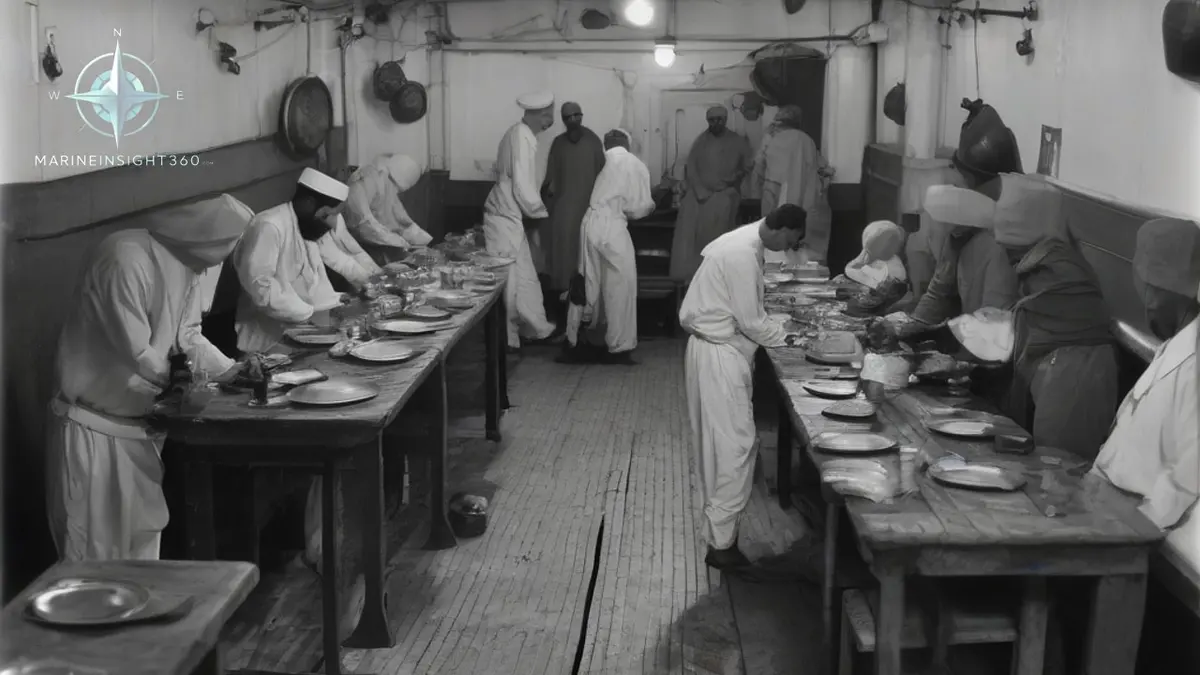
Muslim seafarers observing Ramadan take a pre-dawn meal, called suhoor, then take no food or water until the sunset meal, iftar. On a ship that runs around the clock, this collides with the watch bill, the galley routine and the working temperature in the engine room. Facilities for Muslim seafarers during Ramadan are mostly a planning problem rather than a hardware problem: meal timing, rest hours, a clean quiet space and honest medical screening cover most of it.
Ramadan follows the lunar calendar and moves about eleven days earlier each Gregorian year, so the operational impact shifts. Fasting hours vary with latitude and season. A ship in northern Europe in summer can face a fast of more than eighteen hours, while the same crew near the equator would fast for roughly thirteen.
Rebuilding the galley day around suhoor and iftar
The catering department carries most of the load. The Maritime Labour Convention, 2006 already requires food and drinking water of suitable quality, quantity and variety, with regard to the religious requirements and cultural practices of the crew on board. Ramadan makes that obligation concrete.
- Serve or plate suhoor before dawn, which usually means the cook prepares it the previous evening.
- Keep hot food available at sunset for anyone who cannot leave a watch or a job at the exact iftar time.
- Order dates, yoghurt drinks, soups and oral rehydration salts at the pre-voyage store order rather than improvising from the dry store.
- Label and separate halal provisions properly, and confirm the ship chandler at the loading port can supply them.
- Keep a plated meal in the messroom fridge for anyone whose duty runs past the serving window.
Crews that plan this at the store order stage rarely have a problem. Crews that discover it in the first week of Ramadan usually do.
Do not force the whole crew onto one schedule
A mixed-faith crew is the norm. Non-fasting seafarers still need three meals, and fasting crew should not have to sit through a full messroom at noon. Two service windows and a stocked fridge solve this quietly.
Rest hours, fatigue and the watch bill
Fasting compresses sleep. Suhoor sits in the middle of the night, iftar sits in the evening, and the natural response is to shift sleep into daylight. That is workable, provided the master keeps the STCW rest-hour limits intact: at least ten hours of rest in any 24 hour period and 77 hours in any seven days, with the daily rest in no more than two periods, one of at least six hours.
Adjustments that hold the safety case together:
- Move heavy physical work, tank cleaning and hot work into cooler hours where the operation allows.
- Avoid rostering a fasting seafarer for the 1200 to 1600 watch in the tropics if another slot exists.
- Keep rest-hour records honest. A shifted sleep pattern that still meets the limits is fine; a concealed breach is not.
- Add supervision on critical tasks in the last two hours before sunset, when concentration is lowest.
Heat, dehydration and machinery space work
Dehydration, not hunger, is the main hazard. Engine room and pump room temperatures make a daylight fast physiologically demanding, and early heat strain looks like ordinary tiredness. Chief engineers should treat a fasting rating in a hot space the way they treat any lone task in a risk area: fixed check-in intervals, and short work periods.
The company doctor or the medical examiner should see anyone with diabetes, kidney conditions or a history of heat illness before the voyage. Fasting is not obligatory for a seafarer whose health or duties make it unsafe, and Islamic practice provides for making up missed days later. Nobody on board should feel that saying so is a failure.
A clean quiet place to pray
Prayer needs a clean surface, a rough sense of direction and a few uninterrupted minutes. Most ships can nominate a corner of a recreation room, a spare cabin or a section of the ship office, with a mat stowed there and the space noted on the accommodation plan. Some operators fit a simple qibla indicator. None of this costs anything, and it removes the awkwardness of a seafarer praying in a passageway.
Shore leave and port welfare centres
MLC Regulation 2.4 sets the principle that seafarers are granted shore leave for their health and well-being, subject to operational needs, and that requests to reach welfare facilities should not be unreasonably refused. Many port seafarer centres run by ISWAN members, Stella Maris and the Mission to Seafarers arrange transport, prayer space and iftar meals during Ramadan. One call to the local centre before arrival usually establishes what is on offer.
Getting it into the plan
Put the Ramadan dates on the voyage plan alongside the port rotation. Raise it at the safety meeting beforehand, agree the meal windows and roster changes in writing, and record the arrangements in the minutes. That written record is what protects the crew and the master if fatigue or a delayed operation is later questioned. The Merchant Navy Careers section covers rest-hour compliance and crew welfare obligations in more depth.
Sources and further reading
- Supporting Fasting Crew During the Ramadan Season - NorthStandard
- Welfare aspects of the Maritime Labour Convention, 2006 - ICS
- MLC, 2006 and access to shore-based welfare facilities - ILO FAQ
- MLC 2006: creating a framework for shore-based welfare - ISWAN
What to read next
Recommended Reading

Why Gulf of Guinea Pirates Switched From Kidnapping Seafarers to Stealing Oil
The UN reports that Nigerian criminal networks moved from kidnapping seafarers to oil theft. What drove the shift and what ships trading the region should do.
How Oil Is Separated From Water on Board a Ship
How oil is separated from water on ships: gravity separation, coalescing filters, the 15 ppm monitor and the MARPOL Annex I rules every engineer must follow.
Boat Approaches Tanker Near Yemen: What Happens On Board Next
A boat approaches a tanker near Yemen, then retreats when the armed team appears. Inside the UKMTO reporting chain, warning signs and onboard drills.