
Hanwha Ocean Wins Qatari LNG Carrier Orders: Inside the QatarEnergy Fleet Build
Hanwha Ocean has booked more 174,000 cbm LNG carriers for the QatarEnergy programme. What the contracts, prices and delivery slots mean for the LNG trade.
What Hanwha Ocean has actually won
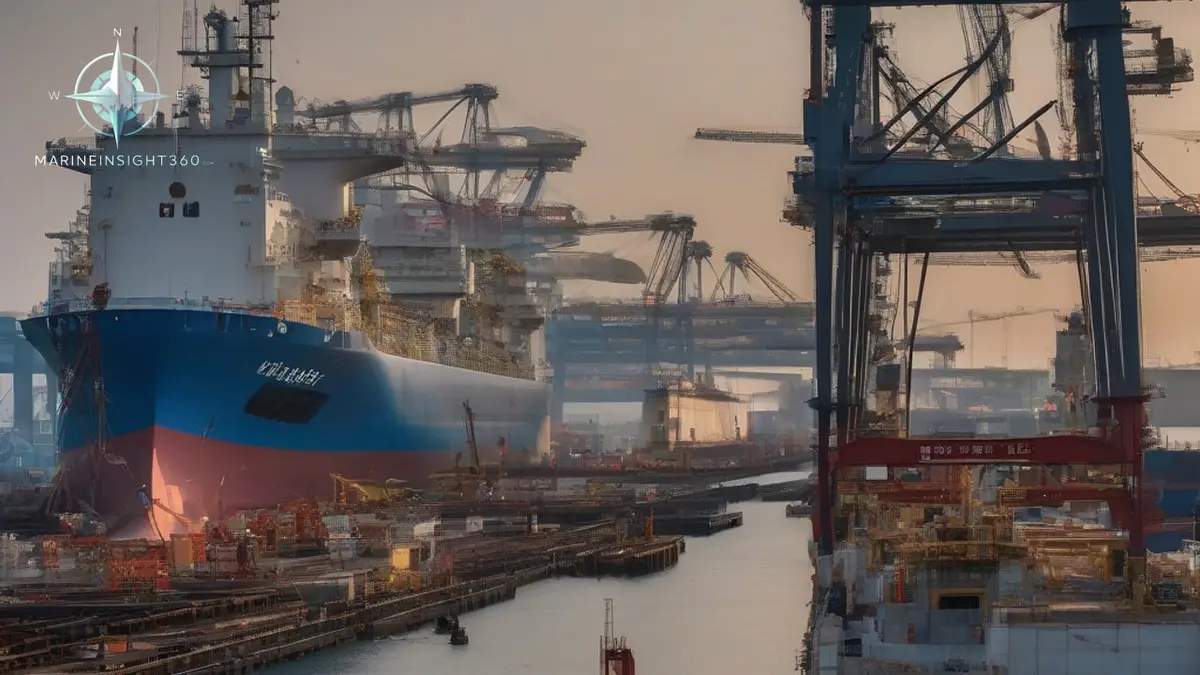
Hanwha Ocean wins Qatari LNG carrier orders in tranches rather than in one headline contract. The pattern tells you more than any single number. Its latest quartet of 174,000 cubic metre carriers is worth about $920 million, roughly $230 million a ship. Delivery is scheduled for August 2027. The vessels will be owned by a joint venture of Japan's K Line and South Korea's Hyundai Glovis. They are time chartered into the QatarEnergy programme.
That follows a larger book of eight carriers of the same size, worth about $1.84 billion, ordered by Qatari owner Nakilat and due for delivery by January 2028. Steel cutting for those ships began at the Geoje yard in March 2025 under 15 year charters. Behind them the second owner tender covered 25 vessels in total, and the Hanwha Ocean share of that Qatari LNG carrier order book is eight ships against 17 at Hyundai Heavy Industries.
Why 174,000 cubic metres became the standard unit
Almost every new conventional LNG carrier is built at around 174,000 cbm. That size fits the terminal envelope, the berth restrictions and the Panama Canal neopanamax locks that shape the Atlantic to Pacific trade. Cargo is held in membrane containment. A thin metal barrier sits on insulation panels bonded into the inner hull, licensed from the French designer GTT and built to one of two families of design.
Propulsion has settled on dual fuel two stroke engines burning cargo boil-off gas or fuel oil. The QatarEnergy ships are specified as X-DF vessels, meaning the low pressure gas admission type. The competing high pressure design achieves similar fuel economy by a different route. The argument between them turns on methane slip, gas compression power and maintenance load rather than headline efficiency. Modern membrane designs have pushed daily boil-off well below 0.1 per cent of cargo volume.
That matters directly to voyage economics on long Qatar to Europe or Qatar to Asia runs.
The price signal inside a $230 million ship
The per-vessel price on this order sits below the open market level. A comparable 174,000 cbm carrier commands roughly $265 to $270 million from a South Korean yard today. Qatar secured that discount by ordering at scale and early. It reserved slots before the current wave of US export projects pushed demand up.
For anyone reading the market, that gap is the story. Cheap slots booked years ahead are why Qatari cargoes will land in Europe and Asia with a structurally lower shipping cost than projects fixing tonnage today. Owners outside the programme are competing for the same berths at yards that are effectively full.
The scale of the QatarEnergy programme
The latest order lifted confirmed second phase vessels to 44 and the whole programme to more than 100 ships. Very little of that capacity is speculative. It is tied to the North Field expansion and to long term charters, which is why the newbuilding orders keep landing in blocks with owners attached.
South Korean yards hold the large majority of the global LNG carrier orderbook. Concentrating so much tonnage in three builders creates a delivery risk that charterers watch closely. A labour shortage or a design change at one yard moves dozens of delivery dates at once.
What it means for officers and crewing
Every hull in this programme needs a full complement of gas qualified officers and ratings. LNG carriers demand STCW basic and advanced training for ships subject to the IGF and IGC Codes. Vessel specific cargo handling experience sits on top of that and cannot be shortcut. Cargo engineers and gas engineers with membrane experience are already the tightest part of the market.
- Advanced gas tanker training plus documented sea service is the entry ticket, not a preference.
- Deck officers need custody transfer, cooldown and gas trial competence, not only watchkeeping.
- Operators bridging the gap use cadet berths and structured mentoring on delivery voyages, which is where an ambitious junior officer should be looking.
Why this matters for the wider trade
A block of firm, cheaply priced tonnage delivering in 2027 and 2028 caps the upside for spot LNG shipping rates in those years. It also reshapes which projects can compete. For ship operators and charterers outside the Qatari programme, the practical consequence is planning. Yard slots, gas qualified crew and long lead equipment all need to be secured far earlier than a conventional tanker or bulker project would require.
Nothing in a programme this size moves without the class societies. Korean Register, DNV, Lloyd's Register and ABS approve the plans and survey the hull and containment during build. They issue the certificates the flag administration relies on. The containment and gas systems are built to the IMO gas carrier code, and the yard works to the membrane designer's licensed procedures under class supervision.
Membrane tonnage has characteristic faults. A leak in the primary barrier shows as hydrocarbon in the insulation space nitrogen, which is why that reading is checked every watch. Filling levels are restricted in the intermediate range because sloshing loads can crack membrane panels and pump tower structure. Cold spots on the inner hull mean the insulation has failed, and the repair means gas freeing and a yard period.
Sources and further reading
- LNG Prime: Hanwha Ocean to build LNG carrier quartet for $920 million
- Nakilat: Steel cutting of 8 new LNG carriers at Hanwha Ocean shipyard
- Seatrade Maritime: QatarEnergy signs 25 LNG carrier charters with Nakilat
- Offshore Energy: Four LNG carriers for QatarEnergy's expanding fleet named in South Korea
What to read next
Recommended Reading
Container Tracking: How Shippers Actually Follow a Box Across the Ocean
How container tracking works, from free carrier lookups to visibility platforms: what each tool layer does, what it costs, and how to pick for your volume.
LNG Carrier Shipping: How the Gas Fleet Actually Works
How LNG carrier shipping works: membrane and Moss containment, boil-off gas as fuel, ship sizes, IGC Code rules and the training crews need.
What Is an Ocean Ridge? Inside the Longest Mountain Range on Earth
What an ocean ridge is, how mid-ocean ridges form, the scale of the 65,000 km system, and why the longest mountain range on Earth matters.