
Things To Consider When Installing Marine Engine Bedplates
Things To Consider When Installing Marine Engine Bedplates: technology, equipment and fleet context for US, UK, Canada, Australia, Singapore and...
Key Aspects to Consider When Installing Marine Engine Bedplates
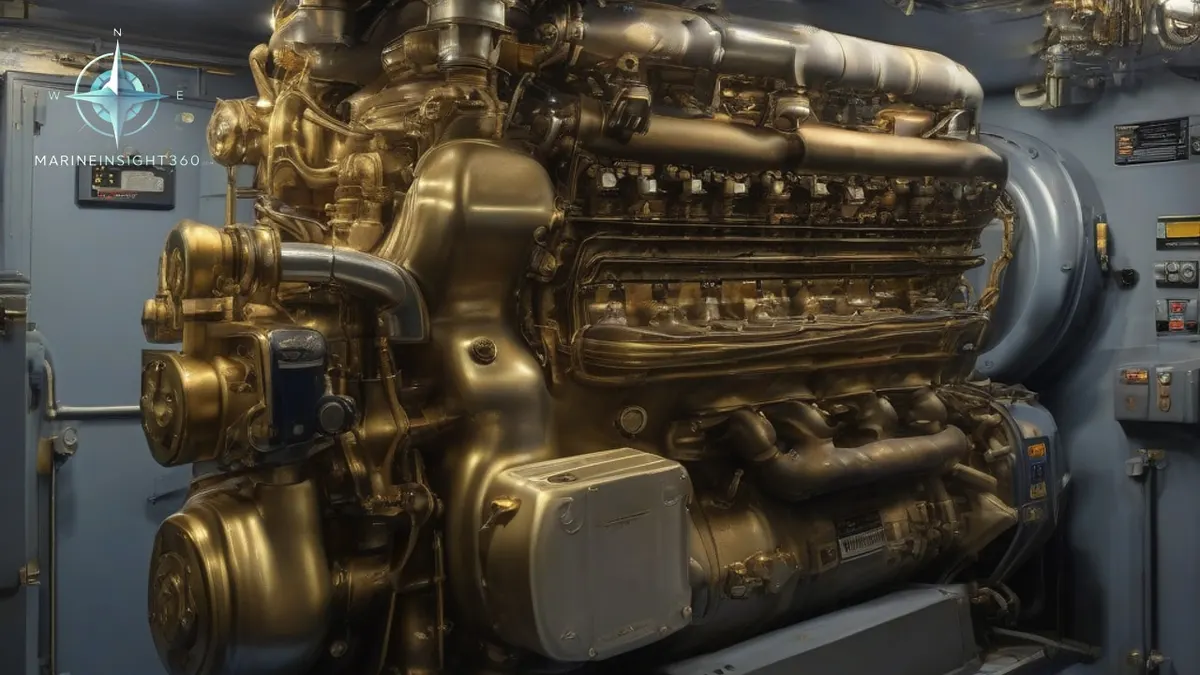
Engine bedplates are the lower components of marine engines (two-stroke and four-stroke), supporting the engine compartment and are among the most stress-sensitive structural components. Engine mounts for large engines typically have a flat-bottomed structure and a high-quality surface finish. These mounts are assembled during installation, while mounts for smaller engines are entirely manufactured using casting processes.
Large engine mounts can be made of cast steel, precast steel, or a combination of both. A key requirement for large engine bedplates is the use of low-carbon steel with a maximum carbon content of 0.23%. Small engine mounts use cast iron with internal vibration-absorbing properties to reduce the frequency of cracking. The main components of any engine bedplates are the longitudinal beams and transverse beams.
The main functions of enginebedplates include:
- Supporting the static loads of the hull and engine block when stationary.
- Supporting the dynamic loads of operating equipment.
- Supporting the crankshaft and keeping it in an upright position.
- Distributing the static and dynamic loads generated by engine operation onto the hull.
- Lubricating oil is collected from the oil pan and transported to the oil tank, where it is pumped out by a lubrication pump.
- The motor, mounted on top of the oil tank, transmits propeller thrust to the hull.
- By supporting the lower engine room, it contributes to the structural integrity of the vessel.
Regular inspection of the engine blocks is crucial, as they form the foundation of marine engines. Engine block inspections are also included in the regular maintenance schedule.
- Spark Erosion and Ship Engine Damage
- Marine Steam Engine – How it Works?
- What is the World’s Most Powerful Ship Engine?
- China’s Innovation: Boron Jet Engine For Launching Hypersonic Underwater Weapons
- Hyundai Creates Ammonia Dual-Fuel Engine
Marine Engine Components
The following engine block inspections should be performed:
Cracks: Cracks are the most common problem in the engine block structure. Cracks should be carefully inspected in the following areas:
- Transverse and longitudinal joint welds. Below the bearing cap, where radial cracks may appear or extend along the cap line, securing the bearing.
- Radial areas around bolt holes and frame bolts.
- Around the smooth holes on the engine block and crossbeams.
- Bottom of the main bearing bracket.
Welding Defects: Newly delivered engines or engines that have recently undergone welding repairs should be inspected for welding defects.
Casting Defects: Newly purchased engines with cast housings must be inspected for casting defects.
Corrosion: As the engine block is the lowest-mounted structure in the engine room, it comes into contact with various liquids, such as oil and water, making it susceptible to corrosion. A thorough corrosion inspection is essential.
Structural Loosening: The engine mount is secured by tie rods connecting the A-frame and the engine deck. Ensure the tie rods are tight and there are no gaps between the frame and the engine mount.
Mounting Bolt Defects: Mounting bolts secure the engine room to the ship's substructure. Check for loose bolts; if found, tighten them according to the manual. Additionally, ensure the mounting bolts are free from shear wear or frictional wear.
Oil Leaks: The engine room collects lubricating oil and supplies it to the engine room. Inspect the engine room for leaks or at the connection points between the engine room and the hull.
The ship's engineer is responsible for ensuring regular inspections of the ship's engine room and for promptly identifying and repairing any defects. Failure to do so can lead to severe vibrations, crankshaft misalignment, reduced engine efficiency, and component failure.
How the bedplate is seated on the tank top
A bedplate is not bolted straight down onto the tank top. It sits on chocks that carry the load and set the engine's height and alignment. These are either cast iron chocks, machined and scraped to bed against both faces, or a poured epoxy resin chock that takes the shape of the gap as it cures.
The bolts do two different jobs. Fitted bolts are reamed into matched holes and take transverse load, while the remaining holding down bolts are tensioned to hold the joint in compression. Side stoppers and end chocks welded to the tank top take the thrust and stop the engine walking. Bolts found slack at survey usually mean the chock beneath them has crushed or the resin has crept.
Crankshaft deflections tell you the bedplate has moved
The reading that finds a distorted bedplate is the crankshaft deflection. A dial gauge is set between the crank webs and read at four positions as the engine is turned, and the spread between those readings shows whether the crankshaft still lies in a straight line.
Readings only mean something if the conditions match. The tank top flexes with the ship's loading and ballast, so deflections are taken in a stated condition and compared with earlier readings taken the same way. A trend that opens up points at a worn main bearing, a slack tie rod or a settling seating, and it shows long before vibration does.
Why the carbon limit matters
The low carbon requirement on a fabricated bedplate is about repair, not about strength. Steel above roughly a quarter of a percent carbon hardens in the heat affected zone when it is welded, and a hard zone beside a restrained weld cracks.
Bedplates do get welded in service. Cracks are found at the weld toe under the main bearing saddle and around the transverse girder joints, usually by magnetic particle inspection at survey, and the repair is a welded one. Steel that can be welded without cracking is worth more here than steel that is slightly stronger.
Recommended Reading

10 Things to Consider While Using Auto-Pilot System on Ships
10 Things to Consider While Using Auto-Pilot System on Ships: shipboard and port-operations context for US, UK, Canada, Australia, Singapore and...

Spark Erosion and Ship Engine Damage
Spark Erosion and Ship Engine Damage: ports, trade and shipping-market context for US, UK, Canada, Australia, Singapore and European maritime readers.
What is the World's Most Powerful Ship Engine?
What is the World's Most Powerful Ship Engine?: ports, trade and shipping-market context for US, UK, Canada, Australia, Singapore and European maritime...