
What Are The Requirements For Joining Pak Navy?
The Pakistan Navy is the maritime component of the Pakistan Armed Forces, responsible for defending the country's maritime interests and ensuring the…
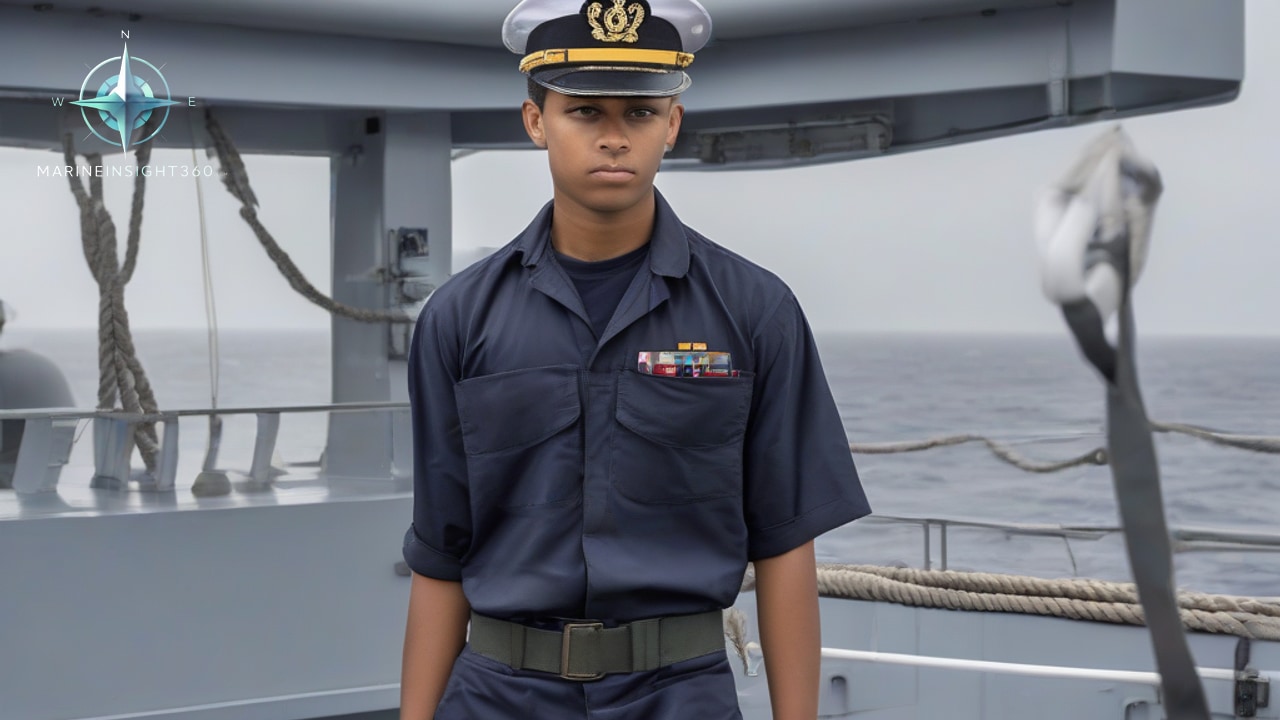
Joining Pak Navy requires Pakistani citizenship, an age of 16 and a half to 21 for civilian candidates, a minimum height of 5 feet 4 inches, and an intermediate qualification with at least 60% marks. Selection then runs through an initial written test, a medical examination, an interview with the PN selection board, and a merit list drawn up by Naval Headquarters.
What Is the Pakistan Navy
The Pakistan Navy is the naval branch of the Pakistan Armed Forces. It defends the country's maritime interests and coastline, protects its sea lanes, and forms part of the national defence strategy. It was established in 1947, when Pakistan was created, and has grown into a modern force operating frigates, submarines, fast attack craft, patrol vessels and maritime patrol aircraft and helicopters.
Besides its defence role, the Pakistan Navy takes part in humanitarian assistance and disaster relief at home and abroad, and in multinational maritime security operations in the Arabian Sea and the wider Indian Ocean. For young Pakistanis interested in the sea, it offers a long career with a wide choice of branches.
The Educational Requirements For Joining Pak Navy:
The educational requirements for joining Pak Navy depend on the entry route and the branch. The qualifications below have been asked for in recent intakes:
1: PN Cadet Permanent Commission (PC):
Education:
Intermediate or equivalent with at least 60% marks.
Subjects:
Physics, Mathematics, and one of the following subjects:
Chemistry, Computer Science, or Statistics.
2: Engineering Cadet (EC) - Permanent Commission (PC):
Education:
FSc (Pre-Engineering) or comparable with at least 65% marks.
Subjects:
Physics, Mathematics, and Chemistry.
3: Medical Cadet - Permanent Commission (PC):
Education:
FSc (Pre-Medical) or equivalent with at least 70% marks.
Subjects:
Physics, Chemistry, and Biology.
4: Short Service Commission (SSC) - Operations Branch (Marines & SSG-N) And Aviation:
Education:
Bachelor's degree (B.A/B.Sc/BBA/BS) or equivalent with at least 60% marks.
Subjects:
The degree should be in a field relevant to the branch.
5: Short Service Commission (SSC) - Marine Engineering Branch:
Education:
BE/B.Sc Engineering in Mechanical, Marine, Manufacturing, Industrial, Mechatronics, and Aviation with at least 60% marks.
6: Short Service Commission (SSC) - Weapon Engineering Branch:
Education:
BE/B.Sc Engineering in Electrical, Electronics, Aeronautics, and Telecommunication with at least 60% marks.
7: Short Service Commission (SSC) - Special Branch (IT):
Education:
BE/B.Sc in Computer Science or Software Engineering with at least 60% marks.
8: Short Service Commission (SSC) - Special Branch (Public Relations):
Education:
Bachelor's degree in Mass Communication or Journalism with at least 60% marks.
9: Short Service Commission (SSC) - Education Branch:
Education:
MA/M.Sc/BS (4 years) in the following disciplines with at least 60% marks:
Physics
Mathematics
Islamiat
Pakistan Studies
Psychology
Geology
International Relations
10: Short Service Commission (SSC) - Medical Branch:
Education:
MBBS or equivalent recognized by the Pakistan Medical and Dental Council (PMDC).
These are general requirements, and particular branches may set extra conditions. Eligibility criteria change from one intake to the next, so check the official Pakistan Navy recruitment website or a Navy recruitment office for the current advertisement before applying.
Qualification CRITERIA:
Applicants must be citizens of Pakistan. For PN Cadet entry, civilian candidates must be between 16 ½ and 21 years old, and serving personnel between 17 and 23. The minimum height for male candidates is 5 feet 4 inches. Age limits and height standards differ for other entries and for women, so check the advertisement for the entry you are applying for.
Selection Process:
Candidates go through four stages before they are selected.
After applying, candidates sit an initial test covering subjects such as Mathematics, English, Pakistan Studies and General Knowledge. Those who pass have a medical examination at a Combined Military Hospital (CMH). After clearing the medical, they appear before the PN selection board for psychological tests, outdoor tasks and interviews. Finally, Naval Headquarters (NHQ) draws up the merit list and makes the selection.
Training Test :
After joining as cadets, candidates train at the Pakistan Naval Academy in Karachi, where they are put through a demanding programme of academic study, professional training, physical fitness and character building. After about a year and a half, the cadets go to sea as midshipmen and learn to work in the different departments of a warship. After a further period of training at sea, they are promoted to Sub-Lieutenant. Throughout their training, cadets are given free messing, accommodation and uniform.
Engineering cadets go on to study for their engineering degree at the Pakistan Navy Engineering College (PNEC) in Karachi. Promotion to higher ranks depends on further professional courses and qualifications.
Officers who perform well can specialise in particular fields once they have completed the necessary courses.
The Courses May Include:
- Surface Warfare
- Under Water Warfare
- Electronic Warfare
- Communications
- Navigation & Operations
Benefits
a. A degree in engineering for engineering branch officers
b. Free mess, accommodation and uniform
c. Free medical care for yourself, your family and your parents
d. Chances to go abroad on courses or deputation
e. Extra allowances, reported at up to 40% of pay, plus special rations, for officers in the submarine service and the Special Service Group (Navy)
f. Help with children's education in English-medium schools and recognised professional institutions
g. A 50% concession on air and rail travel
h. Two months' annual leave and a free rail warrant once a year from the place of duty to home
Life At Pak Navy:
The Navy has many branches and posts, each with its own kind of work, and those who serve in it take pride in serving their country.
Life in the Navy is very different from civilian life. Cadets follow strict rules, their performance and routines are watched closely, and their superiors guide them step by step. The training aims to produce officers who put the service before themselves, and for those suited to it, it is a demanding but rewarding experience.
Weapons And Ships Pak Navy:
The Pakistan Navy has built up a modern fleet with up-to-date weapons and combat systems. Alongside its frigates, it operates submarines, mine countermeasures vessels, missile boats and fast attack craft, and fast patrol craft.
In December 2019, Radio Pakistan reported that the Navy had demonstrated the firing of land-attack, anti-ship and air defence missiles in the north Arabian Sea and off the Makran coast in Balochistan.
Footage of the firings was released. The then Chief of the Naval Staff, Admiral Zafar Mahmood Abbasi, who held the post from 2017 to 2020, said the Navy was ready to defend the country's sea frontiers against any aggression.
According to the Navy's spokesman, the land-attack missiles were fired from a fast attack craft and a submarine, the anti-ship missiles from aircraft and a warship, and the air defence missile from a ship, and all the missiles hit their targets.
Recommended Reading

Duties of a Marine Engineer in the Merchant Navy
A marine engineer is the backbone of any merchant ship.
Introduction to Radar Surveillance and SOLAS Requirements
SOLAS Chapter V requires every ship of 300 gross tonnage and above, and all passenger ships, to carry a 9 GHz radar with electronic plotting, while ships of 3,000 gross tonnage and above need a second independent radar.

Why is Merchant Navy Day celebrated?
Merchant Navy Day is an important holiday that celebrates gratitude and appreciation for the hard work, dedication, and perseverance of seafarers. It is…