
Water Sprinkler and Water Mist Fire Extinguishing Systems
Water Sprinkler and Water Mist Fire Extinguishing Systems: safety, training and compliance context for US, UK, Canada, Australia, Singapore and...
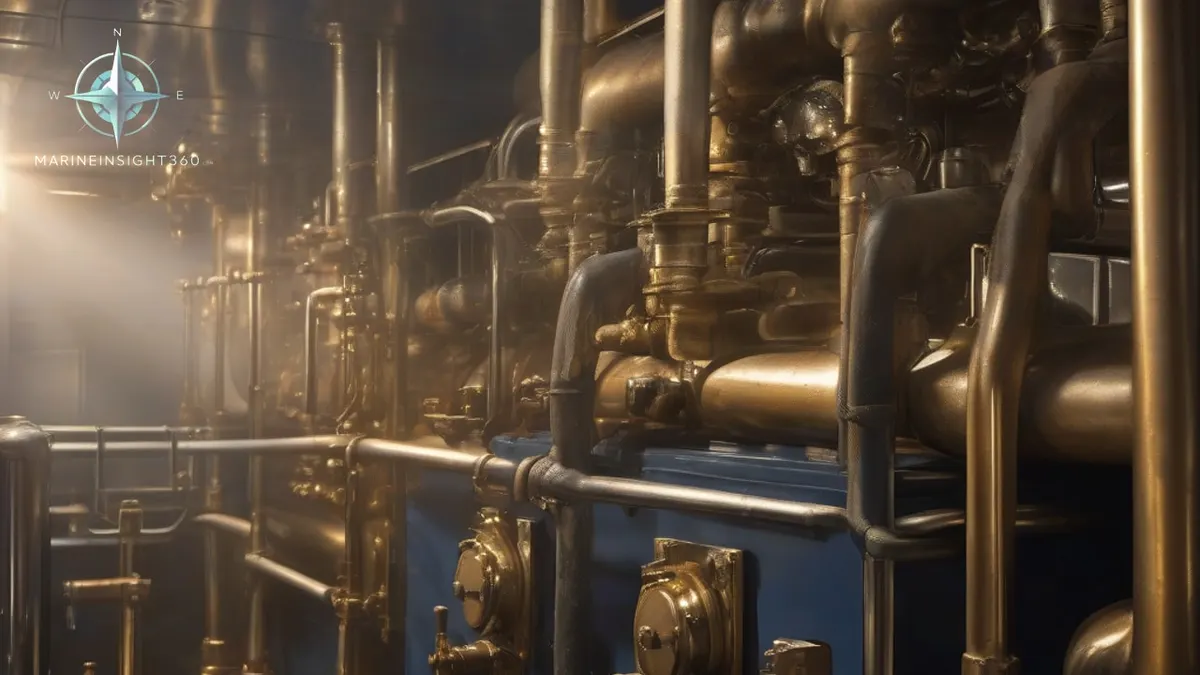
Water Sprinkler & Water Mist Fire Extinguishing Systems on Passenger Ships
A ship's firefighting system is undoubtedly a vital component. Deadly fires frequently strike merchant ships at sea, far from land and unable to receive any assistance from shore, causing extensive damage to the vessel and cargo, and worse still, even loss of life.
Imagine a similar situation aboard a passenger ship carrying thousands of passengers. The mere thought is horrifying, as the casualties could be far greater than anticipated. Therefore, cruise ships must be equipped with firefighting equipment in passenger and crew areas (including technical spaces).
As with cargo ships, the engine room is a particularly vulnerable area for fires. The heat generated by running machinery and its exhaust, oily surfaces, and the large volumes of air delivered by blowers make it a highly dangerous and flammable area. If a fire is not initially contained, it can quickly spread to other areas of the ship, causing widespread damage and chaos.
This is precisely why cruise ships are equipped with a variety of firefighting systems. For example, many cruise ships are equipped with water mist fire extinguishing systems in addition to fixed carbon dioxide (CO2) fire extinguishing systems (for technical areas) and water sprinkler systems (for crew and passenger areas). However, many modern passenger ships use only water mist fire extinguishing systems in all areas (crew, technical, and passenger areas).
In engine room fires on these ships, water mist is typically used as the primary fire extinguishing method. CO2 is only used as a backup method when the fire becomes extremely large and uncontrollable, leaving no other options.
In a water mist fire extinguishing system, water is sprayed in the form of an extremely fine mist from nozzles or sprinklers mounted above the equipment or protected area.
Compared to traditional water sprinkler systems, the advantages of using this form of water extinguishing are:
- Water mist provides wider coverage and more uniform distribution.
- It penetrates the fire area better.
- It quickly cools the fire area and surrounding areas.
- It quickly evaporates the extremely fine water droplets into steam, which aids in extinguishing the fire (due to oxygen depletion).
- Because the water is sprayed in a fine mist, it causes minimal damage to equipment.
- Compared to sprinklers, water droplets are smaller, resulting in lower water consumption.
- Compared to traditional fixed CO2 fire extinguishing systems, water mist offers the following advantages:
Compared to CO2 fire extinguishing systems, water mist releases more quickly, eliminating the need for complete containment and safe evacuation. This saves valuable time and reduces the spread of fire.
Unlike CO2 fire extinguishing systems, water mist fire extinguishing systems do not cause cavitation after extinguishing a fire. Even if a leak occurs (whether accidental or otherwise), it poses no threat to life.
Unlike CO2 fire extinguishing systems, which require large-scale releases, water mist fire extinguishing systems release only small amounts of water to protect critical areas/equipment affected by the fire.
Compared to CO2 fire extinguishing systems, water mist fire extinguishing systems are easier to refill and less expensive.
Maintenance does not require specialized shore-based assistance, whereas CO2 fire extinguishing systems require refilling and cylinder pressure testing every few years.
High-Fog (Hi-Fog) Water Spray System
This is a water spray firefighting system developed by Marioff and installed on some passenger ships.
The system primarily consists of two independent units: a master unit located at the bow and a slave unit located at the stern.
Operating the High-Fog Water Spray System
The fresh water required for the system is stored in a tank. This tank is equipped with a level gauge and a high/low float switch. The tank is refilled based on the water level.
When the water level drops, the low float switch activates. This signals the automation system, activating the high-fog water supply pump and opening the automatic valve in the pump's fill line.
The pump supplies water from one of theship's technical water tanksthrough a filter and automatically stops when the required water level is reached. The automatic valve also closes.
The fuel tank can be manually drained monthly through the drain valve located at the bottom of the tank to test (shut off/on) the fuel supply pump's operation. The drain line is connected to the bottom of the ship.
Under normal circumstances, the pressure is 18-2 bar.
Under normal circumstances, the high-pressure misting system maintains a pressure between 18 and 24 bar. This is ensured by an air-operated, low-pressure diaphragm pump designed to compensate for minor leaks and losses.
If the pressure drops below 18 bar (for example, in the event of a fire or a major leak during the high-pressure misting release), the high-pressure pumps automatically activate. These positive-displacement pumps can raise the system pressure to approximately 140-150 bar when in operation. There are typically 8-10 pumps, but for ease of understanding, I have shown only 3 in the diagram above.
Each high-pressure pump is equipped with a safety valve on the discharge side. This prevents damage to the pump and piping when operating with the main isolation valve closed (for example, during pump testing). The safety valve relieves excess pressure to the storage tank or suction side.
The high-pressure pumps are always in automatic mode. Once automatically activated, they must be manually stopped after the fire is extinguished. An automatic pressure relief valve then vents the high-mist line, reducing the pressure from approximately 150 bar to the normal value of 18 to 24 bar.
The common main isolation valve for the high-mist discharge side is always kept open. During the routine monthly testing of the high-pressure pump, the main isolation valve is manually closed, and the pump is switched to manual mode.
After the pump is commissioned, it is tested for pressure buildup, any unusual noise/vibration, and the operation of the pressure relief valve. The oil level in the pump must also be checked during operation and replenished as needed. Oil changes must be performed according to the Maintenance Management System (PMS).
Operation of the Master, Slave, and Water Cylinders
If a major fire occurs anywhere on board, the forward unit (designated the master unit) will be the first to begin operation. If the fire is not under control, the forward unit will signal the slave unit (aft unit) to operate.
In this case, if the fire cannot be controlled, some ships carry water bottles (typically 10, each containing 50 liters) as an additional source of fresh water.
Master/Slave Units
A pilot nitrogen cylinder is provided as the operating mechanism for opening and releasing the water bottles. If both the master and slave units are unable to extinguish a fire simultaneously, an electrical signal releases nitrogen, activating and opening/opening the water bottles. Pressurized water then flows to the high-level misting nozzles.
In addition to all the above devices, the high-level misting system also features a seawater supply line (typically from the fire service line). This is used when fresh water is insufficient in the high-level misting water tanks (forward and aft), the technical water tanks, and the water bottles. There are two seawater supply valves, both in the normally closed (NC) position.
If seawater is used, the pipes must be thoroughly flushed with freshwater after extinguishing the fire to reduce the potential for seawater corrosion and deposits. Freshwater must then be refilled and the system placed in standby mode.
Zone Valves and Nozzles
The high-level misting system includes multiple zone valves for supplying water to machinery and accommodation areas. Each zone valve serves a specific location. For example, there is a zone valve for each diesel generator, each boiler, each scrubber (forward and aft), each waste incinerator, and, for accommodation areas, one zone valve per deck.
The valves, lines, and designs for high-mist nozzles in the machinery area and the residential area differ. Zone valves in the machinery area are typically normally closed (NC) and can be opened manually or by pressing a button in the engine room control room.
This means that the high-mist lines in the machinery area are dry under normal circumstances. Fire control personnel only open the valves and supply water to the high-mist nozzles in the event of a fire.
Engine Room High-Mist Distribution
Zone valves are tested according to PMS (Permanent Management System) standards. Close the shutoff valves supplying water to the high-mist nozzles (as shown above) and open the test valves (as shown in the figure). Next, open the zone valves (locally or remotely) and check for water flow.
Residential zone valves are normally open (NC), meaning the lines are always wet, meaning the nozzles or sprinklers are always supplied with water. The nozzles themselves are spherical and filled with a heat-sensitive liquid that expands and ruptures during the heat of a fire, releasing water.
Residential High-Mist Distribution
High-concentration spray distribution in passenger ship accommodation spaces. The reasons for this difference are as follows:
Accommodation spaces (including passenger cabins) are not always occupied. Therefore, unlike machinery spaces and engine room control rooms, which are always occupied, the system must be designed to operate quickly and automatically in the event of a fire to minimize damage.
The temperature in machinery spaces is much higher than in accommodation spaces. Therefore, if wet piping and heat-sensitive ball nozzles are used, even in the absence of an actual fire, a nozzle failure could cause an unexpected high-concentration spray leak due to high temperatures, especially in high-temperature engine room areas, such as those near generators and cleanrooms.
For this reason, dry piping is used in machinery spaces, while wet piping is used in accommodation spaces.
Sprinkler system nozzles
However, in both cases, once the fire is extinguished, the solenoid valves must be manually closed using a button in the engine room control room. In accommodation spaces, these valves open after the faulty nozzle is replaced and remain open (closed) at all times. In the engine room, these valves are latching (NC) type.
In addition to being operable from the engine room control room, valves in the machinery room can also be opened by pressing a local button. This system provides a backup function, saving time in the event of a fire or potential fire.
As mentioned above, the Hi-Fog system has been used on many modern and newer ships, providing versatile firefighting capabilities in accommodation and engine rooms. The system has gained widespread acceptance due to its efficiency, availability, low risk of exposure or evacuation, and ease of operation.
Due to these advantages, the system has also been retrofitted as a backup on many older passenger ships. However, due to the high cost and complexity of retrofitting, the use of Hi-Fog systems on older ships is typically limited to high-risk areas in the machinery room, such as boilers, distributed generators, scrubbers, and combustion chambers. In the accommodation areas, conventional sprinkler systems are used.
- Oil Water Separator - How Does an Oil Water Separator Works?
- Water Transportation: Types, Advantages & Disadvantages
- Ship Behavior in Shallow Water, Resistance & Speed
- Do You Know About Fresh Water Generator?
- Don Juan Pond- Saltiest Bodies of Water
Sprinkler Systems for Accommodation Area Fires on Older Passenger Ships
The sprinkler system shown in the figure is used to extinguish fires in the accommodation areas of an older passenger ship. The system is designed to operate with fresh water (typically supplied from one of the technical water tanks) and, in emergencies, with seawater. System components include:
Pressure tank: A pressure vessel used to maintain the system pressure at approximately 10-12 bar. It contains an air supply and a level gauge.
Auxiliary freshwater tank: As the name suggests, this is an additional source of freshwater, used only when the main freshwater tank is empty or unavailable. This tank is filled with technical water from the ship's wastewater (TW) system.
Boosting pump: This pump transfers technical water from a dedicated tank to the filling pump.
Filling pump: This pump normally works in conjunction with the boosting pump. If the dedicated wastewater tank or boosting pump is unavailable, it can operate independently, filling the system (overflow tank) directly from the additional freshwater tank.
Spray pump: In an emergency, the system can also operate using seawater supplied by the spray pump. The pump automatically activates when the system pressure drops below 5 bar, as determined by a pressure switch.
Check valve: There are two check valves. One is located in the wastewater pump discharge line to prevent backflow, thereby preventing a loss of system pressure from the wastewater supply line. Another prevents backflow into the overflow tank.
Pressure Gauge: Indicates system pressure.
Line Valves: These valves are typically butterfly valves with remotely controlled limit switches for opening and closing. There are five valves: V1, V2, V3, V4, and V5.
During normal system setup, the water level in the flush tank is maintained at approximately three-quarters full, as indicated by the level gauge. A column of air must be maintained within the flush tank. Monitoring personnel should check this during regular inspections, as it helps maintain system pressure and prevents the flush tank from overfilling.
The booster and priming pumps operate automatically, and the valves are set so that the system can supply water to the various sprinkler stations in the accommodation area, and then to the sprinkler heads in each cabin or guest room. The settings are as follows:
- Valve V1 Open
- Valve V2 Open
- Valve V3 Open
- Valve V4 Open
- Valve V5 Closed
In the event of a fire, the booster and priming pumps automatically activate when the water level in the tank rises.
Recommended Reading
Marine Fire Safety: What the FSS Code Requires on Every Ship
How marine fire safety works under the FSS Code: fire mains and pumps, fixed gas and sprinkler systems, detection, escape gear and the drills that bind it all.
Container Tracking Systems: A Comprehensive Guide
Container Tracking Systems: A Comprehensive Guide: ports, trade and shipping-market context for US, UK, Canada, Australia, Singapore and European...
Ship Navigation Equipment: The 30 Systems on a Modern Bridge
The ship navigation equipment a modern bridge carries, grouped by job: position fixing, collision avoidance, charts, communications, safety recorders and more.