
Maintenance and Cure: What an Injured Seaman Is Owed
Maintenance and cure is a shipowner's no fault duty to an injured seaman. What it pays, when it ends, the defenses raised and how MLC 2006 compares.
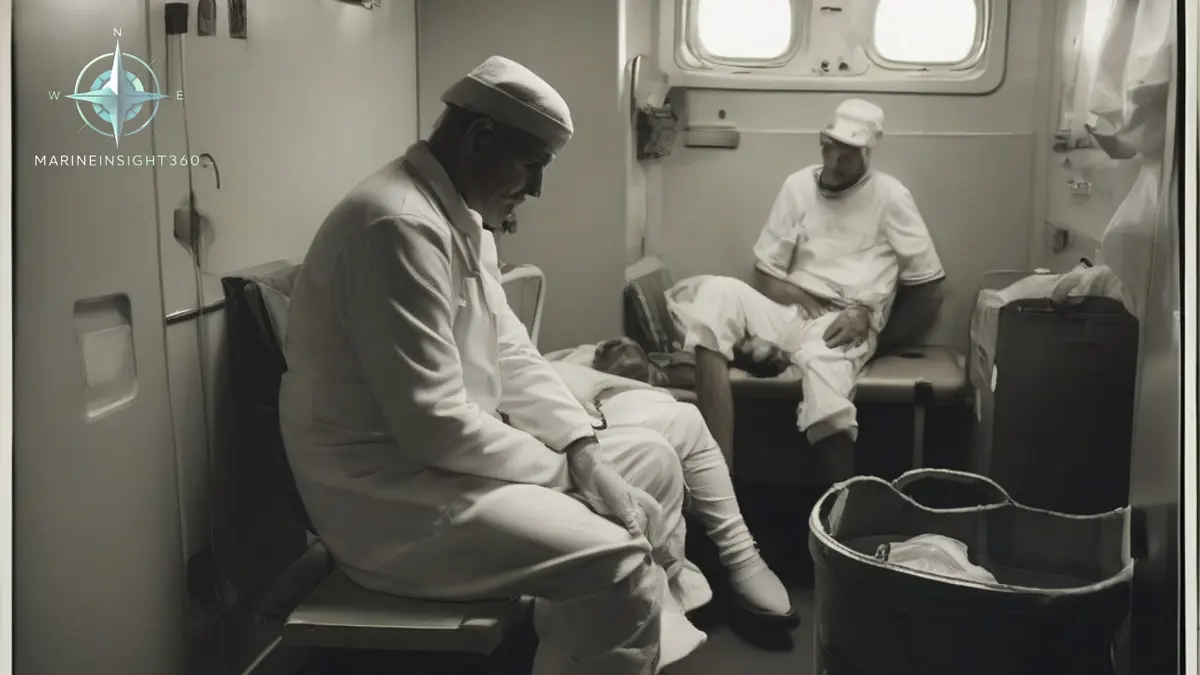
Maintenance and cure is the shipowner's ancient, no-fault duty under United States general maritime law to support a seaman who falls ill or is injured while in the service of the vessel. Maintenance is a daily allowance for food and lodging ashore, replacing what the ship would have provided. Cure is payment for necessary medical treatment.
Both run from the day the seaman leaves the ship until maximum medical improvement, the point at which further treatment will not better the condition. Fault is irrelevant: the seaman does not have to prove the owner did anything wrong, and his own carelessness generally does not defeat the claim.
What maintenance, cure and unearned wages each cover
- Maintenance is a daily rate for board and lodging ashore. Many collective bargaining agreements fix the rate, and fixed rates set decades ago are a common source of dispute because they no longer meet actual living costs.
- Cure covers reasonable and necessary medical expenses: hospital treatment, surgery, medication, physical therapy and travel to appointments.
- Unearned wages cover pay the seaman would have earned to the end of the voyage or contract period, depending on the engagement.
The duty is non-delegable. Hiring a manning agent or a third-party medical provider does not transfer it away from the owner.
Who counts as a seaman
Only a seaman gets maintenance and cure. The test the courts apply asks whether the worker's duties contribute to the function of a vessel in navigation and whether the connection to that vessel, or to an identifiable fleet, is substantial in both duration and nature. Courts commonly use around 30 percent of working time aboard as a rule of thumb rather than a rigid threshold.
Longshore workers, terminal staff and most shipyard workers fall outside it and claim under the Longshore and Harbor Workers' Compensation Act instead.
In the service of the ship is wider than on duty
This is the part crews most often get wrong. The obligation attaches to illness and injury occurring while the seaman is answerable to the call of duty, which includes time on shore leave in a foreign port. It does not require that the work caused the harm. A heart attack in a bunk, an illness with no connection to the job, or an injury ashore during a legitimate liberty period can all trigger it.
Where the obligation ends
Maintenance and cure continues to maximum medical improvement, declared when a physician concludes the condition will not improve further with treatment. Care that is purely palliative, easing symptoms without improving the condition, generally falls outside cure. Genuine doubt about whether improvement is still possible is resolved in the seaman's favor, which is why owners who cut payments off early on a company doctor's opinion frequently lose.
What happens when an owner refuses to pay
The courts treat unjustified refusal seriously. A shipowner who is callous or arbitrary in denying maintenance and cure can be ordered to pay the seaman's attorney fees, and the Supreme Court confirmed in Atlantic Sounding Co. v. Townsend in 2009 that punitive damages remain available for willful and wanton failure to meet the obligation. That exposure is the practical reason most operators pay first and argue later.
The defenses owners actually raise
- Concealment of a pre-existing condition. Known as the McCorpen defense, it requires that the seaman intentionally concealed a condition on a pre-employment medical questionnaire, that the concealment was material to the hiring decision, and that the concealed condition is connected to the current injury.
- Maximum medical improvement reached. Usually supported by an independent medical examination.
- Not a seaman, or not in the service of the ship. Aimed at workers with mixed shore and sea duties.
How this differs from a Jones Act claim
An injured United States seaman may have three separate remedies. Maintenance and cure requires no fault. A Jones Act negligence claim requires proof that employer negligence played some part in causing the injury, and the causation standard is famously light. An unseaworthiness claim requires proof that the vessel or its equipment, crew or procedures were not reasonably fit for their intended use.
Only the first pays out while the case is running, which is why it matters so much in practice.
The international comparison: MLC 2006
Seafarers outside United States jurisdiction are covered by Regulation 4.2 of the Maritime Labour Convention, 2006, which imposes shipowner liability for sickness and injury occurring between the start of duty and proper repatriation. Shipowners pay full wages while the seafarer remains on board or until repatriation, and national law may limit further wage liability to a period of not less than 16 weeks.
Liability for medical expenses may likewise be limited to not less than 16 weeks from the day of injury. Ships must carry financial security certificates evidencing that cover.
Practical steps after an injury on board
- Report the incident in writing the same day and keep a copy of what you signed.
- Record names of witnesses and note whether the accident report matches your account.
- Ask for the medical log entry and any radio medical advice received.
- Keep every receipt for lodging, food and travel while ashore.
- Do not sign a release or settlement before taking independent advice.
The Marine Insight 360 Merchant Navy Careers section covers contracts, repatriation and crew welfare obligations in more detail.
Sources and further reading
- The Origins and History of Maintenance and Cure
- Shipowners' liability under the Maritime Labour Convention 2006
- When does shipowners' liability begin and end? ILO MLC FAQ
What to read next
Recommended Reading

Two Crew Members Seriously Injured in Explosion on Tanker at Ireland's Second Largest Port
An explosion aboard the chemical tanker Bow Hercules at Shannon Foynes seriously injured two crew members. What the case shows about gas cylinder safety.
What Is a Seaman Book? The Seafarer's Discharge Book Explained
What a seaman book is: the discharge book that records a seafarer's sea service, who issues it, what it proves, and how to keep it accurate.
Able Seaman Certification: Sea Service, Courses and the STCW Endorsement
Able seaman certification explained: USCG sea service day counts for AB Unlimited, Limited and Special, the STCW Able Seafarer Deck layer, and course list.