
Two Crew Members Seriously Injured in Explosion on Tanker at Ireland's Second Largest Port
An explosion aboard the chemical tanker Bow Hercules at Shannon Foynes seriously injured two crew members. What the case shows about gas cylinder safety.
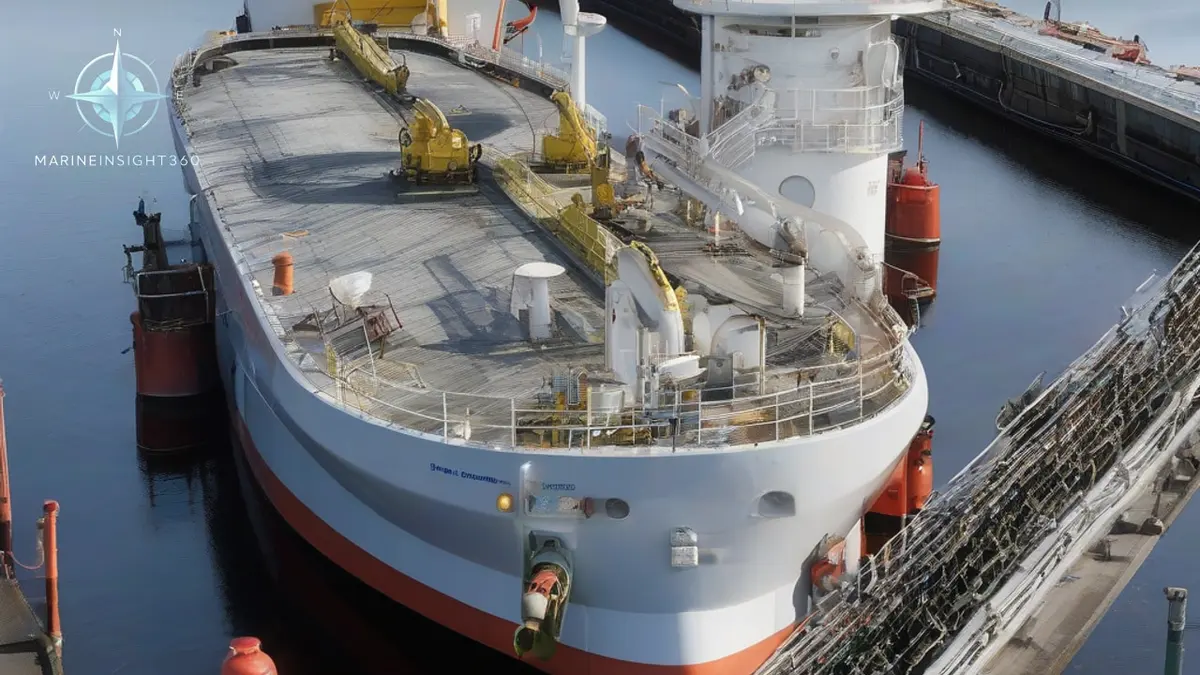
A tanker explosion at Shannon Foynes, Ireland's second largest port, seriously injured two crew members on the evening of 24 June 2025. The ship was the Norwegian-flagged chemical tanker Bow Hercules, alongside at the port in County Limerick. Maritime Executive reported that a gas cylinder exploded during routine maintenance near the lifeboat area. Both injured men were Filipino nationals.
Shannon Foynes falls under the Irish Coast Guard for response and the Paris MoU for port state control, which is the framework European operators plan around.
One man was airlifted to hospital in Cork and the other taken by road ambulance to University Hospital Limerick. Port operations were suspended while the emergency response ran and resumed once the area was made safe. The ship is a 183 meter (600 ft) tanker of 40,847 deadweight tonnes, built in 2017 and operated by Odfjell Tankers, and had arrived from Purfleet on the Thames.
Why a gas cylinder is a serious shipboard hazard
A compressed gas cylinder stores a large amount of energy in a thin steel shell. Oxygen and acetylene sets for cutting and welding, carbon dioxide bottles for firefighting and inerting, and refrigerant cylinders are all carried on ordinary merchant ships. A cylinder failing under pressure behaves like a projectile, and the blast can travel through a deck space that had no obvious ignition source at all.
Acetylene adds a second failure mode. It is unstable in the free state at even modest pressure, which is why it is dissolved in acetone held inside a porous mass within the bottle. A cylinder that has been laid on its side, knocked hard, or subjected to a flashback can decompose internally with no external flame present.
The handling rules crews break most often
- Cylinders stowed horizontally or unsecured. They belong upright, chained or clamped, in a dedicated ventilated locker clear of accommodation.
- Oxygen and fuel gas bottles stowed together. They must be separated, and oxygen fittings kept clear of oil and grease, which can ignite on contact with high pressure oxygen.
- Cylinders carried to the job with the regulator fitted instead of the valve cap. Any knock that shears the valve turns the bottle loose.
- Flashback arrestors missing, or fitted at the torch only and never tested at the regulator.
- Bottles left in the sun on deck or close to hot pipework. Pressure rises with temperature, and relief devices are sized for a fire case rather than for repeated cycling.
Boat deck maintenance deserves its own risk assessment
Lifeboat and davit work sits awkwardly in most maintenance systems. It is life saving appliance work, planned around SOLAS inspection and servicing intervals, but the physical job is often hot work: freeing seized sheaves, cutting corroded fittings, welding bracket repairs. The two systems are frequently planned by different officers.
The practical fix is to route any boat deck job involving cutting, grinding or a gas cylinder through the same hot work permit used for engine room hot work, with the same gas testing, the same fire watch and the same declaration of adjacent spaces. Lifeboat fuel tanks, hydrostatic release units and pyrotechnic stores all sit close together on a typical boat deck.
What good practice looks like alongside
Port is when maintenance backlogs get cleared, contractors come aboard, and the deck watch is thin. That combination shows up in a lot of port injury cases. Three controls do most of the work.
- Restrict cylinder work to daylight hours with the responsible officer physically present, not merely nominated on the permit.
- Confirm the terminal has been told. On a tanker berth the permit is a joint document with the terminal, and a cylinder job near the boat deck is still a potential source of ignition on a ship carrying flammable cargo.
- Rehearse the shoreside casualty route. Crew injuries alongside are handled by a national ambulance service that may never have boarded a ship, and getting a stretcher from a gangway to a boat deck is not obvious under pressure.
The investigation and what usually comes out of it
Serious injuries of this kind normally attract parallel inquiries: the flag state acting under the IMO Casualty Investigation Code, the coastal state where the casualty happened, and the operator's own investigation under the ISM Code. Each asks a different question, and the safety management findings are the ones that reach other ships.
Cylinder incident reports tend to converge on the same three causes. A cylinder that was not in the condition the records claimed. A permit issued without a walk down of the actual work site. A maintenance task deferred long enough that it was finally done under time pressure. All three are visible in the planned maintenance system before anything goes wrong.
What operators should check this week
Pull the cylinder inventory against hydrostatic test dates, walk the locker, and count how many boat deck jobs are running on a routine work order rather than a hot work permit. Shannon Foynes is a working bulk and tanker port, and this was a maintenance task rather than a cargo operation. That is precisely why it transfers to every other ship. Our Maritime Safety section carries related guidance on hot work permits and enclosed space entry.
Sources and further reading
- Explosion Aboard Chemical Tanker in Irish Port Seriously Injures Two Crew
- Explosion aboard oil tanker injures two crewmembers in Ireland
- Blast injures two on tanker in Ireland's Foynes Port
What to read next
Recommended Reading
IRGC Gunboats Open Fire on a Tanker Off Oman: The Crew Response That Matters
UKMTO reported IRGC gunboats firing on a tanker 20 nautical miles off Oman without a radio challenge. What crews do when a state naval unit closes in.
Shadow Fleet Tanker Detained in Gibraltar After Russian Crew Left Unpaid
A shadow fleet tanker was detained in Gibraltar after its Russian crew went unpaid. What counts as abandonment under MLC 2006 and what seafarers should do.
External Explosion Off Oman: What a Waterline Blast Means for the Crew
UKMTO logged an external explosion near a tanker off Oman. What the term means, why waterline damage points to mines or drone boats, and what crews do next.