
MAN Cryo Ammonia Fuel System Approved: What Engineers Should Know
DNV and Bureau Veritas approved the MAN Cryo ammonia fuel system design. What Approval in Principle means, and the toxicity rules engineers now face.
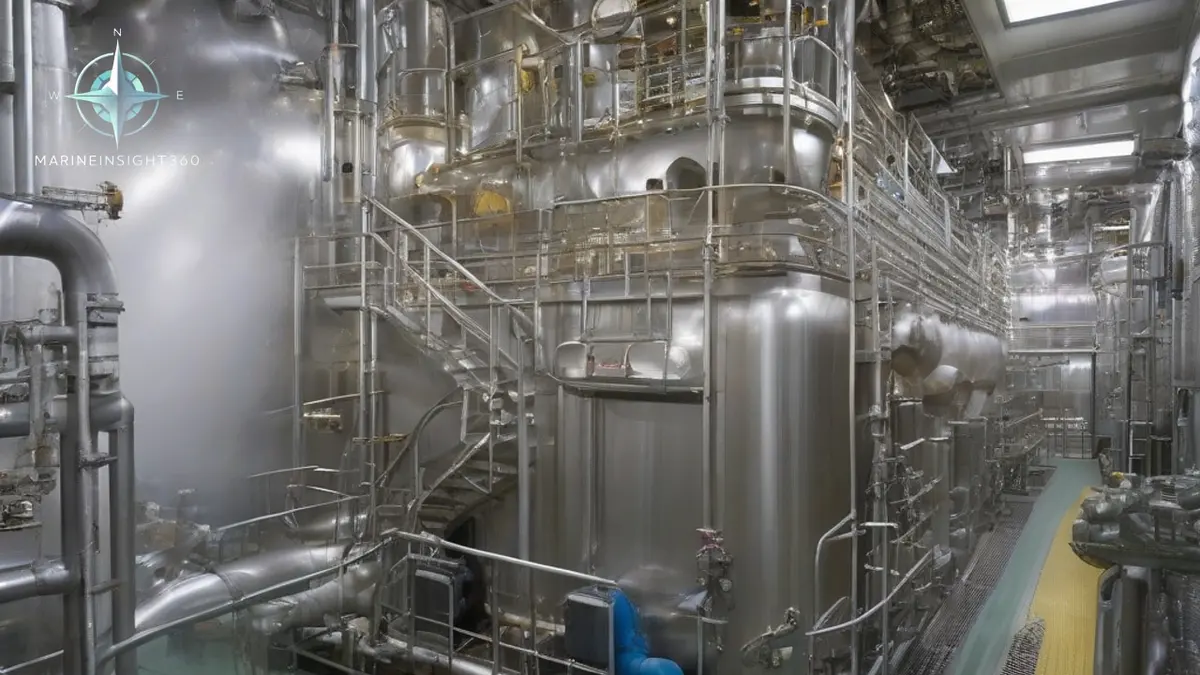
The MAN Cryo ammonia fuel system approved by DNV and Bureau Veritas in January 2024 is a design concept, not a product ready to install. Both societies granted an Approval in Principle for the ammonia fuel supply system for marine engines, developed with the Chinese company Yada Green Energy Solutions. That distinction matters to any European or Japanese owner weighing an ammonia-ready newbuilding.
An Approval in Principle confirms a design has no obvious showstopper against the applicable rules at concept stage. It is a milestone, not a certificate of fitness.
That distinction is the first thing an engineer should take from the announcement. An Approval in Principle, or AiP, confirms that a design has no obvious showstopper against the applicable rules at concept stage. It is a milestone, not a certificate of fitness.
What an Approval in Principle actually certifies
Class societies use AiP to review a novel design early, before an owner commits capital. The society examines drawings, a hazard identification study and the design philosophy against the rule set that will eventually apply, then states that the concept is feasible.
What still has to happen afterwards:
- Detailed design approval against the full rule set, with calculations and material specifications.
- Failure mode and effects analysis, plus quantitative risk assessment for the toxic release cases.
- Type approval testing of components such as valves, pumps and the vaporizer.
- Flag state acceptance, since ammonia as fuel is still handled through alternative design approval rather than a settled code.
- Shipboard commissioning, gas trials and crew familiarization before the ship enters service.
Two societies granting AiP on the same design is useful because owners normally want their own society's view before ordering. Covering two of the major societies widens the pool of yards and owners who can take the design forward.
How an ammonia fuel supply system differs from an LNG one
MAN Cryo came to this from LNG and methanol equipment, and the hardware looks superficially similar: a storage tank, a pressure build-up and conditioning loop, pumps, a heater, and a supply line delivering fuel to the engine at the required pressure and temperature. The physical properties of the fuel drive the differences.
Ammonia boils at about minus 33 degrees Celsius (minus 28 F) at atmospheric pressure, far warmer than LNG at about minus 162 degrees Celsius (minus 260 F). Fully refrigerated storage is therefore less demanding thermally, and semi-refrigerated or pressurized storage is also practical. Energy density is the trade-off.
Ammonia carries roughly half the energy per tonne of fuel oil and far less per cubic meter, so a tank sized for the same voyage takes something in the order of two and a half to three times the volume of a fuel oil bunker.
Toxicity shapes every design decision
The engineering problem with ammonia is not combustion. It is that ammonia is acutely toxic to people at concentrations well below anything that would burn. Occupational exposure limits are set in parts per million, and a release that would be an inconvenience with methane is a casualty event with ammonia.
That is why an ammonia fuel supply system is built around containment and detection rather than around flammability alone:
- Double-walled piping with the annular space ventilated and monitored, so a leak is captured and detected before it reaches a machinery space.
- Segregated fuel preparation rooms with high air change rates and gas detection interlocked to shutdown.
- Water spray and scrubbing arrangements, since ammonia is highly soluble in water and a water curtain is an effective knockdown method.
- Personal protection and escape equipment sized for the affected spaces, with emergency eyewash and safety showers near fuel handling areas.
- Purging and inerting procedures for bunkering connections and for any maintenance intervention on the fuel line.
Emissions are the other open question. Unburned ammonia slip and nitrous oxide formation both have to be controlled, because nitrous oxide is a very strong greenhouse gas and enough of it would cancel the climate benefit that justifies the fuel.
Where the rules now stand
The regulatory position moved after this approval. IMO's Maritime Safety Committee approved interim guidelines for the safety of ships using ammonia as fuel at its 109th session in December 2024, issued as MSC.1/Circ.1687 on 26 February 2025. The text had been finalized by the Sub-Committee on Carriage of Cargoes and Containers in September 2024.
The interim guidelines set a goal-based framework covering ship design, equipment, operation, bunkering, toxicity mitigation and crew protection. Alongside them, amendments to SOLAS chapter II-1 were approved to make clear that the IGF Code, the international code of safety for ships using gases or other low-flashpoint fuels, applies to gaseous fuels including ammonia. The IGC Code for gas carriers was updated so that ammonia carriers can burn their own cargo.
Training is being handled through generic interim guidelines for seafarers on ships using alternative fuels, finalized by the Sub-Committee on Human Element, Training and Watchkeeping at its eleventh session.
What engineers should be preparing for
Anyone likely to sail on an ammonia-fueled ship should expect advanced training beyond the current IGF Code gas fuel courses, weighted toward toxic release response rather than fire. Expect drills that treat a fuel leak as a rescue and medical event, with rescue team entry procedures and casualty decontamination. Expect bunkering checklists closer to a chemical tanker cargo operation than to a fuel oil stem, including pre-transfer conferences and agreed emergency shutdown signals.
The commercial signal from the MAN Cryo approval is that the fuel handling supply chain is maturing at roughly the same pace as the engines themselves. Marine Insight 360's Marine Machinery section follows the engine and fuel system side of the alternative fuel transition.
Sources and further reading
- MAN Cryo Wins Approval for Ammonia Fuel-Supply System
- MAN Cryo gains class approval for ammonia fuel-supply system
- IMO issues interim guidelines for safety of ammonia-fuelled ships
- IMO alternative fuel and technology safety guidelines
What to read next
Recommended Reading
What Is Trim in Ship Operations? Draft, Stability and Fuel
Trim is the difference between aft and forward draft. How to calculate it with MCTC, why trim by the head is avoided, and what it costs in fuel.

AMSA Approved Medical Practitioners: Finding One and Passing the Seafarer Medical
Where to find the AMSA medical practitioner list, which seafarer medical you need in Australia, what the examination covers and how long it stays valid.
What Is SMS in Maritime? The Safety Management System Explained
SMS in maritime means Safety Management System, required by the ISM Code. Here is what it contains, how the DOC and SMC work, and how audits actually go.