
What Is Trim in Ship Operations? Draft, Stability and Fuel
Trim is the difference between aft and forward draft. How to calculate it with MCTC, why trim by the head is avoided, and what it costs in fuel.
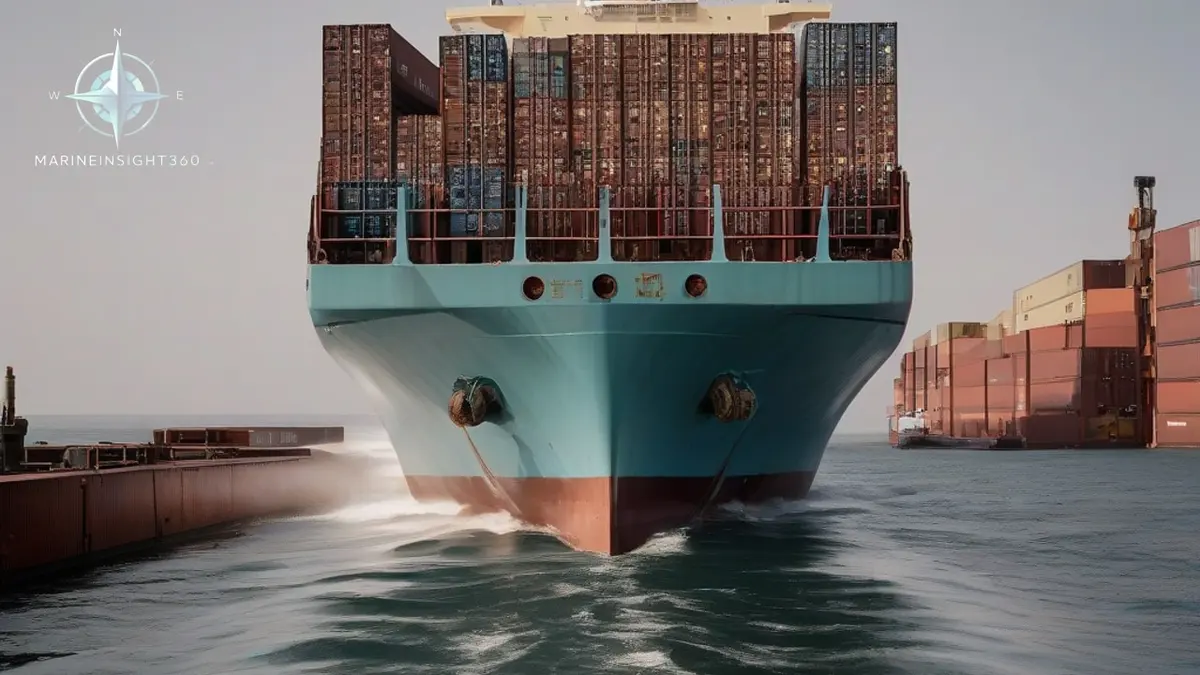
What is trim in ship operations? It is the difference between the draft aft and the draft forward. If the aft draft is greater, the vessel is trimmed by the stern; if the forward draft is greater, she is trimmed by the head. Equal drafts mean an even keel. Trim is stated in centimeters or meters, and it measures longitudinal attitude, not how deeply the ship is loaded.
It is commercial as well as technical: trim optimization feeds straight into the IMO carbon intensity rating that charterers in Northwest Europe, Japan and North America now check.
Trim matters for three separate reasons: it changes how the ship handles, it changes how much power is needed to push the hull at a given speed, and it decides whether tanks and holds drain to their suctions.
Calculating trim and moving it deliberately
Trim changes when weight is moved, added or removed longitudinally. The tool is MCTC, the moment to change trim by one centimeter, which is tabulated in the hydrostatic particulars for each displacement.
- Trimming moment: weight moved multiplied by the distance moved fore and aft, in tonne-meters.
- Change of trim: trimming moment divided by MCTC, giving the change in centimeters.
- Distribution: that change splits between the ends about the center of flotation, not about amidships. On most cargo hulls the center of flotation sits aft of amidships, so the two ends do not change equally.
This is why a bunker transfer between a forward and an after tank is a trimming operation, and why a chief officer working to a target arrival trim plans fuel and ballast movements as part of the loading sequence rather than as an afterthought at the pilot station.
Why trim by the head is avoided
Almost every merchant ship is operated with at least a small stern trim, and there are concrete reasons for it.
- Directional stability: a ship trimmed by the head tends to be directionally unstable, chasing off course and demanding constant helm. Stern trim moves the pivot point and settles the ship on its heading.
- Propeller and rudder immersion: stern trim keeps the propeller fully submerged and the rudder working in solid water, which protects both thrust and steering response.
- Drainage: bilge suctions in cargo holds and machinery spaces, and stripping suctions in tanks, are placed aft. Bow-down trim strands water and residues away from them.
- Forward structure: a deep forward draft loads the bow in a head sea and increases slamming and bow flare impact.
- Squat behavior: in shallow water a ship trimmed by the head will squat further by the head, reducing forward under-keel clearance exactly where the ship is deepest.
Container ships and car carriers are the usual exceptions, and even there a modest stern trim is the normal working condition.
Trim, visibility and the SOLAS blind sector
Trim also controls the view from the bridge. SOLAS Chapter V requires that the view of the sea surface from the conning position not be obscured ahead by more than two ship lengths, or 500 meters (1,640 ft), whichever is less, in all conditions of draft, trim and deck cargo.
On a ship loading deck cargo forward, this becomes a live constraint. Adding stern trim raises the bow and lengthens the blind sector, so the loading plan has to reconcile the propulsion argument for stern trim against the visibility requirement.
What optimum trim is worth in fuel
Resistance through the water varies with trim even when speed and mean draft are held constant, because trim changes the shape of the wetted hull, the position of the bulbous bow relative to the surface, and the flow into the propeller. Optimum trim is the trim at which required propulsive power is lowest for that speed and draft.
Typical reported gains from trim optimization are in the range of 2 to 4 percent of fuel consumption, with the exact figure depending on hull form, draft and operating profile. Model and full-scale testing has shown larger savings at specific conditions, with results of up to 15 percent reported against a reference even keel condition in favorable cases. IMO promotes trim and draft optimization as a low-cost operational efficiency measure under its energy efficiency work.
Three points keep this honest in practice.
- Optimum trim is condition-specific. A trim table valid at design draft and 14 knots tells you little at ballast draft and slow steaming.
- Achieving it costs something. Carrying extra ballast to hit an optimum trim adds displacement, and the added resistance can consume the saving.
- The gains are only realizable if the ship can actually be trimmed. Cargo stowage, stability limits and the visibility requirement all bound the range available.
Trim in daily shipboard practice
Trim shows up in more places than fuel reports. A draft survey to determine cargo quantity depends on measured forward, aft and midship drafts, and trim correction is a required step. Ships loading in a river with limited depth may plan a specific arrival trim to keep the deepest point away from the shallowest part of the channel. Tank cleaning and stripping on tankers is planned around a stern trim that drains cargo to the suctions.
Dry docking calculations depend on trim at the moment the sternframe takes the blocks.
The practical habit worth building is to read the trim off the loading computer at every stage of a cargo operation rather than only at the finish, because intermediate trim and stress conditions are where limits get exceeded quietly.
For stability calculation practice and draft survey procedure, work through the shipboard operations entries in the Marine Insight 360 Knowledge Base.
The failures are practical ones. A draft survey read in a swell, or with the ship listing, produces a trim correction that is wrong, and the cargo quantity dispute that follows lands with the P&I club. On tankers, insufficient stern trim leaves cargo behind the stripping suctions, and the remaining-on-board figure turns into a shortage claim against the ship.
Trim optimization fails quietly in other ways. Crews apply a table drawn at design draft to a ballast passage, then find no saving in the noon reports. Ballasting down to reach an optimum adds displacement that eats the gain. The worse error is checking trim only at completion, because intermediate shear force and bending moment limits are exceeded during the sequence, not at the end.
Sources and further reading
- Trim and draft optimization, IMO GreenVoyage2050
- Trim optimisation: an efficient tool for minimising energy consumption
- Ship Trim Optimization: Assessment of Influence of Trim on Resistance
What to read next
Recommended Reading
How to Read Draft Marks on a Ship Accurately
Draft marks are read where the waterline meets the bottom of a figure. Metric and imperial marks, the six reading positions and draught survey corrections.
What Is the Beam of the Boat? Width, Stability and Handling
The beam of a boat is its width at the widest point. What beam means for stability, beam-to-length ratios, and the limits set by locks and trailers.

MAN Cryo Ammonia Fuel System Approved: What Engineers Should Know
DNV and Bureau Veritas approved the MAN Cryo ammonia fuel system design. What Approval in Principle means, and the toxicity rules engineers now face.