
Middle East Green Hydrogen Momentum and What It Actually Means for Shipping
Middle East green hydrogen momentum reaches shipping as cargo and as future bunker fuel. The project numbers, the ammonia logic and the honest constraints.
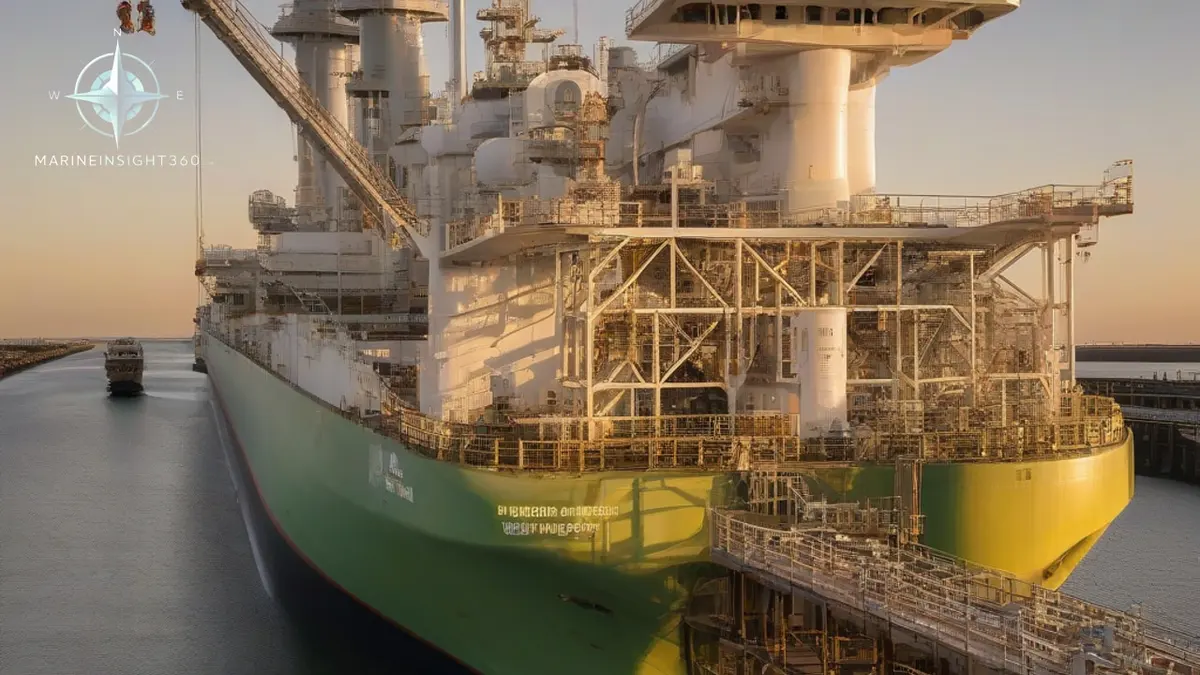
Middle East green hydrogen momentum reaches shipping in two separate ways. Confusing them leads to bad planning. The first is cargo. Hydrogen produced in the Gulf is almost always exported as ammonia, which means gas carriers, export jetties and refrigerated storage. The second is fuel. The same molecule is a candidate bunker fuel for deep-sea ships. The cargo case is already being financed. The fuel case is still being proven.
The scale behind the momentum is real but should be read carefully. The region has around 67 low-carbon or renewable hydrogen and ammonia projects in development with a combined production capacity of about 9 million tonnes a year, of which roughly 1.4 million tonnes a year sits in advanced development. That gap between announced and advanced is the single most useful number in the whole subject.
The projects driving the numbers
- NEOM, Saudi Arabia. A 2.2 GW green hydrogen project that reached financial close in 2023 with 8.4 billion USD of finance, targeting 240,000 tonnes a year of renewable hydrogen from 2026.
- The Saudi-German hydrogen corridor. An agreement signed in February 2025 to move 200,000 tonnes of green hydrogen a year to European markets by 2030, transported principally as ammonia.
- Jordan. A green ammonia project that signed a land use agreement with the Aqaba Special Economic Zone Authority in September 2024, completed feasibility and basic design in January 2026, and is projected to produce about 100,000 tonnes a year of green ammonia for export to European and Asian markets, backed by an approved export hub investment of around 1 billion USD.
- National strategies. Saudi Arabia's National Hydrogen Strategy under Vision 2030, the UAE Hydrogen Roadmap and Oman's Hydrogen Strategy 2040 all carry production targets and explicit export intent, supported by early low-carbon ammonia shipments to Asia.
Why the cargo moves as ammonia and not as hydrogen
Liquid hydrogen has to be held at around minus 253 degrees Celsius (minus 423 F), which demands cryogenic containment that barely exists at commercial scale. Ammonia liquefies at around minus 33 degrees Celsius (minus 28 F) at atmospheric pressure, and the world already moves roughly 20 million tonnes of it a year in a mature fleet of gas carriers with established terminals, cargo handling procedures and trained crews.
That is the entire logic. Exporting hydrogen as ammonia converts a technology problem into a trade that shipping already knows how to run. The trade-off is toxicity. Ammonia is acutely harmful at low concentrations, so the safety case is built around gas detection, water curtains, respiratory protection and strict entry control rather than around explosion risk alone.
What it means for gas carrier trades
If even the advanced tranche of projects is delivered, it adds long-haul ammonia volume between the Gulf and Northwest Europe, Japan and South Korea. Three consequences follow for operators.
- Tonnage demand shifts toward larger ammonia-capable carriers rather than the smaller semi-refrigerated units that dominate the traditional fertiliser trade.
- Terminal capability becomes the constraint. Export jetties, refrigerated storage and loading rates are being built to a schedule that has to match ship deliveries, and mismatches show up as waiting time.
- Crew competence becomes a hiring differentiator. Gas carrier officers with ammonia cargo experience and the relevant advanced training endorsements are the pool everyone will be recruiting from at the same time.
Ammonia as a bunker fuel is a separate question
Using ammonia to move the ship rather than only to fill her tanks is further behind. The IMO has been developing interim guidelines for ships using ammonia as fuel alongside the IGF Code framework covering low-flashpoint fuels, and the Maritime and Port Authority of Singapore has been preparing for ammonia bunkering in Singapore waters from 2026. Those are the enabling steps, not the finish line.
For engineers, the practical implications are concrete: toxic release rather than fire is the dominant hazard, fuel preparation rooms and double-walled piping need inert or ventilated annular spaces, nitrous oxide slip from combustion has to be controlled because it is a far more potent greenhouse gas than carbon dioxide, and every person on board needs training that today's certificates do not cover.
The constraints worth stating plainly
Green hydrogen in the Gulf has genuine advantages: excellent solar and wind resource, cheap land, existing export infrastructure and governments willing to underwrite projects. It also has real obstacles. Production costs remain above grey ammonia, desalination and power demand are large, and the number of buyers willing to sign long-term offtake at green prices is small. That is why 9 million tonnes of announced capacity narrows to 1.4 million tonnes in advanced development.
The useful conclusion for shipowners is a sequencing one. Ammonia as a cargo is a decision that can be made now on visible projects. Ammonia as a fuel is a decision to prepare for, through crew training pathways, dual-fuel-ready specifications at newbuilding stage and close attention to what bunkering ports such as Singapore actually stand up.
Ammonia cargo has its own failure set, and it is not the same as LPG. Liquid ammonia attacks copper and copper alloys, so brass gauges and fittings that suit other gas cargoes corrode and leak. Stress corrosion cracking in carbon steel cargo tanks is a known problem, controlled by limiting oxygen content and keeping a small water content in the cargo. Small releases at manifold connections during loading are the routine incident.
On the project side the pattern is announced capacity that never reaches sanction. Schemes fail on offtake first. Without a buyer committed to a long term contract at a green price, the finance does not close. Electrolyser cost, power supply and grid connection delays finish the job. Owners who specify tonnage against announced volumes rather than sanctioned ones end up with ships and no cargo.
Sources and further reading
- Middle East eyes global role in green hydrogen trade - S&P Global Commodity Insights
- Jordan Green Ammonia: fertilizer and export opportunities from the Middle East - Ammonia Energy Association
- Jordan Approves $1B Green Ammonia Export Hub to Lead New Middle East Market - Energy Tech
- Events in the Middle East and a call to action on global shipping - Green Hydrogen Organisation
What to read next
Recommended Reading
Container Tracking: How Shippers Actually Follow a Box Across the Ocean
How container tracking works, from free carrier lookups to visibility platforms: what each tool layer does, what it costs, and how to pick for your volume.
How to Check a RightShip Rating and What the Score Actually Means
Check a vessel RightShip rating: where the Safety Score lives, what the 0 to 5 scale means to charterers, and how owners get bad data corrected.
NEOM Oxagon, the World's Largest Floating City: What It Means for Shipping
NEOM Oxagon is planned as a floating industrial city on the Red Sea with a 3.5 million TEU port. What is real, what is untested, and what to watch.