
The Role of Hydrodynamics in Modern Ship Design
Imagine standing on the deck of a massive container ship as it slices through the ocean, moving thousands of tons of cargo with surprising grace and…
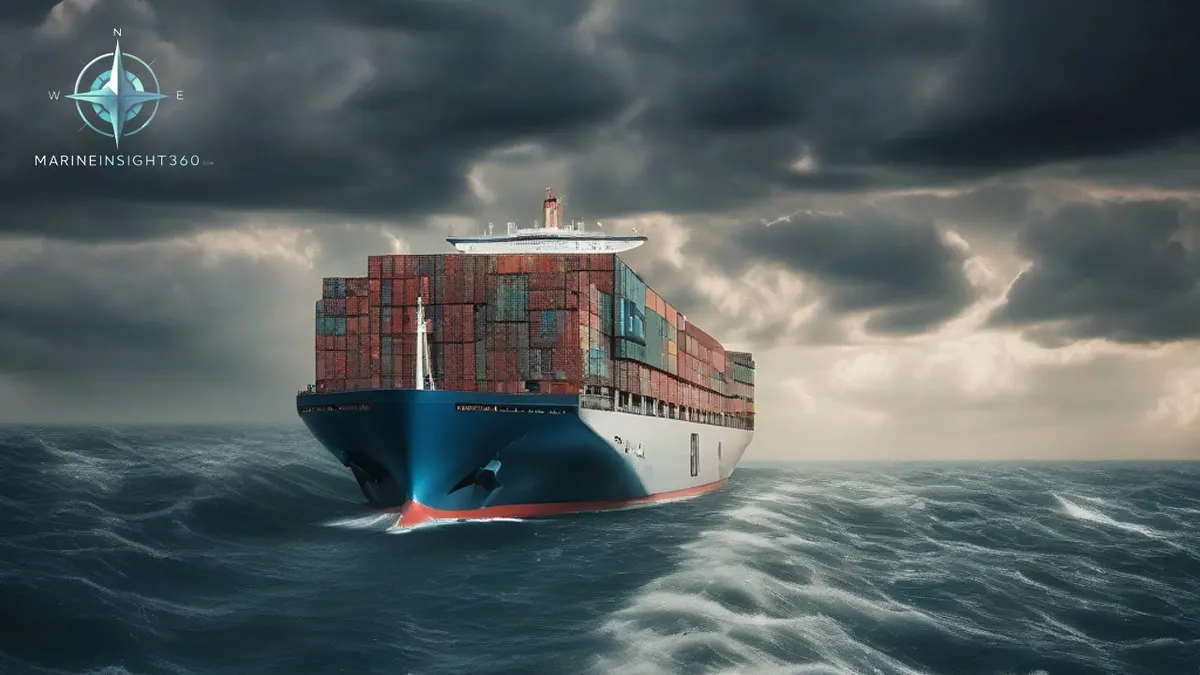
Hydrodynamics is the branch of fluid dynamics that governs how water flows around a hull, and in modern ship design it dictates hull form, bow shape and energy-saving devices that cut wave-making, frictional and form resistance.
The Role of Hydrodynamics in Modern Ship Design
Introduction: The Silent Force Shaping Modern Vessels
Imagine standing on the deck of a massive container ship as it slices through the ocean. It moves thousands of tons of cargo with surprising grace and efficiency. What you're witnessing isn't just raw engine power at work. It is the elegant application of hydrodynamics. That science has quietly revolutionized how ships interact with water. For marine enthusiasts and professionals alike, understanding hydrodynamics in modern ship design opens a fascinating window. It shows how today's vessels achieve unprecedented levels of efficiency, speed, and environmental performance.
Hydrodynamics is a specialized branch of fluid dynamics. It focuses on how fluids in motion interact with solid objects. In this case, that means how water flows around a ship's hull.D1meba This seemingly simple concept has profound implications. They run from fuel consumption to cargo capacity, and from maritime safety to environmental sustainability. As we navigate deeper into the 21st century, the role of hydrodynamics in ship design has evolved. It has moved from basic hull shaping to sophisticated computational modeling, innovative bow designs, and integrated energy-saving systems. Those systems are transforming the maritime industry.
The modern shipping industry faces mounting pressure to reduce emissions and cut operational costs. It must also meet increasingly stringent environmental regulations. Hydrodynamic optimization has emerged as one of the most powerful tools for meeting these challenges. Naval architects and marine engineers rely on it. This comprehensive guide explores how hydrodynamics shapes every aspect of contemporary ship design. It follows the work from the drawing board to the open ocean.
H2: Understanding Hydrodynamics: The Foundation of Ship Design
H3: What is Hydrodynamics and Why Does It Matter?
At its core, hydrodynamics examines how water behaves when ships move through it. When a vessel travels across the ocean, it must overcome several forms of resistance. Wave-making resistance is the energy required to create and push through waves. Frictional resistance is the drag created by water sliding along the hull surface. Form resistance relates to the pressure distribution around the hull shape.
The fundamental principle governing hydrodynamics is Bernoulli's equation. It describes the relationship between fluid pressure, velocity, and elevation.Dmsonline Understanding this equation allows naval architects to predict how water will behave around different hull shapes. It also lets them make informed decisions about vessel design. When water flows faster, its pressure decreases—and vice versa. This simple relationship has enormous implications for how ships are shaped and optimized.
For marine lovers, grasping these concepts reveals why ships look the way they do. The graceful curves of a modern hull aren't arbitrary aesthetic choices. They are carefully calculated shapes. Each one is designed to minimize resistance and maximize efficiency as the vessel moves through water.
H3: The Historical Evolution of Hydrodynamic Ship Design
The bulbous bow concept is attributed to David W. Taylor. He was a naval architect who served as Chief Constructor of the United States Navy during World War I. He implemented the design in the USS Delaware, which entered service in 1910.Wikipedia However, widespread adoption didn't occur until decades later. Only then did shipbuilders begin to fully understand the hydrodynamic principles at work.
The transformation accelerated dramatically in the 1960s and beyond. Computational power became available to naval architects. One of the first representatives of computational approaches was the Hess and Smith method, presented in 1962. It made it possible to compute three-dimensional potential flow around arbitrarily shaped bodies. Exact boundary conditions were applied on the hull surface.National Academies This marked the beginning of a revolution that continues today.
H2: Computational Fluid Dynamics: The Game-Changer in Modern Ship Design
H3: How CFD Transforms the Design Process
Computational Fluid Dynamics (CFD) approaches can achieve optimal design and energy efficiency improvement of ships by adopting dynamics analysis theory.ScienceDirect CFD has fundamentally changed how naval architects approach ship design. Physical model testing in towing tanks can be expensive and time-consuming. Designers no longer rely on it alone. They can now simulate water flow around digital hull models with remarkable accuracy.
Modern CFD software can predict ship resistance and analyze propeller performance. It can evaluate seakeeping characteristics and assess stability. All of this happens before a single piece of steel is cut. The technology enables engineers to test hundreds or even thousands of design variations quickly. It identifies optimal configurations that would have been impossible to discover through traditional methods alone.
Even marginal percentage point gains made possible by CFD add up. The savings in fuel and emissions are substantial.Wärtsilä For large commercial vessels, a fuel efficiency improvement of just two or three percent matters. It can translate into savings of hundreds of thousands of dollars annually. It reduces environmental impact at the same time.
H3: Real-World Applications of CFD in Maritime Engineering
The applications of CFD in ship design extend across multiple critical areas. CFD assists in the design and optimization of propulsion systems, including propellers and thrusters. It does this by simulating the interaction between the propeller and surrounding water.Simfwd This helps designers select the most efficient propulsion components and configurations. That choice is essential for enhancing overall ship performance.
An assessment of final designs using CFD-based optimization has demonstrated reductions in wave height and total hull resistance by up to five percent. It also showed significant improvements to the quality of flow into the propeller. Those changes result in notable improvements to propulsive efficiency.BMT These aren't theoretical gains. They are real-world improvements that directly impact operational costs and environmental footprints.
CFD also enables analysis of complex scenarios that are difficult or impossible to replicate in physical testing. Engineers can simulate ships operating in various wave conditions. They can evaluate dynamic positioning systems and analyze wake patterns. They can assess the effectiveness of energy-saving devices. All of this happens within a virtual environment that provides detailed insights into fluid behavior.
H2: The Bulbous Bow: Hydrodynamics' Most Visible Innovation
H3: The Science Behind the Bulbous Bow
Perhaps no single hydrodynamic innovation is more recognizable than the bulbous bow. It is that distinctive underwater protrusion extending forward from a ship's bow. It might look unusual. The bulbous bow still represents a triumph of hydrodynamic engineering. It has saved the shipping industry billions of dollars in fuel costs.
The bulbous bow modifies the way water flows around the hull. That reduces drag and thus increases speed, range, fuel efficiency, and stability. Large ships generally achieve twelve to fifteen percent better fuel efficiency than similar vessels without them.Wikipedia But how does this seemingly simple addition create such dramatic improvements?
The answer lies in wave interference. As a ship moves forward, it naturally creates a bow wave. That wave of water is pushed ahead of the vessel, and it represents wasted energy. The bulbous bow generates its own wave pattern. That pattern strategically intersects with the ship's bow wave. When properly positioned, the bulb trough coincides with the crest of the bow wave. The two then cancel out through destructive interference, reducing the vessel's wake.Maritime Page
This wave cancellation reduces the overall amplitude of waves created by the ship. That directly translates to lower resistance and improved fuel efficiency. The bulbous bow essentially allows the ship to glide more effortlessly through the water. Less engine power is needed to maintain speed.
H3: Design Considerations and Optimization
Not all bulbous bows are created equal. The effectiveness of a bulbous bow depends critically on ship size and displacement. Operating speed and specific hull characteristics matter just as much. Vessels with high kinetic energy benefit most from bulbous bows designed for their operating speed. That energy is proportional to mass and the square of velocity. Such vessels include those with high mass, like supertankers, and those with high service speeds, like passenger and cargo ships.Wikipedia
Operating conditions often differ from design speeds. In those cases, bulbous bow optimization can achieve overall energy savings above ten percent compared to original configurations. Power savings reach up to fifteen percent in the most probable sailing conditions.VICUSdt This highlights why modern ship operators increasingly invest in bulbous bow retrofits for existing vessels. The return on investment can be remarkably rapid.
The design process for bulbous bows has become increasingly sophisticated. Naval architects now use CFD simulations to test multiple bulb configurations. They analyze how different shapes, sizes, and positions affect wave patterns and resistance across various operating conditions. Expected reduction potentials on main engine fuel consumption from new bulbous bows range from three to five percent. The figure depends on the difference between design speed and average operating speed according to current operating profiles.Imo
H2: Energy-Saving Devices and Hydrodynamic Innovations
H3: Beyond the Bulbous Bow: Modern Energy-Saving Technologies
The bulbous bow remains the most recognizable hydrodynamic innovation. Modern ships also incorporate numerous other energy-saving devices. Those devices are designed to optimize fluid flow and reduce resistance. These auxiliary devices work in concert with hull design to maximize efficiency.
Several Energy-Saving Devices (ESDs) are being developed. Pre-swirl Fins are installed at the propeller's hub to improve flow into the propeller and reduce vortex strength. Ducts like the Kort nozzle improve propulsion system efficiency under specific conditions. Fins attached to the hull redirect flow and minimize energy loss due to wake vortices.D1meba
Each of these devices addresses specific hydrodynamic challenges. Pre-swirl fins condition the water flow before it reaches the propeller. That allows the propeller to operate more efficiently. Stern fins and vortex generators help manage complex flow patterns. Those patterns develop as water moves along the hull and around the stern. Rudder bulbs reduce drag on the rudder itself while improving steering efficiency.
The integration of these devices requires careful analysis and optimization. What works well for one vessel type may not be optimal for another. The same is true across operating profiles. Modern naval architects use CFD simulations to evaluate how different combinations of energy-saving devices interact with specific hull forms. This ensures that each installation delivers maximum benefit.
H3: Innovative Hull Forms and Coatings
Hydrodynamic optimization extends beyond appendages and protrusions. It encompasses the fundamental shape of the hull itself. Researchers are experimenting with hull form innovations such as optimized aft-body shapes and longer, slimmer hulls. These further reduce drag and improve flow. Advanced coatings and materials also offer reduced frictional resistance.D1meba
Modern anti-fouling coatings prevent marine organisms from attaching to the hull. Such growth would otherwise increase drag and decrease efficiency. Some advanced silicone-based foul release coatings create ultra-smooth surfaces. These minimize frictional resistance while preventing biological growth. The cumulative effect of these coatings, combined with optimal hull shaping, is substantial. It can significantly reduce a vessel's fuel consumption over its operational lifetime.
New bow configurations beyond traditional bulbous designs are also emerging. The X-bow was developed for offshore vessels operating in harsh conditions. It features an inverted bow shape that reduces slamming. It also improves motion characteristics in heavy seas. The X-bow was initially designed for comfort and safety. It also demonstrates interesting hydrodynamic properties that may influence future designs.
H2: The Environmental Imperative: Hydrodynamics and Sustainability
H3: Reducing Emissions Through Hydrodynamic Optimization
The maritime industry faces unprecedented pressure to reduce its environmental footprint. Recent focus has fallen on environmental protection and on the reduction of greenhouse gas emissions and CO2. That focus has created a strong push toward optimizing ship operation. The route runs through hydrodynamic performance improvement and main engine performance enhancement.MDPI
Hydrodynamic optimization offers one of the most effective pathways to reducing maritime emissions. Every percentage point of resistance reduction translates directly to lower fuel consumption. It also cuts emissions. The global shipping fleet transports over 90 percent of world trade. For that fleet, even modest efficiency improvements have enormous cumulative environmental benefits.
Large cargo ships equipped with optimized bulbous bows see four to seven percent reductions in fuel usage. Cutting fuel consumption means lower carbon dioxide and sulfur emissions. It also brings reduced operational costs.Engineerine These improvements help the shipping industry meet International Maritime Organization emissions targets. They improve profitability at the same time, which is a rare win-win scenario.
H3: Future Trends in Green Ship Design
The future of CFD in the shipping industry includes several developments. Real-time CFD will enable onboard monitoring and decision-making to optimize ship performance during operations. A continued focus on green ship design will also matter. It supports the adoption of cleaner propulsion systems, energy-efficient hull forms, and anti-fouling coatings.Simfwd
Emerging technologies promise to further enhance hydrodynamic performance. Researchers are exploring air lubrication systems that inject tiny air bubbles along the hull surface. These create a low-friction layer that significantly reduces drag. Biomimetic designs are inspired by marine animals like dolphins and whales. They are being studied for their potential to reduce turbulence and improve flow characteristics.
New innovations in bulbous bow technology include adjustable and retractable bulbous bows for ships operating at variable speeds. Hybrid designs combine bulbous bows with air lubrication systems for further drag reduction.Engineerine These adaptive systems could allow vessels to optimize their hydrodynamic profile for different operating conditions. That would maximize efficiency across a broader range of speeds and sea states.
H2: Advanced Modeling and Testing Techniques
H3: Integrated Design Approaches
Modern digital ship design platforms combine 3D modeling, hydrodynamic analysis, structural simulation, and lifecycle data management within unified environments. They utilize parametric modeling. That lets designers modify vessel dimensions and instantly update associated systems.Cashlesstime This integrated approach represents a quantum leap from traditional sequential design processes.
Contemporary naval architects work within sophisticated software ecosystems. Those ecosystems connect hydrodynamic analysis with structural engineering, stability calculations, regulatory compliance checking, and cost estimation. When a designer modifies a hull line, the system automatically recalculates resistance. It evaluates stability and checks structural loads. It updates cost projections, and that enables rapid iteration and optimization.
These platforms also facilitate collaboration across global design teams. Cloud-based systems allow naval architects in different countries to work simultaneously on the same vessel design. Changes propagate in real-time across all aspects of the project. This collaborative capability accelerates the design process. It also ensures consistency and reduces errors.
H3: The Continuing Role of Physical Testing
Despite advances in computational modeling, physical testing in towing tanks remains essential. It is a core component of ship design validation. Modern ship hydrodynamics utilizes both experimental and numerical methods. These cover ship resistance and propulsion, maneuvering, seakeeping, and hydrodynamic aspects of ship vibrations. Developments in computational methods and model testing techniques continue to advance.ScienceDirect
Physical model testing provides validation for CFD simulations. It also reveals phenomena that may be difficult to capture computationally. The interplay between computational predictions and experimental verification creates a robust design process. That process combines the speed and flexibility of simulation with the reliability of physical testing.
Modern testing facilities employ sophisticated instrumentation. That instrumentation captures detailed flow measurements, pressure distributions, and performance metrics. These measurements validate specific designs. They also provide data that improves the accuracy of computational models. The result is a virtuous cycle of continuous improvement in hydrodynamic analysis capabilities.
H2: Practical Applications Across Vessel Types
H3: Commercial Shipping: Maximizing Efficiency
Many commercial shipping companies often operate on razor-thin profit margins. For them, hydrodynamic optimization directly impacts bottom-line profitability. Container ships, bulk carriers, and tankers all benefit from refined hull forms and energy-saving devices. Those devices reduce fuel consumption, often the single largest operational expense.
Container ships transport vast quantities of cargo, which makes fuel efficiency a top priority. Bulbous bows allow these vessels to save fuel while maintaining high speeds.Maritime Page Modern ultra-large container vessels incorporate sophisticated hydrodynamic optimizations. These include specialized bulbous bows and stern tunnels optimized for propeller efficiency. Integrated energy-saving devices collectively reduce fuel consumption by significant margins.
Bulk carriers and tankers move at slower speeds but carry enormous cargo weights. They benefit from hull forms optimized for their specific operating profiles. The hydrodynamic requirements for a laden tanker differ substantially from those of a ballasted vessel. Careful analysis is needed to ensure optimal performance across different loading conditions.
H3: Naval and Specialized Vessels
Military vessels face unique hydrodynamic challenges. Modern warships must balance speed and maneuverability with stealth characteristics. They must also meet seakeeping demands and the structural requirements of combat operations. The USS George H.W. Bush was the second Nimitz Class carrier to feature a new bulbous bow design. Its lower portion protrudes forward in a bubble shape to add buoyancy to the bow. That reduces drag for better handling at sea and provides lift to the flight deck.Global Security
Specialized vessels like offshore support ships, research vessels, and icebreakers each require tailored hydrodynamic solutions. Offshore vessels operating in harsh environments need hull forms that maintain stability. Those hulls must also reduce motion in heavy seas. Research vessels may prioritize quiet operation. That avoids interfering with sensitive scientific equipment. Icebreakers require specialized bow designs that efficiently break through ice. Those designs must manage the unique hydrodynamic challenges of operating in ice-filled waters.
H2: The Future of Hydrodynamics in Ship Design
H3: Artificial Intelligence and Machine Learning
Bio-memetic methods are increasingly employed in hydrodynamic optimization. They include genetic and evolutionary algorithms and artificial neural networks. Optimization procedures account for the area of ship service and its mission.MDPI These advanced computational techniques enable exploration of vast design spaces. Traditional methods would find those spaces impractical to investigate.
Machine learning algorithms can identify optimal hull forms by analyzing thousands of design variations. They learn patterns that correlate with superior performance. Neural networks are trained on extensive databases of ship performance data. They can predict hydrodynamic characteristics almost instantaneously. That enables real-time optimization during the design process.
As these technologies mature, we may see a shift toward generative design approaches. In those approaches, AI systems propose novel hull forms and configurations. Human designers might never conceive of them. These unconventional designs would be validated through CFD and physical testing. They could unlock new levels of hydrodynamic efficiency.
H3: Autonomous Systems and Real-Time Optimization
The emergence of autonomous and semi-autonomous vessels introduces new possibilities for hydrodynamic optimization. Ships equipped with sophisticated sensors and computational capabilities could continuously monitor their hydrodynamic performance. They could make real-time adjustments to optimize efficiency for current conditions.
Trim optimization systems already exist. They automatically adjust a vessel's fore-and-aft orientation to minimize resistance. The adjustment is based on loading, speed, and sea state. Future systems may go further. They could adjust ballast distribution or control dynamic trim tabs and foils. They might even modify propeller pitch in response to real-time hydrodynamic analysis.
This shift toward adaptive, intelligent systems represents the next frontier in marine hydrodynamics. The field is moving away from static designs optimized for specific conditions. It is moving toward dynamic systems that continuously adapt to changing circumstances.
Conclusion: Hydrodynamics as the Foundation of Modern Maritime Excellence
The role of hydrodynamics in modern ship design extends far beyond abstract scientific principles. It represents the foundation upon which the global maritime industry operates. Look at the elegant curves of a container ship's bow. Look at the sophisticated energy-saving devices clustered around its stern. Every aspect of contemporary vessel design reflects careful hydrodynamic analysis and optimization.
For marine enthusiasts, understanding hydrodynamics reveals the hidden intelligence embedded in ship design. What appears as simple metal and machinery is actually a physical manifestation. It embodies complex mathematical models and countless hours of computational simulation. It also carries decades of accumulated knowledge about how ships interact with water. Consider the bulbous bow that breaks the surface ahead of a passing vessel. Consider the smooth transition of hull lines along its length. Consider the precisely positioned stern fins.
Each element tells a story of engineering optimization in pursuit of efficiency, economy and environmental responsibility.
As the maritime industry navigates toward a more sustainable future, hydrodynamics will play an increasingly central role. The pressure to reduce emissions and minimize environmental impact continues to intensify. So does the pressure to operate more economically. Hydrodynamic optimization offers proven, practical solutions to these challenges. They benefit operators economically while advancing environmental goals.
The adoption of CFD-based dynamics analysis methods can effectively optimize ship dynamics performance. It reduces ship energy consumption and pollution gas emissions. Future research is focused on coupled dynamics analysis. The goal is overall performance optimization of integrated ship-engine-propeller-appendages systems.ScienceDirect This holistic approach treats the entire vessel as an integrated system. It does not treat it as a collection of separate components. That approach represents the future direction of ship design.
The journey of hydrodynamic ship design runs from early empirical approaches through the computational revolution. It reaches today's sophisticated integrated systems. That journey demonstrates humanity's remarkable ability to understand and harness natural forces. Computational power continues to grow and measurement techniques become more precise. Our understanding of fluid dynamics deepens. We can expect continued advances in ship hydrodynamics that will shape the vessels of tomorrow.
For anyone who loves the sea and the magnificent vessels that traverse it, hydrodynamics offers an endless source of fascination. It's a field where physics meets creativity. It is where mathematical elegance translates into physical grace. It is where scientific understanding enables practical solutions to real-world challenges. The next time you watch a ship glide past, consider the invisible forces at work. There is a careful orchestration of pressure and velocity, wave and resistance.
That orchestration allows thousands of tons to move efficiently across the ocean. That's the magic of hydrodynamics in modern ship design.
Recommended Reading
What Is The Basic Principle Behind Hatch Cover Design?
What Is The Basic Principle Behind Hatch Cover Design?: ports, trade and shipping-market context for US, UK, Canada, Australia, Singapore and European...
Ship Navigation Equipment: The 30 Systems on a Modern Bridge
The ship navigation equipment a modern bridge carries, grouped by job: position fixing, collision avoidance, charts, communications, safety recorders and more.
Modern Ship Mast Design – Comprehensive Guide
Modern Ship Mast Design – Comprehensive Guide: safety, training and compliance context for US, UK, Canada, Australia, Singapore and European maritime...