
Stowaways on Ships: Classification and Measures to Prevent Access
How the FAL Convention defines a stowaway, how cases are classified, the master's duties on discovery, and the access controls that actually work.
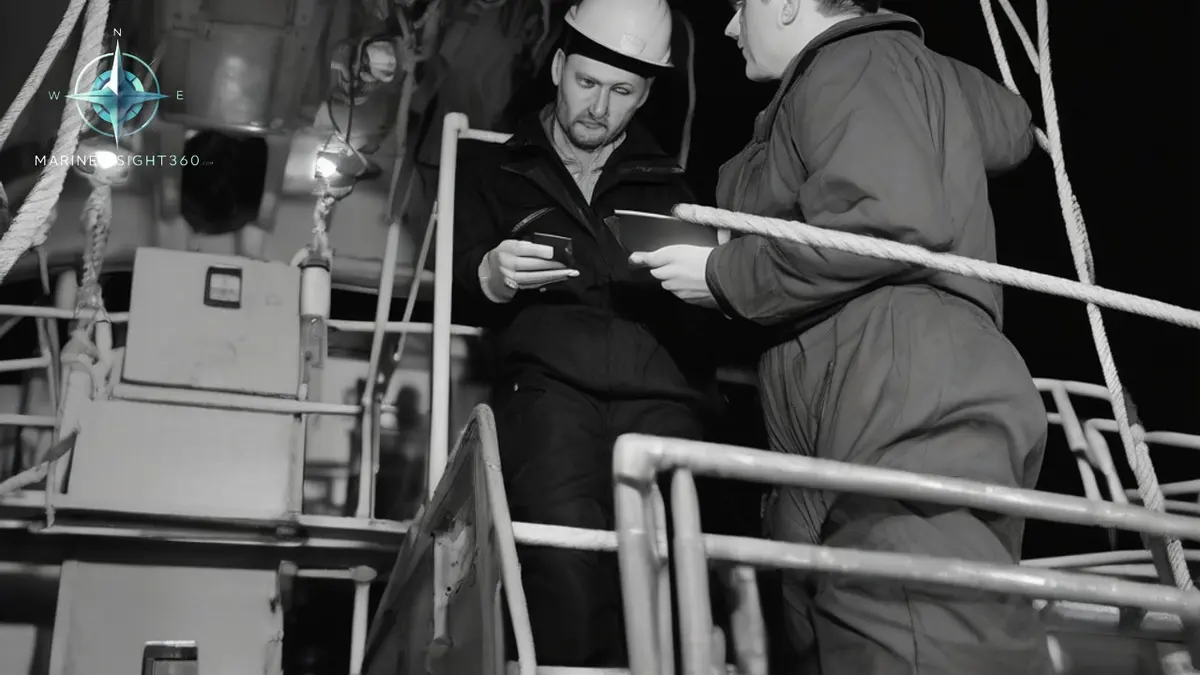
Stowaways on ships are people secreted on board, or in cargo later loaded on the ship, without the consent of the shipowner, master or any other responsible person. The case becomes a stowaway case when one of them is detected on board after departure, or in the cargo at the discharge port, and is reported by the master to the authorities. That definition comes from the IMO Convention on Facilitation of International Maritime Traffic, the FAL Convention.
It decides who carries the legal and financial burden. The bill lands hardest on ships bound for the United States, the United Kingdom or Australia, where landing a stowaway means immigration detention, guards at the gangway and a repatriation flight, all paid by the owner.
How stowaway cases are classified
Classification is not academic. It changes the legal duties, the insurance position and what the crew may lawfully do.
- By point of access. Port boarders who climb moorings, gangways or the shell plating; cargo concealment cases inside containers, vehicle decks or bulk holds; and external structure cases, where people hide in the rudder trunk, sea chests or void spaces.
- By discovery point. Detected before departure, at sea, or only at the discharge port. Pre-departure detection keeps the case with the port authority. Detection at sea makes it the master's problem.
- By legal status. A stowaway is not the same as a person rescued at sea, an asylum seeker who declares a protection claim, or an armed intruder. A protection claim changes the disembarkation options and must be handled through the flag state and the P and I club, not resolved on board.
Risk tracks trade pattern, cargo type and crew security awareness. Vessels loading in ports with weak perimeter control and sailing to attractive destination states see the highest incidence.
The master's duties once a stowaway is found
- Ensure the person's safety, health and welfare. Food, water, medical attention and shelter are not discretionary.
- Search for others. Stowaways rarely travel alone, and a second person found later destroys the credibility of the first report.
- Interview and document. Name, claimed nationality, port of embarkation, method of access, and photographs where lawful.
- Report immediately to the flag state, the next port state, the owner and the P and I club correspondent.
- Do not deviate without instruction. Deviation carries charterparty and insurance consequences that must be authorized ashore.
Amendments to the FAL Convention adopted in 2022 and in force from 2024 added a recommended practice that stowaways should not receive payments or other benefits beyond the minimum needed for their security, health, welfare and safety. The reasoning is that anything more acts as an incentive to try again.
Measures to prevent stowaway access at the berth
IMO Resolution FAL.11(37) sets out revised guidelines on preventing access by stowaways and allocating responsibility for resolving cases. The operational core of it is simple and repetitive.
- Control the gangway with a manned watch, an identity check and a log, and hold the same standard at 0300 as at 1400.
- Rig rat guards and keep mooring lines and the anchor cable under observation in high risk ports.
- Lock every access point to the accommodation, store rooms, forecastle, steering flat and funnel casing before the pilot boards.
- Search before departure using a written plan with named spaces and a signed sign-off, not a walk around.
- Seal and check containers and holds, and record seal numbers against the manifest.
- Use shore security guards in ports with a known problem, and brief them on which spaces matter.
A common failure on board is treating the pre-departure search as a formality once the ship is on standby. The rudder trunk, chain locker, funnel casing and empty ballast void spaces are the ones that get skipped, and they are the spaces where people are found.
Cost, insurance and why owners take it seriously
P and I clubs cover stowaway costs, and their case numbers run well above the incidents reported to IMO because many cases are settled commercially without a formal report. The bill includes deviation, port charges, shore guards, repatriation flights and escorts, immigration fines and legal fees. A single case can reach six figures once a deviation is involved, and repeated cases affect a member's claims record.
What crews should have ready before a high risk port
Before arrival, confirm the search plan, the access control watch schedule and the reporting chain. Keep the club correspondent's contact details on the bridge rather than in a folder. Agree with the master who conducts the interview and who writes the report. Retain the search records for the voyage, because the ship's ability to prove it searched properly is often the difference between a covered claim and an argument.
Gard and Steamship Mutual both publish current stowaway guidance for members, and the IMO facilitation pages hold the FAL texts. Related shipboard security material sits in the Marine Insight 360 Shipboard Operations section.
Sources and further reading
- IMO: Stowaways
- IMO: FAL Convention
- Gard: Guidance on Stowaways 2025
- Steamship Mutual: Guidelines to prevent stowaway access to vessels
What to read next
Recommended Reading

What Is a TEU? The Unit That Measures Container Shipping
What is a TEU? How the twenty-foot equivalent unit measures containers, ships and ports, and how to read vessel sizes quoted in TEU.
Measures Prepare for Tropical Revolving Storm (TRS)
Measures Prepare for Tropical Revolving Storm (TRS): technology, equipment and fleet context for US, UK, Canada, Australia, Singapore and European...

Internet Options at Sea: How to Access the Internet on Board?
Internet Options at Sea: How to Access the Internet on Board?: ports, trade and shipping-market context for US, UK, Canada, Australia, Singapore and...