
Sunken Ship: What Happens Next, Who Pays and Who Removes It
What happens after a ship sinks: who owns the wreck, who pays to remove it, how much oil sunken ships still hold, and what the Nairobi Convention requires.
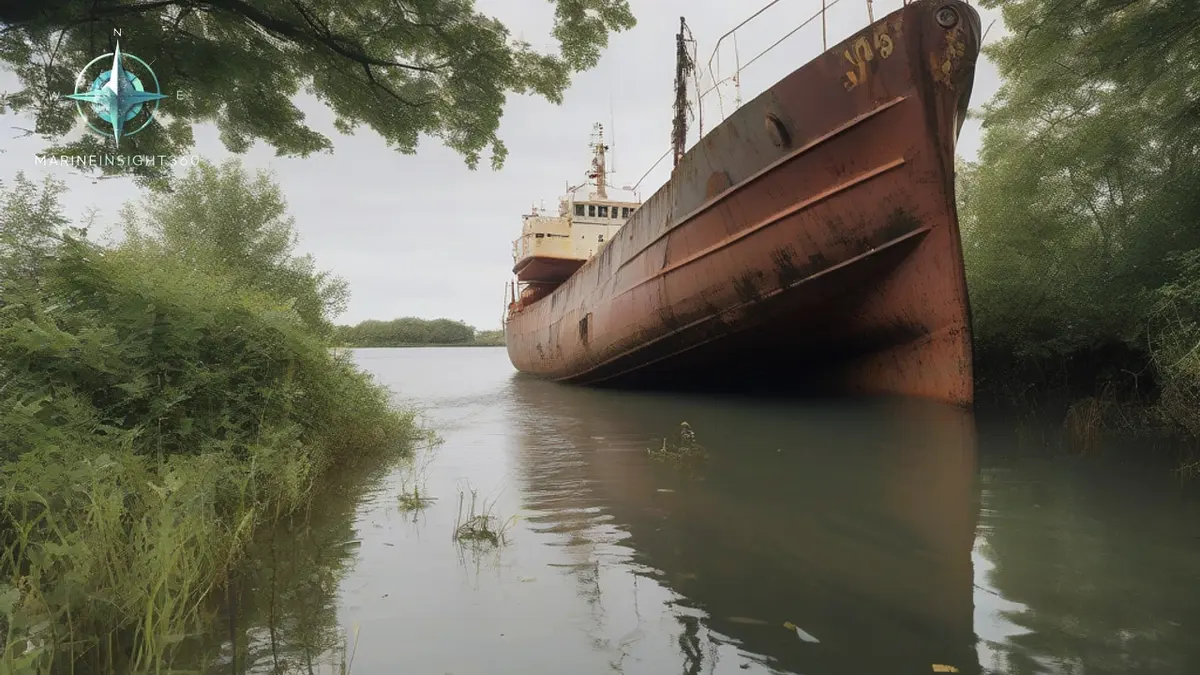
A sunken ship is still the owner's property and the owner's liability. Reaching the bottom settles nothing. It has to be located and marked as a hazard. If it threatens navigation or the environment, the owner can be required to remove it at their own cost. The Nairobi International Convention on the Removal of Wrecks has been in force since 14 April 2015.
Under it that liability is strict, insurance is compulsory, and the affected state can claim directly against the insurer.
Everything after a sinking follows from three questions: is it in the way, is it leaking, and who is paying.
The first job is marking it
A new wreck in navigable water is an immediate hazard, and often the chart still shows clear water. The coastal authority issues a navigational warning, follows it with a Notice to Mariners, and marks the position physically.
The dedicated mark is the IALA emergency wreck marking buoy, introduced after several serious incidents involving newly sunk ships. It is unmistakable: vertical blue and yellow stripes, an upright yellow cross topmark, and an alternating blue and yellow flashing light. It is placed as close to the wreck as practicable, sometimes in pairs. It stays until permanent marking such as cardinal buoys is established or the wreck is removed.
Any officer of the watch who sees blue and yellow vertical stripes should treat the position as foul until the chart says otherwise.
Who owns a sunken ship
Sinking does not transfer ownership. The registered owner keeps title to the hull, and the cargo owners keep title to the cargo, unless title is formally abandoned. Abandonment does not necessarily remove the liability that came with it.
Salvage law then determines what a third party recovering property is entitled to. Salvage is generally a no cure, no pay arrangement: recover value and you earn an award; recover nothing and you earn nothing. That principle shapes which wrecks attract commercial interest and which sit untouched for decades.
Jurisdictions add their own machinery on top. In the UK, anyone recovering wreck material in UK waters must report it to the Receiver of Wreck, which then seeks the owner. In the US, federal law obliges owners to mark and remove obstructions in navigable waters. The Oil Spill Liability Trust Fund can be tapped when no responsible party can be identified.
Who pays: the Nairobi Convention
The 2007 Nairobi convention was written to close a specific gap. Coastal states could deal with wrecks in their territorial sea under national law, but had weak recourse for wrecks in the exclusive economic zone beyond it.
- Strict liability. The owner is liable for locating, marking and removing a hazardous wreck without the state needing to prove fault.
- Compulsory insurance. Ships of 300 gross tonnage and above must carry a state-issued certificate evidencing insurance or other financial security. Protection and indemnity clubs issue the blue cards that support those certificates.
- Direct action. The state can claim against the insurer directly rather than chasing an owner who may be a single-ship company with no other assets.
- Limitation varies. Limits generally follow the Limitation of Liability for Maritime Claims convention. Several states have exercised the reservation that takes wreck removal outside the limitation regime, so exposure depends on where the ship sinks.
The practical effect is that wreck removal is now a priced, insured risk rather than an argument after the event.
The oil still inside
Most sunken ships still hold fuel. A widely cited 2005 study estimated more than 8,500 wrecks worldwide containing up to 22 billion liters (5.8 billion US gallons) of oil. Much of that sits in vessels lost during the Second World War, in tanks that have been corroding for eight decades. NOAA has assessed wrecks in US waters for pollution potential and identified a subset of dozens requiring further evaluation or removal of fuel and cargo oil.
Removing oil from a wreck is a specialist operation. Divers or remotely operated vehicles survey the tanks. Hot tapping equipment is clamped to the shell and drills through it without releasing the contents. The oil is heated so it will flow. It is pumped into a barge or a floating bladder while seawater replaces it. Costs run high and access windows are weather dependent, which is why a wreck usually has to threaten something specific before the work is funded.
When a wreck is removed and when it is left
Removal is not automatic. The decision weighs navigational risk, pollution risk and cost, and the numbers are substantial. P&I market estimates put removal of a laden container ship in a busy sea lane in the range of tens of millions of US dollars. A large tanker or cruise ship in environmentally sensitive water can exceed 100 million.
- Removed: wrecks in port approaches, fairways and anchorages, wrecks with a leaking or threatened cargo, and wrecks at a depth that reduces charted clearance below the design draft of the trade.
- Left in place: deep water wrecks clear of traffic with stable tanks, war graves and protected sites, and wrecks where removal would cause more environmental damage than leaving them.
- Monitored: a growing middle category, surveyed periodically for hull deterioration and sampled for hydrocarbon release.
Reporting a wreck you find
If you locate an uncharted wreck or an obstruction, report it. Send the position, depth over it, method of detection and any visible evidence to the coastal state authority and to the national hydrographic office. Uncharted obstructions are corrected through the Notice to Mariners system, and the report from a working ship is often the first anyone hears of it.
Historic wrecks are a separate regime
Wrecks that have been underwater for at least 100 years fall under the UNESCO Convention on the Protection of the Underwater Cultural Heritage. That convention favors preservation in place and discourages commercial exploitation. Many states also protect specific sites and designate military wrecks as war graves. Recreational and commercial access can be restricted, and the penalties for interference are real.
Next step: if your ship transits an area with recent casualties, check the latest navigational warnings against your passage plan before relying on chart depths. A new wreck reaches the warning system long before it reaches the chart. The Marine Insight 360 Knowledge Base covers navigational warnings and chart correction in more detail.
Sources and further reading
- IMO: Nairobi International Convention on the Removal of Wrecks
- NOAA: New report examines national oil pollution threat from shipwrecks
- Transport Canada: Overview of the Nairobi International Convention on the Removal of Wrecks, 2007
- ITOPF: Sunken Oil and the Removal of Oil From Sunken Wrecks
What to read next
Recommended Reading
Boat Approaches Tanker Near Yemen: What Happens On Board Next
A boat approaches a tanker near Yemen, then retreats when the armed team appears. Inside the UKMTO reporting chain, warning signs and onboard drills.
Cadeler 20MW Wind Turbine Installation Vessel Keel Laid: Inside a Next-Generation WTIV
The keel laying of Cadeler's 20MW wind turbine installation vessel explained: crane capacity, deck area, jack-up limits and what the milestone means.
CSSC Tianjin Adds Two Drydocks by Buying the Yard Next Door
CSSC Tianjin has bought its bankrupt neighbor, adding 500,000 and 300,000 tonne drydocks and 2.4 million dwt of annual capacity at a yard booked to 2028.