
Swedish Navy Spots Vessels Suspected of Sabotage: What Baltic Crews Need to Know
How Baltic states track and board ships after undersea cable damage, what the law of the sea allows, and how merchant crews stay clear.
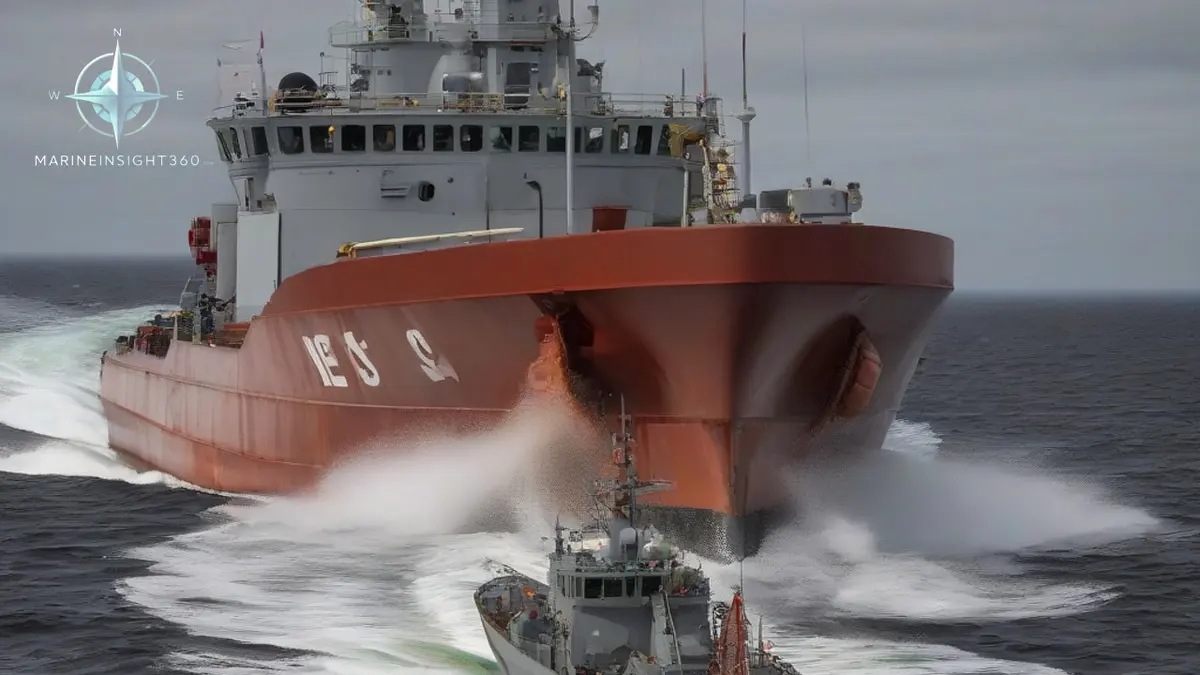
When the Swedish Navy spots vessels suspected of sabotage in the Baltic, it is reacting to a specific pattern. A ship slows over a charted cable or pipeline corridor, its anchor is down or its track wanders, and hours later an operator reports a break. Sweden, Finland and Estonia now keep naval and coast guard units at sea daily under NATO's Baltic Sentry to watch for that signature. Boarding the ship afterwards is the hard part.
UNCLOS gives a coastal state very little authority over a foreign-flag vessel outside its territorial sea, which is why EU members have leaned on port state control and sanctions screening instead.
That gap between suspicion and enforcement explains most of what merchant crews see in the region: shadowing warships, radio challenges, requests to alter course into territorial waters, and long investigations that often end without charges.
What the patrols are actually watching for
Surveillance in the Baltic is built around behavior, not nationality. Naval watchkeepers and commercial risk analysts flag the same handful of indicators.
- Speed dropping to a few knots over a known cable or pipeline route with no operational reason.
- An anchor deployed, or only partly housed, while the vessel is under way.
- AIS, the Automatic Identification System that SOLAS requires most ships to broadcast, switched off or transmitting a position that does not match radar and satellite returns.
- Ship-to-ship transfers in open water, falsified port calls, and gaps in the vessel's reported movement history.
- Ownership and insurance arrangements that change often and cannot be traced to a solvent party.
Those techniques are associated with the sanctioned trading fleet moving Russian crude, and the Baltic is the sea area where they concentrate most heavily. Carnegie's research on the region links that fleet directly to the run of subsea infrastructure incidents.
Why the Baltic is unusually hard to police
Geography works against the defenders. The Baltic is shallow, narrow and busy, so a ship dragging an anchor never has to travel far from a legitimate track to reach something important. Power interconnectors, gas lines and telecom cables cross it in dense bundles between the Nordic states, the Baltic states, Poland and Germany.
Exclusive economic zones also meet each other across most of the sea, which leaves almost no high seas area and a great deal of overlapping jurisdiction. A suspect track can cross three states' waters within a single watch.
Why boarding a suspect ship is legally difficult
Under the UN Convention on the Law of the Sea, a coastal state cannot simply stop and board a foreign ship in its exclusive economic zone, even with strong evidence that the ship cut a cable serving its own territory. Article 113 obliges states to make cable damage a criminal offense in their own law. It does not hand them enforcement powers over another flag's ship at sea.
The practical workaround has been persuasion. Swedish and Finnish authorities have asked suspect ships to proceed into territorial waters, then boarded them there. Swedish authorities boarded the Malta-flagged Vezhen after a cable breach and later ruled out sabotage, releasing the vessel. In a separate case a Bulgarian-owned ship inbound from Russia was boarded and became the subject of a sabotage investigation.
Detention is expensive and rarely permanent. Ships are often released after fines and return to the same trade. That is why NATO and the UK-led Joint Expeditionary Force have put effort into persistent surveillance across the Baltic and North Seas rather than into seizure.
How an honest ship stays off the suspect list
Most anchor damage to cables is careless, not deliberate. The defense is ordinary good practice, kept tight and documented.
- Plot cable and pipeline corridors on the passage plan from the electronic chart and the relevant notices to mariners, and treat them as no-anchoring areas unless the coastal state says otherwise.
- Confirm both anchors are properly secured and the brake is set before the pilot leaves. Record the check in the deck log.
- Keep AIS transmitting continuously. Switching it off in the Baltic invites a boarding.
- Log any unplanned speed reduction, drift or machinery problem over a cable corridor at the time, with position and reason.
- Answer VHF challenges promptly and in plain language. Silence reads as evasion.
If your anchor does snag something
Stop. Do not try to free the obstruction by heaving through it. Report immediately to the nearest coastal state authority and to the flag state, and note the exact position, depth, time and heading. Cable operators can usually match a fault position to a vessel track within hours, so an unreported snag will be found. A prompt, documented report is often the difference between a civil claim and a criminal investigation.
What it changes for operators
Charterers and protection and indemnity clubs active in the region now ask harder questions about anchor handling, AIS discipline and route choice in Baltic waters. Ships with clean, contemporaneous records clear inspections faster and get released sooner when they are stopped. Expect the daily naval presence to continue while the legal framework lags the threat, and build the extra reporting time into Baltic passage plans. Our Shipboard Operations section covers anchor watch and passage planning practice in more detail.
The enforcement route that works is inspection in port. Sweden, Finland, Estonia and Poland are Paris MoU members, so a suspect ship calling in the region can be inspected on certificates, manning, hull condition and insurance, and detained on deficiencies that have nothing to do with cables. EMSA supplies the tracking and satellite picture the coastal states build those cases on.
Class is the other lever. A tanker that loses its certificates from a recognised society such as DNV or Lloyd's Register becomes very hard to insure and to enter anywhere, so withdrawal of class bites faster than any prosecution. Port state control detention and loss of class together do more to change behaviour in the Baltic than a boarding at sea achieves.
Sources and further reading
- The Baltic Sea at a Boil: Connecting the Shadow Fleet and Episodes of Subsea Infrastructure Sabotage
- How the Baltic Sea nations have tackled suspicious cable cuts
- The Baltic Sea Cable-Cuts and Ship Interdiction: The C-Lion1 Incident
- Timeline of Suspected Underwater Sabotage in the Baltic Sea
What to read next
Recommended Reading
Chinese and Russian Warships Sail Around Japanese Islands: What Merchant Crews Need to Know
Chinese and Russian warships sail around Japanese islands on joint patrols. The straits involved, the passage rules that apply and safe bridge practice.
What qualifications do I need to be in the Merchant Navy India?
What qualifications do I need to be in the Merchant Navy India?: ports, trade and shipping-market context for US, UK, Canada, Australia, Singapore and...
Do Merchant Marines Wear Uniforms? What Crews Actually Wear at Sea
Merchant marines do wear uniforms, but not all day and not on every ship. How stripes, epaulettes and department insignia work, and what crews wear on watch.