
The Hull of a Ship: Purpose, Design and the Trade-offs Behind It
What a ship hull does, how naval architects shape it, and why block coefficient, bulbous bows, stern form and double hulls change fuel burn and survivability.
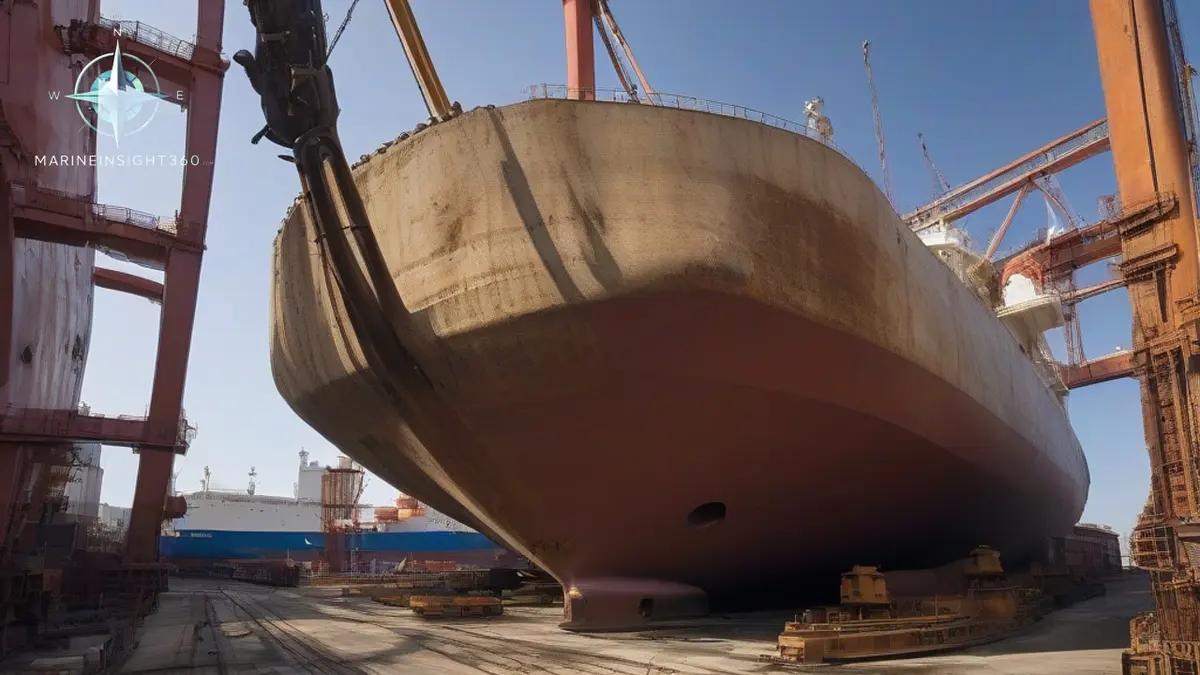
What a ship hull is actually for
The hull of a ship is built to do three jobs that pull against each other: provide buoyancy and stability, carry the cargo and structural loads, and move through water with as little resistance as possible. Every design decision trades one against the others.
A fuller hull carries more cargo on the same length. A finer hull goes faster on the same power. No hull does both. The rules that settle the argument are written by class societies such as Lloyd's Register, DNV, ABS and ClassNK, and enforced at the quay by port state control in the US, the UK and Australia.
Understanding hull purpose and design is what lets a watchkeeper read why a ship behaves the way it does. It explains why one vessel slams and another rolls, why a bulbous bow helps at one draft and hurts at another, why the same engine gives different speeds loaded and in ballast.
The coefficients that describe a hull in numbers
Naval architects compare hull forms using dimensionless coefficients. The one every mariner should know is the block coefficient.
- Block coefficient. Submerged hull volume divided by the box of length, breadth and draft that would enclose it. A laden VLCC sits near 0.80 to 0.85. A container ship runs roughly 0.55 to 0.65. A fast naval hull can be near 0.45.
- Prismatic coefficient. How the volume is distributed along the length. It drives wave-making behavior more than the block coefficient does.
- Midship section coefficient. How square the midship section is. Full amidships and fine at the ends is the tanker recipe.
- Waterplane area coefficient. The fullness of the waterline shape. It governs how far the ship sinks per tonne loaded and feeds straight into stability.
These are not academic figures. Block coefficient feeds freeboard assignment under the Load Line Convention, powering prediction, propeller wake, steel weight estimation and the EEDI and EEXI efficiency ratings that decide regulatory compliance.
Resistance: two forces trading dominance
Total hull resistance divides mainly into frictional resistance, from water shearing along the wetted surface, and wave-making resistance, from the wave system the hull generates. At low speed relative to length, friction dominates, so wetted surface area is what to minimize. As speed rises, wave-making grows sharply and the ends of the hull have to be made finer.
This is why a slow bulk carrier is a full box with a rounded nose while a fast ferry is a slender wedge. It also explains what slow steaming did to hull design. Ships built for 25 knots and then run at 18 for years carried bows optimized for a speed they no longer used, and a wave of bulbous bow retrofits followed.
Bow shapes and the problem each one solves
A bulbous bow generates its own wave system slightly ahead of the stem. At the design speed and draft that wave partially cancels the bow wave, cutting wave-making resistance. Away from the design condition, particularly in ballast with the bulb near the surface, the benefit shrinks and can turn into a penalty.
A raked conventional bow gives reserve buoyancy forward and throws spray clear, which is why it survives on general cargo ships and workboats. An inverted or axe bow , common on offshore support vessels, cuts through waves instead of lifting over them, reducing pitch accelerations and slamming at the cost of a wetter foredeck. A vertical stem maximizes waterline length within a given overall length, buying speed on the same block.
Stern form and what the propeller sees
The stern has to close the flow smoothly and deliver clean, even water into the propeller disc. Turbulent separation aft costs power twice: once as added resistance, once as lost propulsive efficiency and added vibration. A transom stern adds deck area and helps at higher speeds once the transom runs dry, but a transom dragging in the water at low speed is pure added drag.
Wake-equalizing ducts, pre-swirl stators and fins are all attempts to correct a stern flow field the hull lines alone did not deliver.
Double hulls, subdivision and damage stability
Structure is the other half of hull design. MARPOL Annex I requires double hulls on oil tankers, with the single-hull fleet phased out after the Exxon Valdez and Erika casualties, so a grounding or a moderate side impact breaches only the ballast space. SOLAS Chapter II-1 sets watertight subdivision and damage stability standards, which decide how many compartments a ship can flood and still float upright.
For the crew, the practical consequence is that watertight door discipline and ballast tank inspection are not housekeeping tasks. They are the conditions under which the damage stability calculation stays true.
Fouling: the design that erodes at sea
A hull leaves the yard hydrodynamically smooth and starts degrading immediately. Slime, weed and shell growth raise frictional resistance, and a heavily fouled hull can demand substantially more power for the same speed. Antifouling coating selection, hull cleaning intervals and propeller polishing are therefore continuing design decisions rather than maintenance afterthoughts, and they feed directly into the carbon intensity rating a ship reports each year.
Reading your own ship
The useful habit is connecting numbers already on the bridge to the form under the waterline. Compare fuel consumption at the same speed loaded and in ballast, and the bulb design condition becomes visible. Watch how the ship answers a beam sea and the waterplane and midship coefficients start to mean something concrete. The Knowledge Base section covers stability and hull structure terminology for anyone preparing for an oral examination.
Sources and further reading
- Block coefficient and hull form coefficients - ShipCalculators
- Practical Hydrodynamic Design of Bulbous Bows for Ships
- Types of Bow Designs Used for Ships - American Nautical Services
What to read next
Recommended Reading
What Are Masts on a Ship? Purpose, Types and Modern Design
What masts are on ships: their purpose on sailing and motor vessels, common types and materials, and how modern mast design has changed.
What Are Fishing Nets Made Of? Materials, Trade-offs and Ocean Impact
What fishing nets are made of today: nylon, polyethylene and polypropylene, why synthetics replaced natural fibers, and the ghost gear problem.

What Are Portholes? Purpose, Construction and the Rules Behind Ship Side Scuttles
What portholes are, why they are round, how side scuttles are built with toughened glass and deadlights, and the strength grades rules require at sea.