
What Is the Most Effective Way to Treat Ballast Water on a Ship?
UV and electrochlorination dominate ballast water treatment. Here is how each performs against the IMO D-2 standard and how to match a system to your trade.
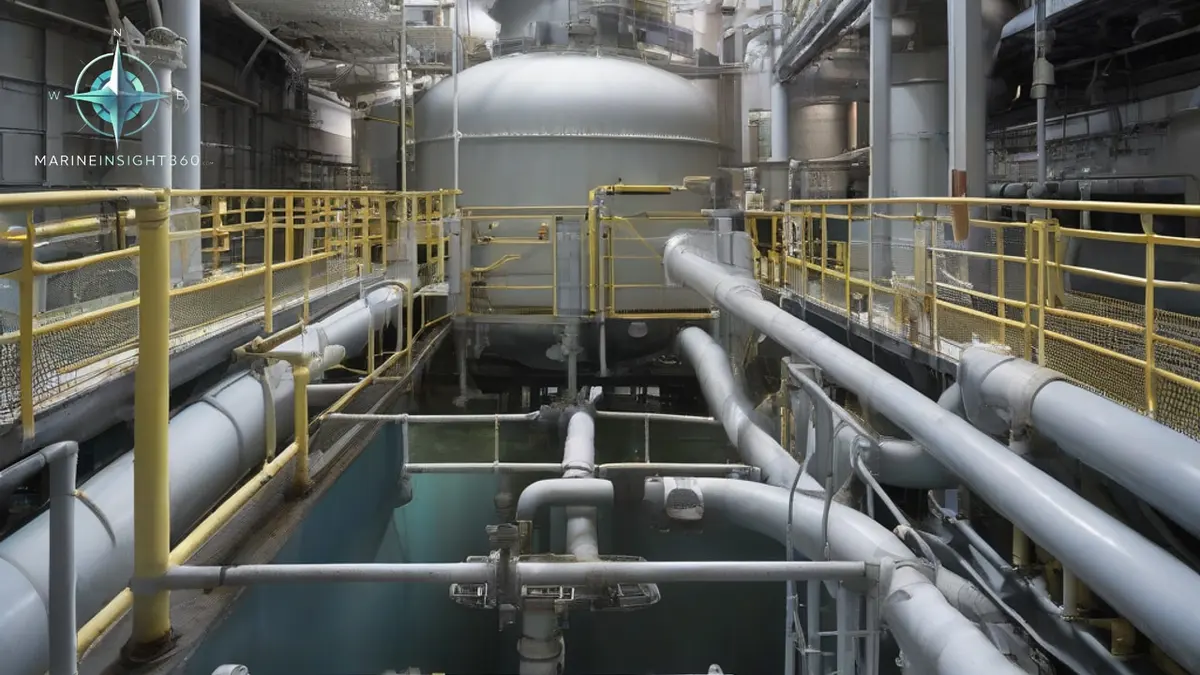
What is the most effective way to treat ballast water on a ship? There is no single technology that wins on every vessel. The effective answer is a system matched to the ship's trading pattern, ballast flow rate, available power and the water it will actually pump. Two technologies dominate the installed fleet: electrochlorination at around 37 percent of systems and ultraviolet treatment at around 31 percent.
Both meet the IMO D-2 standard in type approval testing, and both fail in different real-world conditions.
Since 8 September 2024, all applicable ships must meet the D-2 discharge standard, which ends the transitional D-1 ballast exchange option. Compliance is now a machinery availability question rather than a procedural one.
What the D-2 standard actually requires
The D-2 standard sets numerical limits on viable organisms in discharged ballast water:
- Fewer than 10 viable organisms per cubic meter for organisms 50 micrometers and above in minimum dimension.
- Fewer than 10 viable organisms per milliliter for organisms between 10 and 50 micrometers.
- Fewer than 1 colony-forming unit per 100 ml of toxicogenic Vibrio cholerae.
- Fewer than 250 cfu per 100 ml of Escherichia coli.
- Fewer than 100 cfu per 100 ml of intestinal Enterococci.
Every approved system is built around a filter that removes the larger organisms and sediment, followed by a disinfection stage that handles what passes through. The filter is where most operational trouble starts.
Filtration plus ultraviolet: strengths and limits
UV systems pass filtered water past medium or high pressure lamps, damaging organism DNA so they cannot reproduce. The chemistry is simple, nothing is stored on board, and there is no residual to neutralize before discharge.
Where UV wins: salinity makes no difference, so a ship trading between fresh, brackish and sea water uses one operating mode everywhere. Great Lakes traders, river-served terminals and Baltic operations favor UV for exactly this reason. Treatment is also immediate, which suits short ballast legs.
Where UV struggles: turbidity. UV transmittance falls in silty or algae-rich water, and the system compensates by cutting ballast flow rate, sometimes severely. Alongside a berth with a tight cargo schedule, a halved deballasting rate becomes a demurrage problem. Power draw is also significant, and lamps and quartz sleeves are consumables with real running costs.
Electrochlorination: strengths and limits
Electrochlorination passes a side stream of sea water through electrolytic cells, converting chloride into sodium hypochlorite, which is dosed back into the main ballast line. Kill is chemical rather than optical, so turbidity matters far less.
Where EC wins: high ballast flow rates in warm, saline water. Tankers and bulk carriers on ocean trades handle very large ballast volumes in a short window, and EC handles that flow with lower power per cubic meter than UV. Residual oxidant continues working in the tank during the voyage, which suppresses regrowth.
Where EC struggles: low salinity and low temperature both reduce hypochlorite generation, and many EC systems need a brine dosing arrangement or simply cannot operate below a stated salinity threshold. The process also generates hydrogen, which requires a dedicated degassing and venting arrangement and pushes the equipment into hazardous area considerations. Residual oxidant must be neutralized before discharge, adding a chemical store and a total residual oxidant sensor to maintain.
A note on regrowth
Comparative testing of UV and chlorine-based systems found that all met D-2 at discharge, but phytoplankton regrowth still occurred in the tank. Neutralizing the residual chemical in EC systems accelerated that regrowth. This is an argument for treating on discharge as well as on uptake where the system supports it, and for not assuming a treated tank stays treated indefinitely.
Matching the system to the trade
- Fixed liner route in brackish or coastal water: UV, sized generously so turbidity derating does not cripple the ballast rate.
- Ocean tramp trade, high ballast volume, warm saline water: electrochlorination, or a UV and EC hybrid that switches modes.
- Mixed trade including United States ports: confirm US Coast Guard type approval, which is a separate approval from IMO and is not automatic. A system approved by IMO alone can leave a vessel unable to discharge in US waters.
- Retrofit into a crowded pump room: check footprint, explosion-proof requirements and switchboard capacity before selecting on performance alone. Many retrofits are decided by available space and spare generator load.
Operational failures that cause D-2 non-compliance
Most port state control findings are procedural rather than technological.
- Filter backflush not functioning, causing operators to bypass and then discharge untreated water.
- Ballast Water Record Book entries that do not match the system alarm log.
- Total residual oxidant sensors out of calibration, so neutralization cannot be evidenced.
- Crew unfamiliar with the bypass procedure, and no contingency entry recorded when bypass was justified.
- Ballast uptake in visibly turbid or bloom-affected water where the system was always going to underperform.
The most effective way to treat ballast water is therefore a combination: the right technology for the trade, sized with margin, plus engineers who can run it without reaching for the bypass valve. The Marine Machinery section of Marine Insight 360 covers system commissioning and record keeping in more detail.
Sources and further reading
- International Convention for the Control and Management of Ships' Ballast Water and Sediments (BWM), IMO
- Implementing the Ballast Water Management Convention, IMO
- Ballast Water Management Technologies: UV Based Systems and Electrochlorination Systems, DESMI
- A comparison of six ballast water treatment systems based on UV radiation, electrochlorination and chlorine dioxide
What to read next
Recommended Reading
Understanding Ballast Water
Clear definition of ballast water, its environmental impact, and key international and national regulations for seafarers and ship operators.
How Ballast Water Treatment Systems (BWTS) Works
How Ballast Water Treatment Systems (BWTS) Works: ports, trade and shipping-market context for US, UK, Canada, Australia, Singapore and European...
Water Tornado: How a Waterspout Forms and What to Do at Sea
A water tornado is a waterspout. Here is how fair weather and tornadic spouts form, the five stages you can see coming, and how to steer clear of one safely.