
Understanding Windlasses
Learn the mechanics, components, power options and safety practices of ship windlasses. A practical guide for seafarers, cadets and marine engineers.
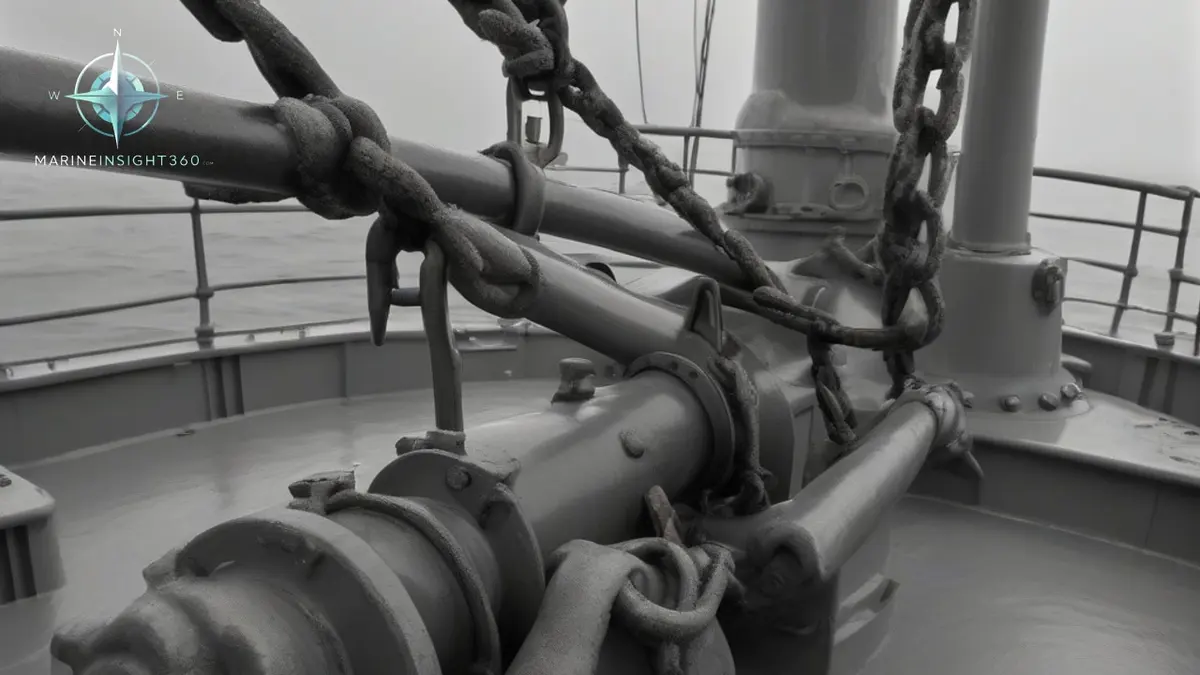
How a Windlass Lifts an Anchor
Windlasses are deck machines that let out and heave up an anchor chain. Understanding windlasses means knowing what the chainwheel, the pawl, the brake and the gear train each do. The chainwheel grips the chain and the gear train multiplies the motor’s torque. The pawl locks the wheel so the chain cannot run back, and the brake holds the drum when the machine is idle.
In short, the windlass converts electric or hydraulic power into a controlled, high-torque rotation that pulls the anchor chain up, then holds it securely with a brake and pawl system.
Core Components and Their Interaction
Chainwheel and Chain Pitch
The chainwheel is a notched wheel that grips the anchor chain. Its teeth must match the chain pitch; a mismatch can cause slippage or damage.
Pawl and Brake
The pawl is a ratchet that engages the chainwheel teeth, preventing the chain from slipping backward. The brake holds the drum in place when the windlass is idle, providing a fail‑safe stop.
Gear Train and Motor
A gear train reduces the motor’s speed while multiplying its torque. This mechanical advantage is described by the capstan equation, which relates the applied torque to the force on the chain.
Power Sources: Electric, Hydraulic, and the Past
Modern windlasses are powered by electric or hydraulic motors. Older units were steam‑driven, a technology now largely obsolete. Choosing between electric and hydraulic involves trade‑offs in weight, maintenance, and energy efficiency.
- Electric – lighter, lower maintenance, but requires a reliable power supply.
- Hydraulic – more robust in rough conditions, but heavier and requires hydraulic fluid management.
Horizontal Windlasses vs. Vertical Capstans
Windlasses are typically installed horizontally on the deck, while capstans are vertical. Horizontal windlasses offer easier access for maintenance and a lower center of gravity, but may take up more deck space. Vertical capstans are more compact but can be harder to service.
Maintenance Priorities and Common Mistakes
- Brake and Pawl Inspection – These are critical safety devices; neglecting them can lead to uncontrolled chain movement.
- Chainwheel Pitch Check – Ensure the chainwheel teeth match the chain pitch to avoid slippage.
- Gear Train Lubrication – Proper lubrication reduces wear and extends component life.
Common mistakes include installing a chainwheel with the wrong pitch, failing to service the brake regularly, and overlooking the hydraulic fluid level in hydraulic units.
Regulatory Standards and Compliance
Windlass installation and operation must meet International Maritime Organization (IMO) guidelines and classification society rules. These standards cover design, testing, and periodic inspection to ensure safety and reliability.
How class rules size a windlass before anyone picks a motor
Anchor equipment is not selected from a catalogue. Classification societies calculate an Equipment Number for the hull from its displacement, its exposed side area and its freeboard. That number is read off a table which fixes the anchor mass, the chain diameter, the chain length and the windlass duty.
The societies work to a common baseline. Members of the International Association of Classification Societies, among them DNV, Lloyd's Register, ABS, Bureau Veritas and ClassNK, apply unified requirements for anchoring equipment. The figures therefore do not move when a ship changes class.
Chain is ordered and measured in shackles of 27.5 metres, and marked so the officer on the forecastle can call the count as it runs out. Grade matters as much as diameter. A Grade U3 cable is stronger than a U2 cable of the same size, and the two are not interchangeable when a length is replaced.
The duty side of the table sets performance rather than dimensions. Class rules require the windlass to recover the anchor and three shackles of cable at a mean hoisting speed of around 9 metres a minute. That is the figure which fixes the motor rating and the gear ratio.
The load the brake is not meant to hold
The commonest mistake at anchor is leaving the riding load on the windlass brake. The brake is a stopping device for a moving cable. The chain stopper, the bar or guillotine on deck forward of the gypsy, is what takes the static load once the ship is brought up.
Leaving the load on the brake carries it through the gypsy, the shaft and the gearbox, none of which were sized for a sustained pull. A brake that has been ridden in that way shows glazed or worn linings, and it slips when it is next needed in a hurry.
Depth changes the procedure as well. Letting go on the brake works in shallow water. Beyond roughly 25 to 30 metres the falling weight of cable can overrun the brake and run the whole cable to the bitter end, so standard practice in deeper water is to walk the anchor back under power.
The failures that follow are predictable. Pawls wear and stop seating, gypsy pockets wear until the chain surges under load, and hydraulic units lose brake response when air gets into the system. Each shows up as a windlass that will not hold, discovered at the worst moment.
Practical Decision Criteria for Operators
- Power Availability – Choose electric if the vessel has a robust power system; choose hydraulic if the vessel operates in harsh environments.
- Space Constraints – Horizontal windlasses need deck clearance; vertical capstans save space but may be harder to access.
- Maintenance Capability – Operators with limited maintenance resources may prefer electric windlasses for lower upkeep.
- Safety Requirements – Ensure the brake and pawl system meets the latest IMO and classification society standards.
Why This Matters to Shipping Professionals
Understanding how a windlass works and what to look for when selecting or maintaining one can reduce downtime, improve crew safety, and ensure compliance with international regulations.
For deeper technical details, consult the Marine Insight 360 Marine Machinery section or the Knowledge Base on windlass design and operation.
Recommended Reading
Hapag-Lloyd Invests in APM Terminals Rotterdam to Drive Growth
Hapag‑Lloyd’s new stake in APM Terminals Rotterdam aims to expand capacity, improve hinterland links and enhance crew efficiency in Europe’s busiest port.
Saildrone Completes Missile Launch Test Aboard its Sail-Powered Surveyor
Saildrone’s autonomous vessel successfully launched a missile‑type payload, showing new possibilities for armed surveyors and implications for shipping operator
Nigeria Upbeat Over Maritime Competitiveness After US Lifts 12-Year Ban
Explore how the U.S. lifting a 12‑year ban on Nigerian vessels opens new routes and compliance requirements for global shipping professionals.