
Underwater Symphony: The Science Behind How Fishfinders Work
Underwater Symphony: The Science Behind How Fishfinders Work: technology, equipment and fleet context for US, UK, Canada, Australia, Singapore and...
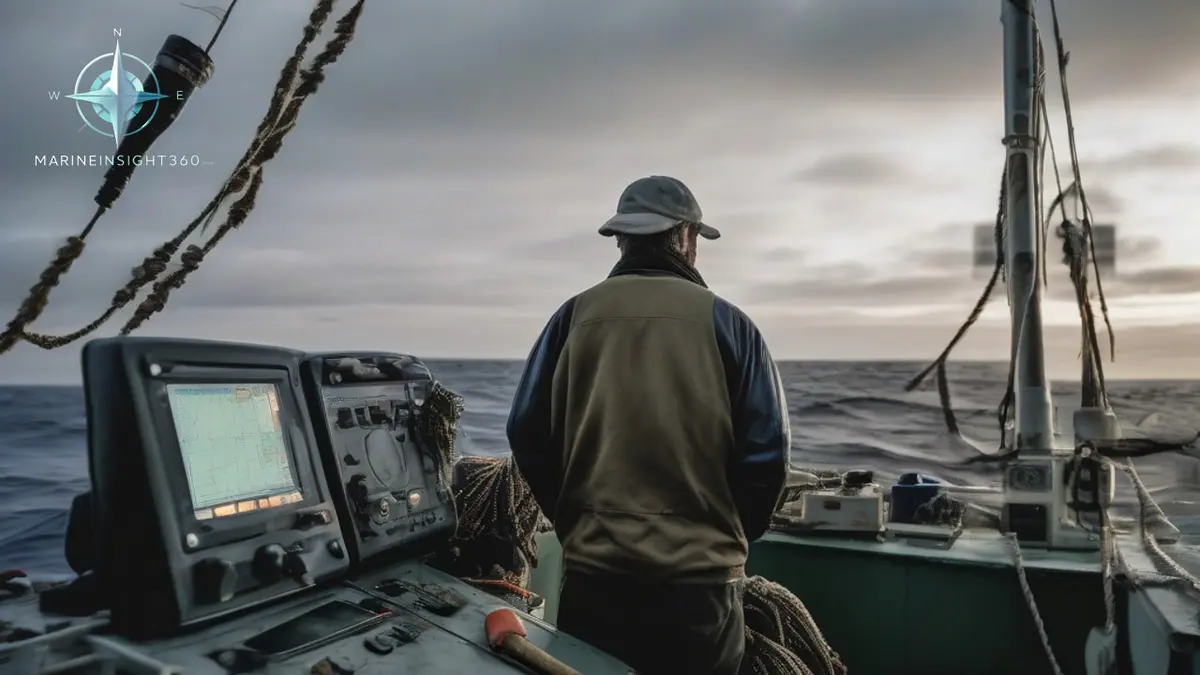
How fishfinders work is simple in principle: a transducer under the hull fires a sound pulse, and the delay before each echo returns from fish, structure or the seabed is converted into a depth and drawn on the display.
Introduction: Listening to the Language of the Deep
Beneath the surface of every ocean, lake. River, there exists a world in constant motion. It is a rich, complex, and largely invisible environment. Fish school there, currents shift, and underwater terrain rises and falls in dramatic formations. For centuries, fishermen navigated this invisible world by instinct, experience, and luck. Today, they navigate it with science.
Welcome to the underwater symphony — the remarkable orchestration of sound waves, digital signal processing. Intelligent display technology that makes modern fishfinders one of the most powerful tools in the maritime industry. A symphony orchestra transforms individual instruments into a unified, breathtaking whole. A fishfinder does something similar, transforming invisible acoustic signals into a vivid, real time picture of the underwater world.
But how exactly does this technology work? What is happening beneath the hull of a vessel when a fishfinder is active? And why does understanding the science behind it matter to professionals in the maritime industry?
This comprehensive guide answers all of those questions and more. You may be a commercial fishing operator, a marine electronics technician, a vessel designer, or a maritime technology enthusiast. In every case this article will give you a deep, authoritative. Actionable understanding of fishfinder technology. It runs from the fundamental physics of sound in water to the cutting edge artificial intelligence now being integrated into modern systems.
Underwater Symphony Basics
The underwater symphony is playing. Let's learn how to hear it.
The Physics of Sound Underwater: The Foundation of the Symphony
Start with the water itself. To understand how fishfinders work, you must first understand how sound behaves in water. Every fishfinder, at its core, is a device that generates, transmits, listens to. Interprets sound.
Why Sound, and Not Light?
It is a reasonable question. We live in a visual world, and our instinct is to reach for light based solutions. Cameras, lasers, and optical sensors work brilliantly in air. But water is a fundamentally different medium.
Light is absorbed and scattered by water with remarkable efficiency. Even in exceptionally clear ocean water, visible light penetrates to a maximum depth of around 200 meters. In turbid, sediment rich coastal or freshwater environments, that figure drops to just a few meters. For practical underwater observation purposes, light is severely limited.
Sound, by contrast, travels through water with extraordinary efficiency. Consider these fundamental differences.
Sound travels approximately four times faster in water than in air. It also propagates over far greater distances with far less energy loss. This makes acoustic technology, the science of using sound, the natural and ideal foundation for underwater detection and imaging systems.
The Doppler Effect and Frequency Behavior
Sound in water is subject to the Doppler effect, like all wave phenomena. That effect is the change in perceived frequency when the source or receiver is in motion. Advanced fishfinders exploit this principle to detect fish. They also use it to determine whether fish are moving toward or away from the transducer. At what speed.
Additionally, the frequency of the sound used has a profound impact on performance.
- Low frequencies (28–50 kHz) — Travel deeper, cover a wider area, but produce lower resolution images. Ideal for deep sea commercial fishing applications.
- Mid frequencies (80–200 kHz) — A practical balance between depth penetration and image resolution. Common in recreational and light commercial applications.
- High frequencies (400–1,200 kHz) — Shorter range but exceptional detail and resolution. Used in shallow water applications and high definition imaging sonar systems.
Understanding this frequency trade off is fundamental to selecting the right fishfinder for a given maritime application. We will return to that point in detail later in this guide.
Fishfinder Technology Explained
The Transducer: The Instrument of the Underwater Symphony
If the fishfinder system is an orchestra, the transducer is its lead instrument. It is the component responsible for converting electrical energy into sound waves. It also receives the returning echoes and converts them back into electrical signals.
How Transducers Work: Piezoelectricity in Action
The technology inside virtually every fishfinder transducer is based on the piezoelectric effect. Pierre and Jacques Curie discovered that phenomenon in 1880. Certain crystalline materials generate an electric charge when mechanically stressed. They include quartz and lead zirconate titanate (PZT). Conversely, when an electric current is applied to these materials, they physically deform, expanding and contracting.
In a fishfinder transducer, this process works in two directions.
- Transmission phase — An electrical pulse from the fishfinder's control unit is applied to the piezoelectric element. That pulse causes the element to vibrate at a precise frequency. The vibration creates a pressure wave in the water, a sound pulse. It travels outward and downward from the vessel.
- Reception phase — That sound pulse may encounter an object such as a fish, the seabed, a thermocline, or a submerged structure. It then reflects back as an echo. When this echo reaches the transducer, it causes the piezoelectric element to vibrate. That vibration generates a small electrical signal. The signal is sent back to the display unit for processing.
The entire transmission and reception cycle happens extraordinarily quickly, typically within milliseconds. That allows the fishfinder to generate a continuous, real time picture of what lies beneath the vessel.
Transducer Beam Angles and Coverage
The transducer does not simply emit a single narrow ray of sound. It emits a cone shaped beam. The angle of that cone determines how much of the water column is covered at any given depth.
- Narrow beam angles (8–12°) — Concentrate acoustic energy in a smaller area. They produce stronger returns and greater depth penetration. Excellent for deep water.
- Wide beam angles (25–60°) — Cover a larger horizontal area at the cost of some depth performance. Better for shallow water coverage and locating fish schools spread across a wide area.
Many modern fishfinder transducers are dual beam or multi beam designs. They transmit simultaneously at different frequencies and angles. That provides both wide area coverage and detailed center beam resolution. It offers the best of both worlds within a single underwater symphony of signals.
Types of Transducer Mounting
How and where the transducer is mounted on a vessel significantly affects its performance. Common mounting configurations include the following.
- Through hull mounting — The transducer is installed through a hole in the hull. It makes direct contact with the water. This provides the best signal quality and is standard on commercial fishing vessels.
- Transom mounting — Bolted to the transom of the vessel. This is the most common configuration for smaller recreational and light commercial craft. Easy to install but more susceptible to turbulence and cavitation at high speeds.
- In hull (shoot through) mounting — The transducer is mounted inside the hull and transmits through the hull material. Convenient but results in some signal loss, particularly with thick or composite hulls.
- Trolling motor mounting — Common on smaller freshwater vessels. The transducer is mounted on the trolling motor. It always points directly downward regardless of vessel orientation.
Signal Processing: Turning Echoes into Intelligence
Receiving an echo is only the beginning. The raw electrical signal returned from the transducer is extremely complex. It is a mixture of meaningful data and noise. The fishfinder's signal processing unit is where the underwater symphony gets its interpretation. It transforms raw acoustic data into actionable visual information.
The Role of the Digital Signal Processor (DSP)
Modern fishfinders incorporate powerful Digital Signal Processors (DSPs). These perform several critical functions in real time.
- Amplification — The returning echo signal is extremely weak. It must be amplified before it can be processed. The challenge is to amplify the signal without equally amplifying background noise.
- Time Variable Gain (TVG) — Sound loses energy as it travels through water. Echoes from greater depths therefore return weaker than those from shallow depths. TVG automatically compensates for this by increasing amplification proportionally with depth. That ensures that targets at all depths are displayed with consistent brightness.
- Noise filtering — Electronic interference, vessel engine noise, and water turbulence all generate noise. That noise can obscure genuine echo returns. Advanced filtering algorithms identify and suppress these noise sources.
- Target strength calculation — By analyzing the intensity of a returning echo, the DSP can estimate the size and density of the reflecting object. It can distinguish between a large boulder on the seabed and a school of fish, for example.
- Echo integration — Over time, the DSP integrates multiple successive echo returns. That builds a more complete and accurate picture of underwater targets, smoothing out momentary anomalies.
Fish Arch Formation: Reading the Display
The fish arch is one of the most iconic features of a traditional fishfinder display. It is the curved arc shaped return that indicates the presence of a fish. Understanding why fish appear as arches rather than dots is a fundamental piece of fishfinder literacy.
A vessel moves forward, or a stationary fish moves through the sonar beam. The fish enters the edge of the acoustic cone, moves through the center. Exits the other edge. The center of the beam is closer to the transducer than the edges. The depth reading for the fish therefore changes as it transits the beam. It appears to get shallower as it enters. It reaches minimum depth at the beam's center.
It then appears to get deeper as it exits. This creates the characteristic arch shape on the scrolling display.
The size, completeness, and thickness of a fish arch provides experienced operators with valuable information.
- Arch width — Wider arches generally indicate larger fish or slower vessel speed.
- Arch thickness — Thicker arches suggest stronger echo returns. Those are often associated with larger, denser fish.
- Arch completeness — A complete arch indicates the fish passed fully through the beam. A partial arch suggests the fish was at the edge of beam coverage.
- Arch depth position — Indicates where in the water column the fish is holding. That is critical for presentation depth decisions.
Advanced Sonar Technologies
Advanced Fishfinder Technologies: The Symphony Evolves
Sonar has deep roots. The basic principles described above have been in use since the mid 20th century. But in recent decades, fishfinder technology has undergone a revolutionary transformation. The pace has accelerated in the last ten years. The underwater symphony has gained new instruments, new movements, and extraordinary new depth.
CHIRP Technology: The Game Changer
CHIRP stands for Compressed High Intensity Radar Pulse. In the sonar context, "Radar" is a slight misnomer. The technology applies pulse compression principles to acoustic sonar.
Traditional fishfinders transmit a single frequency pulse, a simple tone. CHIRP transducers transmit a continuous sweep of frequencies within a single pulse. That sweep runs across a defined range, for example from 40 kHz to 75 kHz. This approach offers several dramatic advantages.
- Superior target resolution — CHIRP systems can distinguish between two fish that are just centimeters apart in depth. Traditional single frequency systems would display them as a single merged return.
- Greater depth penetration — The higher energy content of a CHIRP pulse allows for reliable target detection at significantly greater depths.
- Reduced interference — The frequency modulated nature of CHIRP signals makes them far more resistant to noise. They also resist interference from other electronic systems.
- Better signal to noise ratio — Pulse compression techniques allow weak echoes to be recovered from noise levels. In traditional systems those noise levels would completely mask them.
For commercial fishing operators in the maritime industry, CHIRP technology has been genuinely transformative. It enables more precise fish location, better species differentiation. More reliable operation in deep water environments.
Side Scan Sonar: Widening the View
Traditional fishfinders look straight down. Side scan sonar looks sideways, projecting thin, fan shaped acoustic beams to port and starboard of the vessel simultaneously. That builds a detailed acoustic image of the seafloor and water column on either side of the vessel's track.
The result is a wide area acoustic image. It can cover hundreds of meters to each side of the vessel, revealing several features.
- Bottom composition and texture (sand, rock, gravel, mud).
- Submerged structures, wrecks, and reefs — prime fish holding habitat.
- Fish schools holding near the bottom or over structure.
- Bottom contour changes that indicate habitat transitions.
Side scan sonar is extensively used in commercial fishing, hydrographic survey, search and rescue. Marine archaeology relies on it as well. That makes it one of the most versatile tools in the maritime industry's acoustic toolkit.
DownScan Imaging: Photographic Clarity Beneath the Hull
DownScan imaging uses a very thin, narrow frequency acoustic beam. It produces images with near photographic clarity directly beneath the vessel. The technology is marketed under names such as Lowrance's StructureScan or Humminbird's Down Imaging.
Unlike the traditional cone beam approach, DownScan uses a wide, thin "slice" beam. It is broad from side to side but very narrow fore to aft. This geometry produces images with exceptional horizontal resolution and clarity. It allows users to distinguish individual fish, see the structural detail of submerged timber or rock formations. Identify bottom composition with remarkable precision.
360 Degree Sonar: Full Situational Awareness
Larger commercial vessels and serious maritime operators have another option. 360 degree sonar systems provide a complete acoustic picture of the water column in all directions simultaneously. These systems use rotating or phased array transducers to build a continuous, all around view, which is invaluable for several tasks.
- Locating fish schools before they pass under the vessel.
- Navigation in shallow or obstacle rich waters.
- Coordinating net deployment on commercial fishing vessels.
- Situational awareness in poor visibility conditions.
Artificial Intelligence and Machine Learning Integration
Artificial intelligence (AI) is the newest frontier in fishfinder technology. Machine learning and AI are being integrated into signal processing and display systems. AI powered fishfinders are beginning to offer capabilities that were unimaginable even a decade ago.
- Automated species identification — AI algorithms trained on large acoustic datasets can identify the species of fish. They read the characteristic echo signature of their swim bladders and body geometry.
- Biomass estimation — Real time estimation of fish school size and density to support sustainable fishing decisions.
- Predictive habitat modeling — Integrating sonar data with water temperature, salinity, and current data. That predicts where fish are likely to be found.
- Automated noise filtering — AI driven noise suppression that adapts in real time to changing environmental and operational conditions.
Practical Fishfinder Selection
Choosing the Right Fishfinder: A Practical Guide for Maritime Professionals
Understanding the science is essential. But ultimately, that knowledge must translate into practical decision making. Here is a structured framework for selecting the right fishfinder system for maritime industry applications.
Key Selection Criteria
- Operating depth requirements — Match transducer frequency and power output to your typical operating depth. Deep water commercial operations require lower frequencies and higher power. Shallow water applications benefit from higher frequencies and superior resolution.
- Vessel type and hull construction — Hull material and geometry influence transducer mounting options and signal performance. Consult a marine electronics technician before specifying a system for a new vessel or retrofit.
- Target species and fishing method — Pelagic species require good mid water column performance. Demersal species require excellent bottom discrimination. Trawl fishing requires different sonar capabilities than longline or purse seine operations.
- Network integration requirements — Modern fishfinders are components of integrated bridge systems. Ensure compatibility with chart plotters, AIS, radar, and vessel management systems.
- Display size and resolution — Critical for interpretation accuracy. That matters especially in commercial operations where multiple data layers are viewed simultaneously.
- CHIRP capability — For any serious maritime application, CHIRP technology should be considered a baseline requirement rather than an optional upgrade.
Maintenance and Optimization: Keeping the Symphony in Tune
Even the finest instrument sounds poor when poorly maintained. Fishfinder systems require regular attention to perform at their best.
Transducer Care and Inspection
- Inspect transducer faces regularly for fouling, barnacle growth, or physical damage, all of which degrade signal quality.
- Use antifouling coatings approved for transducer use (standard antifouling paints can damage piezoelectric elements).
- Check transducer mounting hardware for corrosion and security at each haulout.
- Inspect cable connections for water ingress and corrosion.
Software and Firmware Updates
Fishfinder manufacturers regularly release firmware updates. These improve signal processing algorithms, add new features, and address bugs. Keeping firmware current is a simple but frequently overlooked maintenance step that can meaningfully improve system performance.
Interference Management
In multi vessel operations or busy harbors, interference between fishfinder systems can degrade performance. Best practices include the following steps.
- Using CHIRP systems, which are inherently more interference resistant.
- Staggering transmission timing between multiple onboard transducers.
- Routing transducer cables away from engine wiring and other sources of electrical interference.
Conclusion and Future Directions
Summary: The Underwater Symphony in Perspective
At its heart the fishfinder does one thing. It gives human beings the ability to hear the underwater symphony. It lets them see that symphony as well. The symphony has always been playing beneath our vessels. The science starts with the fundamental physics of piezoelectricity and acoustic wave propagation. It reaches the sophisticated digital intelligence of CHIRP processing and AI assisted species identification. 360 degree sonar imaging belongs on that list too.
Modern fishfinder technology represents one of the most elegant intersections of physics, engineering, and maritime practice in the world today.
For the maritime industry, this technology is not merely a convenience. It is a critical operational tool that directly affects several areas.
- Fishing efficiency and profitability — Finding fish faster, more reliably, and with less fuel expenditure.
- Sustainability and resource management — Better biomass estimation and species identification supporting responsible harvesting decisions.
- Vessel safety — Identifying hazards, shallow water, and submerged obstacles.
- Scientific and survey applications — Supporting hydrographic, environmental, and marine biology research.
- Commercial competitiveness — Operators who invest in and master advanced sonar technology consistently outperform those who do not.
The science behind fishfinders continues to evolve at a remarkable pace. AI integration, quantum acoustic sensing, and networked multi vessel sonar systems are already moving from research environments into commercial deployment. The underwater symphony, it seems, is still being composed. The maritime industry has a front row seat.
Understanding how your fishfinder works is not just technical curiosity. It is the difference between hearing noise and hearing music.
Recommended Reading
What Is The Basic Principle Behind Hatch Cover Design?
What Is The Basic Principle Behind Hatch Cover Design?: ports, trade and shipping-market context for US, UK, Canada, Australia, Singapore and European...
What is a Remotely Operated Underwater Vehicle (ROV)?
What is a Remotely Operated Underwater Vehicle (ROV)?: technology, equipment and fleet context for US, UK, Canada, Australia, Singapore and European...

The World's Largest Underwater Restaurant
There are countless amazing underwater dining options, but none compare to Under , the world's largest underwater restaurant.