
US Indicts a Shadow Tanker Captain: The Personal Risk Masters Now Carry
A shadow tanker master was indicted, pleaded guilty and jailed for evading the US Coast Guard. What the case means for serving deck officers and their careers.
What happened and why every master should read the file
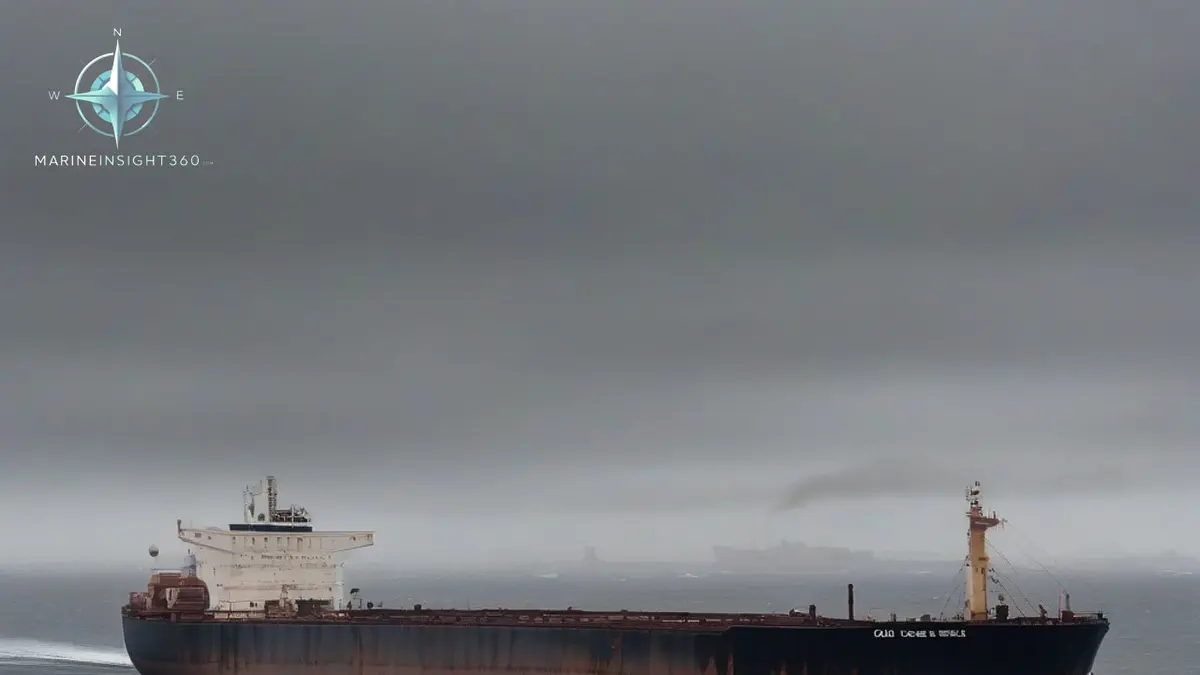
US prosecutors indicted the master of a fugitive shadow tanker for refusing a US Coast Guard order to stop, and he was later jailed. Avtandil Kalandadze, a Georgian national, commanded the tanker Bella 1. He was indicted on 12 February 2026, pleaded guilty in Washington DC, and was sentenced to 10 months in federal prison followed by deportation. The case reaches well beyond one ship.
Any officer whose vessel enters US waters, or who sails for an owner trading to the United States, Canada or the EU, now sits inside that enforcement chain personally.
The vessel was not the only target. The person who gave the orders was prosecuted personally, in a US court, for conduct at sea. That is the part of the case that changes the calculation for serving officers.
What the shadow tanker indictment covered
Between September and late December 2025, the Bella 1 carried approximately 1.8 million barrels of Iran origin oil to Asia while Kalandadze was in command. Prosecutors described the vessel operating with its Automatic Identification System switched off and concealing its identity during ship to ship oil transfers.
In December 2025 the US Coast Guard Cutter Munro intercepted the tanker while it was heading for Venezuela. Instead of complying with the order to heave to, the Bella 1 ran. The pursuit across the Atlantic lasted more than two weeks. The charge that held was failing to obey a Coast Guard order to heave to.
What the shadow fleet is
Shadow fleet, also called dark fleet or ghost fleet, describes tankers that move sanctioned cargo while hiding their positions and ownership. The pattern is consistent across cases.
- AIS manipulation. Transponders switched off during sensitive legs, or transmitting a false position through spoofed data.
- Ship to ship transfers. Cargo moved at sea, often at night and outside recognized transfer zones, to break the paper trail between load port and discharge port.
- Identity laundering. Repainted names, reused identities, frequent flag changes and single ship owning companies in opaque jurisdictions.
- Thin insurance. Cover from insurers outside the International Group, with certificates that may not survive a real casualty.
- Aging tonnage. Vessels well past the age mainstream charterers accept, often with deferred maintenance and expired class records.
Why the master carries the exposure
Owners and commercial managers sit behind corporate structures that are difficult to reach. The master does not. The master signs the log, gives the order to switch off the AIS, runs the transfer operation and decides whether to comply with a boarding request. Each of those is a documented personal act.
The regulatory hooks exist independently of sanctions law. SOLAS Chapter V Regulation 19 requires AIS to be in operation at all times, with a narrow exception where an international agreement or standard protects navigational information. MARPOL Annex I Chapter 8 requires an approved ship to ship operations plan and advance notification for oil transfers at sea. A master who breaches these has already generated the evidence.
The career consequences go beyond a prison term
- A criminal conviction and a deportation record makes future US visas, and therefore US trading, effectively impossible.
- Flag state administrations can suspend or withdraw a Certificate of Competency following a conviction relating to shipboard conduct.
- Reputable managers screen for criminal records, so a conviction closes the mainstream tanker market permanently.
- Legal defense costs land on the individual when the employer is a shell company that stops answering the phone.
Practical checks before signing on an unfamiliar tanker
- Trace the ownership. Check the registered owner, the safety management company and the beneficial owner. A single ship company with no fleet history is a warning.
- Check the insurance. Confirm protection and indemnity cover with an International Group club, and verify the certificate rather than accepting a scan.
- Check the trading pattern. Repeated calls at sanctioned load ports, long unexplained gaps in position history and frequent transfers at sea all point the same way.
- Check the flag. A recent change to a registry with weak oversight, especially mid voyage, is a standard marker.
- Read the contract. Look for who pays legal costs, who repatriates you and which law governs the agreement.
Refusing an unlawful instruction is far easier before the voyage than during it. If an order to disable the AIS or to run an undeclared transfer arrives at sea, record it in writing, notify the company in writing, and contact the flag state and your union.
Why this case sets a direction
Enforcement against tonnage is slow, because ships change names and flags faster than sanctions lists update. Enforcement against people is quicker and harder to unwind, and a custodial sentence with deportation is a durable deterrent. Officers weighing a high paying contract on an opaque tanker should price in the possibility of a criminal record. The Marine Insight 360 Merchant Navy Careers section covers contract vetting and certificate protection in more detail.
Sources and further reading
- Master of Shadow Fleet Tanker Pleads Guilty in D.C. for Evading U.S. Coast Guard
- Master of Shadow Fleet Tanker Sentenced in D.C.
- Shadow Fleet Tanker Captain Sentenced to 10 Months After Weeks-Long Coast Guard Chase
What to read next
Recommended Reading
Maritime Drama in the Gulf of Finland: Shadow Fleet Tankers, Naval Escorts and Navigation Risk
Dozens of shadow fleet tankers idle in the Gulf of Finland under naval escort. What the congestion, cable damage and uninsured hulls mean for other ships.
Sonion Tanker 'Poses Environmental Risk' After Attack In Red Sea
Sonion Tanker 'Poses Environmental Risk' After Attack In Red Sea: safety, training and compliance context for US, UK, Canada, Australia, Singapore and...
Deadweight Tonnage: The Number That Says What a Ship Can Actually Carry
What deadweight tonnage means, how DWT differs from gross tonnage and displacement, the ship size classes built on it, and why charterers price by the number.