
What Are Cruise Ships? How Floating Resorts Actually Work
What cruise ships are, how sizes run from small expedition vessels to 7,600-passenger mega ships, how they are crewed, and the rules that govern them.
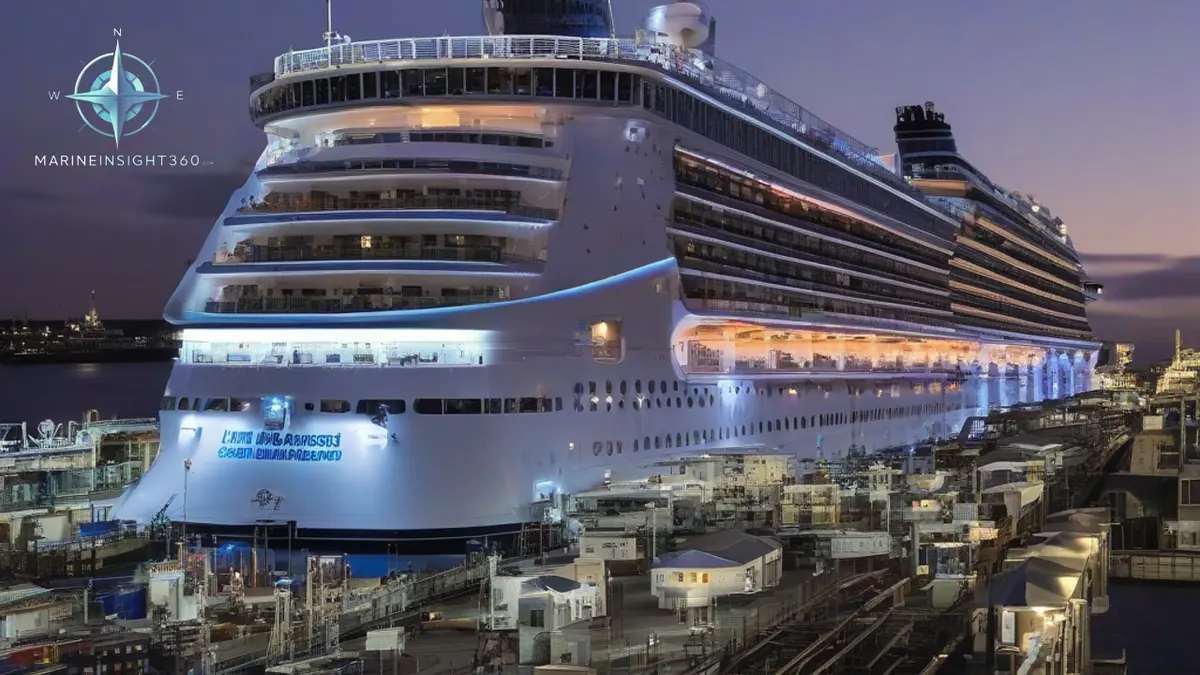
So what are cruise ships? They are large passenger vessels built for leisure voyages rather than transport, combining a hotel, restaurants, theaters and pools with a working merchant ship underneath. Modern examples run from expedition vessels carrying under 100 passengers to mega ships embarking more than 7,000 guests, plus crews numbering in the thousands.
The defining idea is that the ship itself is the destination. Ports matter, but the revenue, the experience and most of the engineering effort live on board.
Cruise ship sizes and passenger capacity
The industry groups ships into four broad size classes.
- Small ships and expedition vessels: under 1,000 passengers, often 70 to 350, trading scale for access to small and remote ports.
- Midsize ships: roughly 1,000 to 2,500 passengers.
- Large ships: roughly 2,500 to 4,000 passengers.
- Mega ships: above 4,000 passengers, with the largest carrying between 5,000 and 7,600 at maximum capacity.
Physically, a large modern cruise ship runs around 300 meters (984 ft) in length and stacks around 15 passenger decks, with some designs reaching 20. Counting crew, total persons on board the biggest ships approaches 10,000, the population of a small town afloat.
Size is quoted in gross tonnage, which measures enclosed volume rather than weight, so a cruise ship's headline tonnage dwarfs that of a far heavier bulk carrier of similar length. Draft tells the opposite story: a 300 meter cruise ship typically draws only 8 to 9 meters. Shallow draft, high freeboard and an enormous sail area are why these ships are so wind-sensitive on a berthing approach.
How a cruise ship is organized and crewed
Crewing splits into two worlds. The marine department, deck and engine officers and ratings, runs navigation, propulsion, safety systems and technical operations. The hotel department, by far the larger, runs cabins, galleys, restaurants, entertainment and shops. A midsize 2,500-passenger ship typically carries 900 to 1,100 crew, about one crew member for every 2.5 guests, and luxury ships run richer ratios still.
The captain commands both sides, while day-to-day hospitality answers to a hotel director. For maritime professionals, cruising is one of the few sectors where a deck or engineering career coexists with thousands of hospitality colleagues on the same hull.
Power, propulsion and the hotel load
Almost every modern cruise ship is diesel-electric. Four to six medium-speed generator sets feed a common high-voltage switchboard, and that board supplies the propulsion motors and the hotel from the same bus. Nothing is coupled to a propeller shaft, so the plant loads flexibly: two engines on a slow overnight passage, most of them on a fast leg.
Many large ships drive azimuthing podded units hung under the stern. These steer through 360 degrees and remove the need for a rudder and stern thruster, while tunnel thrusters forward handle the head, which is what lets a ship this size berth on schedule every morning.
The hotel load is the unusual part. On a cargo ship, electrical demand at sea is a small fraction of propulsion power; on a cruise ship, galleys, air conditioning, laundries, pools and lighting can approach it, and alongside in port the hotel load is effectively the whole plant. Shore power connections matter for the same reason: a ship alongside with thousands aboard still draws megawatts.
Cruise ship versus ocean liner
The terms are not interchangeable. Ocean liners were built for scheduled point-to-point crossings, with stronger hulls, deeper drafts and higher service speeds to hold timetables in North Atlantic weather. Cruise ships optimize for calm-water itineraries, open deck space and cabin count. Purpose-built liners have nearly disappeared, while the cruise fleet has grown into the dominant passenger sector.
The safety framework behind the fun
Beneath the resort, a cruise ship is a SOLAS passenger vessel, subject to the international convention governing life-saving appliances, fire protection, stability and evacuation. Passengers are mustered and briefed on emergency procedures at the start of the voyage, and crews drill continuously, because evacuating thousands of civilians is the hardest safety problem in commercial shipping.
One requirement shapes the design more than any other. SOLAS Chapter II-2 requires large modern passenger ships to meet safe return to port standards: after a casualty below a defined threshold, the ship must still reach port under its own power with propulsion, steering, electrical supply, navigation and sanitation working. The ship is treated as its own best lifeboat, with survival craft as backup.
Timing is regulated too. The passenger muster is held before departure or within 24 hours of embarkation, and practice has settled on completing it before the ship sails. Crew hold crowd management training under STCW, with crisis management and human behaviour training for those carrying emergency duties.
Classification societies survey the hull and machinery, flag states certify the ship, and port state control inspects it on arrival. Operators also run safety management systems audited under the ISM Code, the international standard for ship management.
Where cruise ships trade
Deployment follows sun and seasons. The Caribbean and the Mediterranean dominate, with Alaska, Northern Europe and Asia-Pacific as strong seasonal markets. Itineraries cluster around embarkation hubs such as Miami because flying passengers to the ship is part of the product, and turnaround days, when thousands disembark and thousands more embark within hours, are the operational crunch point of the whole business.
A turnaround runs against a fixed clock: passengers off from early morning, every cabin stripped and remade in one sweep, stores and bunkers aboard through the same shell doors, garbage ashore, the next guests embarking that afternoon. Technical work needing a machine stopped has to fit inside that window or wait for dry dock, which is why cruise engineers plan maintenance around the port schedule.
For readers weighing a career on board, the Merchant Navy Careers section of Marine Insight 360 covers officer routes into the cruise sector, and the vessel guides in the Knowledge Base compare passenger ship types in more detail.
Sources and further reading
- Cruise Ship Passenger Capacity - CruiseMapper
- The Ultimate Guide to Cruise Ship Sizes and Styles - Avoya Travel
- How Many People Can Fit on a Cruise Ship? - Cruise Hive
What to read next
Recommended Reading
Container Tracking: How Shippers Actually Follow a Box Across the Ocean
How container tracking works, from free carrier lookups to visibility platforms: what each tool layer does, what it costs, and how to pick for your volume.
Cruise Ship Building Companies: Who Actually Builds the Fleet
Four European yards build almost every large cruise ship. Here is what Fincantieri, Meyer Werft, Meyer Turku and Chantiers de l'Atlantique deliver.
How to Improve a RightShip Safety Score: What Actually Moves the Number
The RightShip Safety Score runs 1 to 5 and rebuilds as data arrives. Where scores are lost, what fixes them, and how long improvement takes.