
What are Volatile Organic Compounds (VOCs)?
What are Volatile Organic Compounds (VOCs)? VOCs are organic compounds with high vapor pressure and low water solubility. VOCs are emitted in the gaseous...
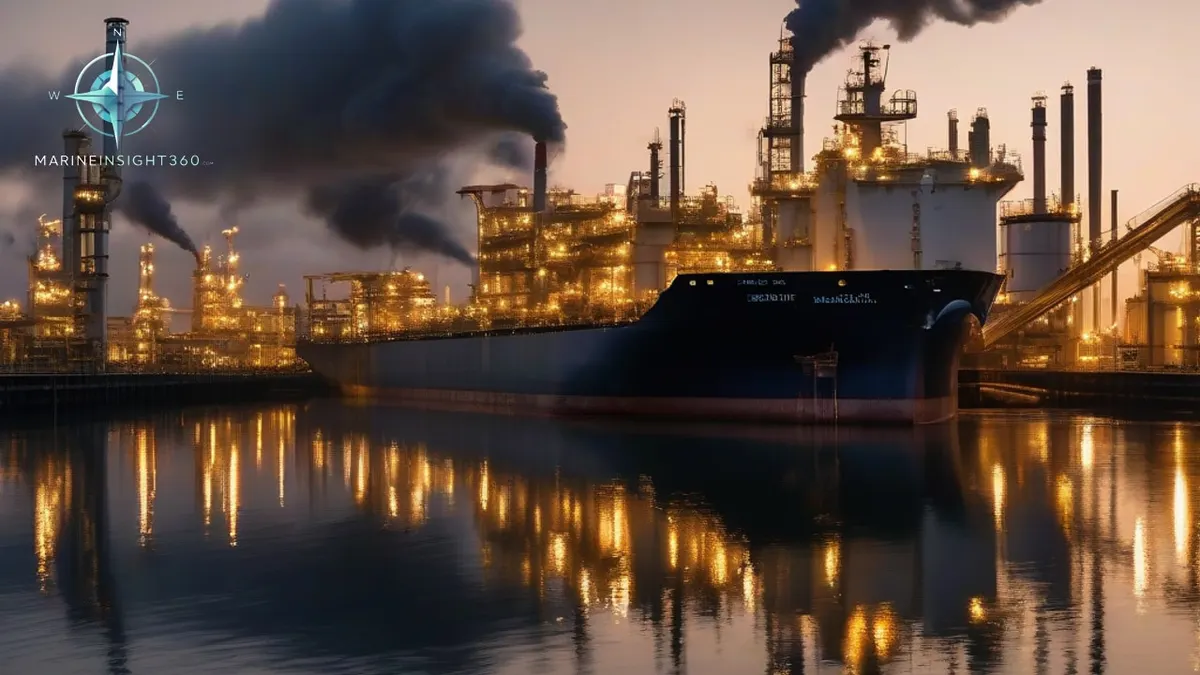
What are Volatile Organic Compounds (VOCs)?
VOCs are organic compounds with high vapor pressure and low water solubility.
VOCs are emitted in the gaseous form by many solid and liquid organic chemicals, such as paints, varnishes, pesticides, lacquers, building materials, furniture. Household chemicals like wax.
All of these materials contain organic solvents, as do many cleaning and disinfecting products, cosmetics, degreasers, hobby products, hydraulic fluids, glues, adhesives, and petroleum fuels.
The storage and use of these materials release VOCs, which can have both short-term and long-term adverse effects on human health.
What is the definition of VOCs in different countries?
The definition of VOCs varies, and many countries have categorized them accordingly to regulate air pollution and the introduction of foreign chemicals into the atmosphere.
Volatile Organic Compounds (VOCs) Classificationby Country:
Canada: VOCs are organic chemicals with a boiling point between 50 and 250°C (122 and 482°F).
EU: These countries define VOCs as chemicals with an initial boiling point of 250°C measured at a pressure of 1 bar (101.325 kPa).
China: China defines VOCs as substances emitted by "motor vehicles, industrial and residential use, combustion of all fuels, storage and transportation of oils, installation and surface treatment, furniture and machinery coatings, cooking fumes. Fine particulate matter (PM2.5)" and similar sources.
India: India's Central Pollution Control Board enacted the Air Pollution Prevention and Control Act in 1981 and amended it in 1987. The Act does not distinguish between volatile organic compounds (VOCs) and other pollutants, including nitrogen oxides, sulfur dioxide, and particulate matter (PM10).
- Complete Guide of PMMC -Composition, Advantages & Disadvantages
- From Bow to Stern: Discovering the Key Components of Navy Ship Structures
- What is Incinerator in a Ship? Construction and Components of Incinerator
- Stern Ship: Complete Guide
- Ship Earthing Systems – Protect Ships from Lightning Strike
How are VOCs generated? What are their impacts?
In the shipping industry, VOCs are primarily generated on oil tankers and chemical tankers, which load, transport, and unload organic chemicals in ports.
VOCs are generated by the diffusion of cargo from the source through the ship's piping system into the cargo holds, as well as by the evaporation of oil or chemicals stored in the tanks during and after loading.
VOCs are generated by the buildup of positive pressure during evaporation and boiling.
During the loading process and subsequent transport of crude oil and chemical tankers, VOCs may be generated and released into the atmosphere along with inert gases.
The amount of volatile organic compounds (VOCs) generated in inert gas tank hulls is related to the volatility of the oil (i.e., the tendency of the substance to evaporate).
Cargo tank hulls contain trace amounts of VOCs from previous cargoes. During loading, the increase in cargo level causes the cargo tank pressure to rise. These compounds are ultimately discharged into the atmosphere through the ship's dedicated exhaust pipes.
It is estimated that the Norwegian system emits approximately 350,000 tons of VOCs annually, of which approximately 200,000 tons come from shuttle tankers and other crude oil carriers.
The generation of VOCs during transportation complicates maintaining constant pressure on tankers, and the emissions of these compounds contribute to environmental pollution.
VOC emissions also result in a significant loss of energy that could otherwise be used for ship propulsion. The environmental impact of these emissions is severe and potentially catastrophic, as the gases emitted contain methane and a range of hydrocarbons above (typically C6+).
Volatile Organic Compounds Used as Fuels
Non-methane volatile organic compounds (NMVOCs) react with nitrous oxide in the presence of sunlight to form toxic ozone and ground-level smog, causing significant environmental damage to plants and human health, particularly the eyes and lungs.
International Maritime Organization (IMO) Volatile Organic Compounds (VOC) Regulation:
The International Maritime Organization (IMO), recognizing the need to regulate VOC emissions to protect the environment and reduce the loss of lightweight end-products, issued MEPC.1/Circ.860 on 27 July 2009, supplementing resolution MEPC.185(89), which provides technical and operational guidance to assist in the development of VOC management plans, which came into effect on 1 July 2010.
The circular states: "The objective of a VOC Management Plan is to ensure that the operation of oil tankers to which MARPOL Annex VI, Regulation 15 applies, prevents or reduces, as far as practicable, the emission of VOCs."
MSC/Circular 585 - MARPOL Annex VI/15, dated 16 April 1992, specifies standards and requirements for the design, construction. Operation of vapour collection systems on oil tankers equipped with onboard vapour handling arrangements to meet the design requirements of shore terminals and to the satisfaction of the flag State/National Authority.
VOC Emission Control Methods:
VOC recovery is typically carried out using two methods: active extraction and passive extraction.
Active VOC recovery typically involves a compression step, followed by condensation, absorption, and desorption. Passive VOC emission systems, on the other hand, utilize a vapor balance loading and unloading process with VOCs as a blanket gas.
The following methods and technologies are available for controlling VOC emissions:
Volatility Reduction: The volatility of tanker cargoes can be reduced by removing volatile components from the crude oil before loading onto ships at offshore platforms. However, this approach is not feasible in most cases due to the cost and availability of such equipment.
Thermal Oxidation: This is the most common method for controlling VOCs during offshore loading. VOC-laden air is burned in a closed burner in a catalytic oxidizer with heat recovery. Safety risks and combustion emissions can be reduced through the use of flame arresters/indicators, damping, concentration, or dilution.
Absorption: Cryogenic liquid or cryogenic liquid absorption is a common and most commonly used method. A cooled liquid absorbent is fed simultaneously with the hydrocarbon vapor flowing through the packed column, dissolving the hydrocarbons in the absorbent and removing them from the air/vapor mixture.
Absorption: Volatile Organic Compounds
Adsorption: Organic molecules are adsorbed onto activated carbon, while permanent gases (such as air or carbon dioxide) pass through the activated carbon bed and are released into the atmosphere. Two activated carbon beds with an automatic switch are recommended to ensure continuous operation. Depending on the size of the activated carbon beds, the properties of the absorbent material. The degree of regeneration, this method can achieve efficiencies as high as 99%.
Membrane Separation: This technology uses a liquid compressor and a semipermeable membrane to separate organic molecules from the air/vapor mixture. The membrane is more permeable to organic compounds than to inorganic gases. After selectively passing through the membrane, the organic molecules are removed by a vacuum pump and fed to the compressor inlet.
Cryogenic Condensation: The exhaust gas/vapor is passed through a nitrogen-cooled condenser. This method can achieve efficiencies exceeding 99%. Lowering the temperature reduces the concentration of volatile organic compounds (VOCs) that are discharged into collection tanks, where they can be recovered and recycled.
Cargo Pipeline Pressure Control: This system aims to reduce the generation of volatile organic compounds (VOCs) and prevent crude oil property changes by equalizing pressure during transportation and reducing pressure buildup. This technology for preventing crude oil property changes does not consume energy and therefore does not produce harmful gases such as carbon dioxide and nitrogen oxides.
Sequential Tank Atmosphere Transfer: This procedure sequentially transfers the cargo tank atmosphere (VOCs and inert gas) between cargo tanks and then releases it to the atmosphere through gas exchange during cargo loading. This is achieved by installing a special gas piping system throughout the entire cargo tank chain, designed to be easily opened and closed at different locations to accommodate different loading schedules. This process prevents excessive VOC emissions from being released into the atmosphere by venting clean inert gas from empty cargo tanks located several bays away from the loading tank.
VOCON program: Using constant pressure valves and automatic release valves, this program maintains a high average cargo tank pressure and controls it through smaller, more precise automatic releases. This ensures less cargo waste.
VOC Recovery Systems by Various Companies:
Wärtsilä's patented VOC recovery system, the GasReformer, is commonly used onboard floating oil storage units and shuttle tankers. Combined with our dual-fuel engine technology, it offers the highest levels of efficiency and flexibility, delivering environmental benefits by reducing VOC emissions and economic benefits by lowering fuel costs by up to 40%.
Volatile organic compounds (VOCs) are recovered by directing tank exhaust gas into the VOC recovery system, where the heavier hydrocarbon molecules are separated through a condensation process.
The lighter, non-condensable hydrocarbon molecules are fed into the power generation unit, resulting in 100% VOC recovery and zero VOC emissions. The separated heavier molecules are liquefied in the VOC unit and stored in pressurized tanks.
LVOC is a light hydrocarbon fuel that can be used as a clean fuel for power generation and inert gas generators.
Wärtsilä's VOC recovery systems have been successfully deployed on several shuttle tankers and floating storage units (FSUs) in the North Sea.
Commercial, Chemical, and Development Companies
CDCC, in collaboration with Clariant of Germany, has developed a volatile organic compound (VOC) recovery system that utilizes adsorption to recover low-concentration vapors, achieving solvent recovery rates of 95% to 99.9%.
The profitability of this technology depends on the vapor composition and the desired recovery rate. This VOC recovery system can be used to recover and remove sulfur dioxide (SO₂), hydrogen sulfide (H₂S), mercaptans. Crude oil residue (COR) from oil fields, produce compressed natural gas (CNG) from biogas, desulfurize flue gas, and treat waste gas (Cluse).
The system can also be used as an extraction system to degrade azeotropes such as ethanol-water, isopropyl alcohol-water, toluene-methanol-water, and ethanol-ethyl acetate-water.
How do crews manage VOCs during crude oil transportation and washing? A VOC management plan designates a specific individual responsible for implementation and assigns appropriate personnel to perform the relevant tasks.
Procedures to be Followed During VOC Management:
The plan contains vessel-specific procedures for addressing VOC emissions during the following operations:
- Cargo
- Related Cargo Transport (Transit)
- Crude Oil Washing
- VOC Emission Control During Transport
Cargo Tank Pressure Control (VOC Procedure):
To reduce overpressure buildup, air pollution, and cargo loss, ventilation and vapor loss must be monitored. Designated personnel must ensure the following activities during cargo transport:
Supervise the maintenance and adjustment of photovoltaic valves: Before loading any cargo, the cargo tank photovoltaic valves must be manually inspected using a lift inspection system to ensure proper operation. Flame arresters on photovoltaic valves must be visually inspected at least monthly and inspected/cleaned quarterly. Liquid levels in P/V bottles must be pre-checked to ensure they are within specified limits.
P/V Valves for Pressure and Vacuum
Monitoring the sealing of ports and ducts: Loading operations must be carried out in a closed state, with all cargo tank openings and ports closed. On-site measurements and sampling must be performed using airlocks or fixed bunkering equipment.
Inert Gas Top-Up Procedures: When topping up the pressure with inert gas containing no more than 5% oxygen, the procedures outlined in the ship's Occupational Safety and Health Management (ISM) Manual must be followed. Cargo pressure must be monitored and recorded hourly.
Partially Filled Cargo Holds: Partial filling of cargo holds must be minimized during and after loading operations.
Cargo Sequence and Loading Rate: Designated personnel must ensure that the loading rate and pressure of cargo holds are monitored and controlled in accordance with the applicable loading plan.
Volatile Organic Compound (VOC) Emission Control During Oil Washing
All crude oil washing operations must follow the procedures outlined in the ship's approved Crude Oil Washing Manual. Relevant records must be maintained in accordance with ISM procedures.
Oil Washing Duration: Reducing the oil washing duration can reduce VOC emissions. Therefore, during crude oil washing, the responsible person should ensure that the process is properly supervised and the time required is minimized. Crude oil washing must be performed in a closed loop.
Recommended Reading
Iran retaliates with missiles and drones, defying Trump’s warning
Learn iran with practical maritime context, safety checks, operational guidance and related resources for global shipping readers.
Hapag-Lloyd Invests in APM Terminals Rotterdam to Drive Growth
Hapag‑Lloyd’s new stake in APM Terminals Rotterdam aims to expand capacity, improve hinterland links and enhance crew efficiency in Europe’s busiest port.
Saildrone Completes Missile Launch Test Aboard its Sail-Powered Surveyor
Saildrone’s autonomous vessel successfully launched a missile‑type payload, showing new possibilities for armed surveyors and implications for shipping operator