
A Guide To HAZMAT Cargo Loading On Ships
A Guide To HAZMAT Cargo Loading On Ships: ports, trade and shipping-market context for US, UK, Canada, Australia, Singapore and European maritime readers.
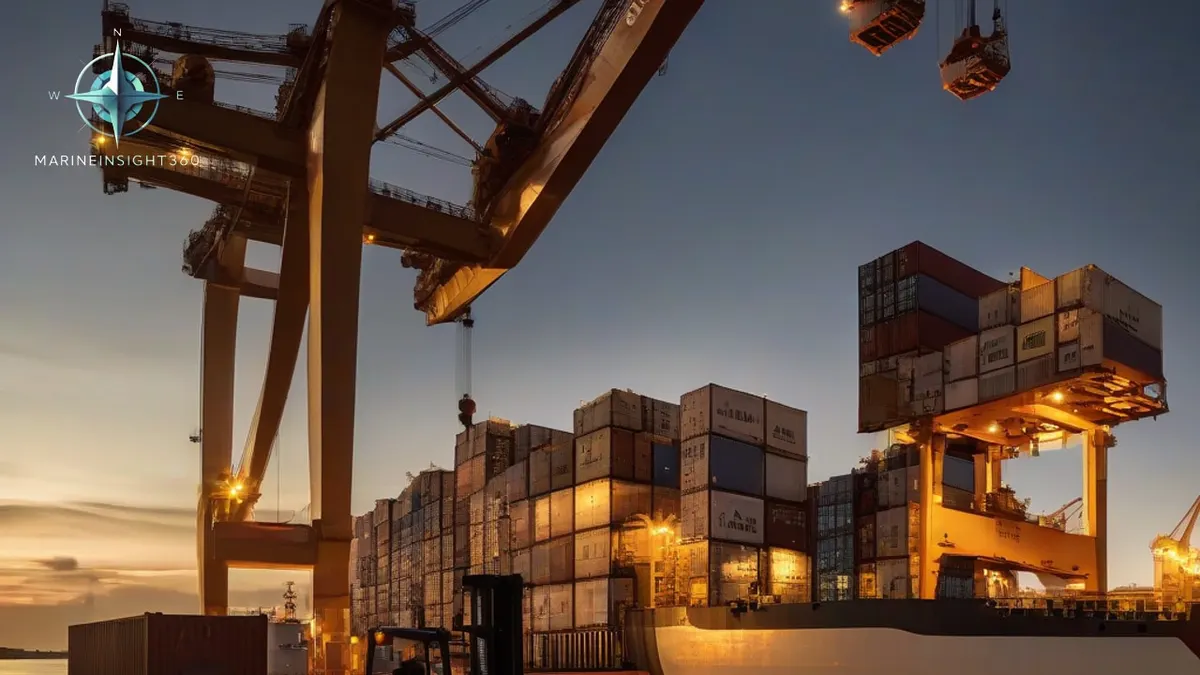
A Guide To HAZMAT Cargo Loading on Ships
Different ships carry different types and forms of cargo at sea. Maritime regulations maintain a database of approximately 5,000 different categories of HAZMAT Cargo. As a maritime professional, knowing whether your vessel is carrying HAZMAT Cargo is crucial. That single question shapes the paperwork, the stowage plan and the emergency arrangements on board.
A common misconception concerns the International MaritimeDangerous Goods Code (IMDG Code). Many people treat it as the sole reference for all HAZMAT Cargo transported by sea. The IMDG Codecovers approximately 3,500 products. The remainder are regulated by the International Maritime Solid Bulk Cargoes (IMSBC) Code. The International Convention on the Management of Chemicals (IGC) covers others. So do Annex I of MARPOL and other regulations.
The IMDG Code applies to cargoes transported in packaged form. However, many ships also transport solid, liquid, and gaseous cargoes in bulk.
The maritime transport of dangerous goods (HAZMAT) requires compliance with various regulations. Those regulations relate to proper packaging and storage. It also requires enhanced communication between the competent authorities and all parties involved in the transport. That communication is what avoids accidents.
Regulations for the Transport of HAZMAT Cargo
Parties must adhere to more stringent requirements than for other common cargoes. Dangerous goods vary in nature or class. Some are simply contaminated, some may be harmful to humans, and some are both.
If the cargo is delivered in packaged form, the shipper is responsible for proper packaging. That packaging must follow the requirements of the International Maritime Dangerous Goods Code. Container ships are the most common means of maritime transport today. A single container can carry cargo from two different shippers.
For HAZMAT Cargo, separate containers can be used to store such cargo appropriately and safely. Even if a container can hold more cargo, it may not carry other types of cargo. That depends on the characteristics of the dangerous goods.
HAZMAT Cargo can be transported to their destination by various means. However, sea transport is considered the most stringent. That is because of the typically large volumes carried by sea compared to air and land transport. Preparing HAZMAT Cargo for sea transport is a shared job. Both the shipper and the vessel must do their part to ensure safe transportation.
- Electric Cargo Ship – Future of Maritime Transport
- MSC Irina: World’s Biggest Cargo Ship
- How Much Load Can A Cargo Ship Carry?
- What Is A Ship Superstructure?
- How Do Ships Survive Storms?
Shipper's Responsibilities:
- The shipper is responsible for classifying the cargo according to the designated maritime regulations/annexes. This must include the correct shipping name (PSN) and dangerous goods details (RQ). It must also cover the flash point of the product to be shipped in bulk, the marine pollutant class, etc.
- Properly pack HAZMAT Cargo to ensure the safety of the crew and the ship's cargo. If the cargo is packaged and shipped, it may need to be properly secured and stowed on pallets. The shipper must perform these procedures effectively.
- Provide appropriate documentation and certificates to prepare a dangerous goods declaration for the cargo to be loaded. Without these documents, the vessel will not be able to load the cargo, as required.
- Provide handling and emergency procedures, such as fire-fighting procedures for specific cargoes. The handling procedures and fire-fighting requirements for certain products, such as chemicals, may differ. They are not the same as the requirements for gas cylinders transported on board.
- Provide preventive and safety measures for planning cargo storage on board. Many dangerous goods (HAZMAT) cargoes interact with other types of cargo when stored together. The shipper must provide this detailed information to the ship. It supports the development of a cargo storage plan. For example, non-flammable gases in Division 2.2 should not be stored near flammable liquids in Class 3. That applies even in separate containers.
When transporting HAZMAT Cargo in containers, the shipper must provide the master/chief officer with a container packing certificate. Other dangerous goods-specific documentation must go with it. These documents must include the following.
A statement certifying that the container is packed in accordance with the applicable International Maritime Dangerous Goods Code.
- Name of the certifying body.
- Suitability of the container structure.
- Segregation requirements that apply.
- Requirements for dangerous goods containers.
- The vessel must be inspected and be in good condition.
Responsibilities of the master and crew
HAZMAT Cargo in containers brings extra paperwork. The shipper must submit a container packing certificate to the captain/chief mate. Other dangerous goods-related documents must go with it. This certificate must include the following items.
A statement that the container has been packed in accordance with the applicable International Maritime Dangerous Goods Code (IMDG Code).
Name of the certifying body.
Container structural effectiveness.
Segregation requirements that apply.
Hazardous Chemical Safety Management Requirements (HAZCOM) for containers.
Packages inspected and are in good condition.
Responsibilities of the Captain and Crew
Once the cargo is ready for loading, the captain takes over. The captain is solely responsible for ensuring that all necessary laws and regulations are properly complied with. The shipper will be submitting documents for the captain's review. He or she must therefore check all transport documents and package markings. Certificates related to dangerous goods shipments must be written in English, or other languages as required. They must also be readily available with supporting documentation.
The shipping documents, shipper's declaration and container packing certificate must be complete. The same applies to any other dangerous goods-related documents. If any of them is incomplete or missing information, the relevant authorities have the right to stop the shipment.
Operated Deck Officers on Tankers
The HAZMAT Cargo to be loaded arrives with relevant documentation. Upon receipt of both, the Master must ensure the following points.
Notify the relevant authorities (at the port of discharge) of the Hazmat cargo specifications and requirements.
The Chief Officer prepares a cargo stowage plan based on the Hazmat cargo requirements.
During loading, packaging will be inspected and verified, if the cargo is already packaged. That check follows the requirements of the International Maritime Dangerous Goods Code.
Hazmat cargo should be kept as far away from accommodation spaces as possible.
Deck officers responsible for cargo stowage and monitoring should be aware of emergency response information.
If the vessel is carrying multiple Hazmat cargoes, the crew should properly segregate the cargoes.
Crew members are aware of incident reporting requirements.
Crew members are aware of the training and safety requirements related to dangerous goods.
The Chief Officer must prepare a dangerous goods manifest.
Regulatory agencies should be aware of Hazmat shipments received on board. Dangerous Goods Manifest (DGM):
A Dangerous Goods Manifest (DGM) is a document detailing the Hazmat loading and storage plan. It is compiled by the Chief Officer upon receipt of the shipping documents from the shipper or agent. The primary purpose of compiling a manifest is to centralize the information. Everything related to the shipment of dangerous goods on board then sits in one document. That document is the DGM.
The Dangerous Goods Manifest (DGM) contains all the essential and necessary information found in the shipping documents and packing certificates. That makes those documents unnecessary for carriage on board the ship.
A compiled Dangerous Goods Manifest must include the following items.
- Information included in the shipping documents.
- Storage plan for Hazmat loaded on board.
- Segregation plan for dangerous goods loaded on board.
- Emergency action plan for dangerous goods.
- Vessors must retain a copy of the Dangerous Goods Manifest for at least one year.
Dangerous Goods Manifest Contents:
- Vessel's name and number or International Maritime Organization (IMO) call sign.
- Vessel's nationality (flag state).
- Technical name and IMO class of the dangerous goods.
- Total number of packages shipped.
- Location of the cargo according to the vessel's cargo stowage plan.
- Actions to be taken in the event of an emergency.
- Emergency response contact number.
- Gross weight of each package.
Other relevant information may be added to the Dangerous Goods Manifest (DGM) for use by maritime or port authorities. That extra material includes the following items.
Name and contact details of the vessel's operator.
- Location of the vessel's moorings.
- Contact details and telephone number of the cargo owner.
- A complete weekly record of all Hazmat received and disbursed.
- Location of the vessel's internal dangerous goods tanks (IMDGs).
Onboard firefighting arrangements
The Dangerous Goods Manifest is typically kept on the vessel's bridge during voyage. A copy is stored in a specially marked container in the cargo control room. That copy is placed there before the vessel arrives in port.
A copy should be retained for reference. That applies even when the next port is not where the dangerous goods cargo was unloaded. The Hazmat manifest must be kept in a readily accessible location upon request.
The captain must carefully review and sign the dangerous goods manifest.
Dangerous Goods Transport Report: Many countries and maritime authorities require reporting of Hazmat cargo.
Hazardous Materials Loading
International hazardous materials containers loaded using port cranes.
The most important information to report includes the following.
- The classification of the hazardous material. Details of the relevant International Maritime Organization (IMO) regulations or conventions are needed too.
- The name of the product, as determined by legal instruments.
- The United Nations number of the hazardous material for the identification of the shipment.
- The International Maritime Organization (IMO) hazard class. It is required for the proper identification of the characteristics and properties of substances, materials, and articles.
- The total amount of hazardous materials carried on board per shipment.
- The location on board is used to identify hazardous and contaminated cargo. That helps provide necessary assistance during rescue or salvage operations.
- The identification of transport units carrying hazardous or contaminated cargo.
- If applicable, the ship's class according to the International Maritime Code (INF Code).
Recommended Reading
Container Loading and Unloading: How Boxes Move Between Ship, Yard and Warehouse
How container loading and unloading actually works: stowage plans and cut-off dates, ship-to-shore cranes, yard handling, and stuffing at the warehouse.
The 7 Types of Cargo Ships That Carry World Trade
The seven types of cargo ships and what each carries: container ships, bulk carriers, tankers, gas carriers, ro-ro, general cargo and reefer vessels.
Cargo Barges: Every Major Type and What Each One Carries
The main types of cargo barges, hopper, deck, tank, crane and more, what each carries, and how tug-and-tow economics move bulk freight on inland waterways.