
What Is a Windlass on a Boat and How Does It Work?
What a windlass on a boat does, how the gypsy, brake and clutch work together, and the mistakes that wreck anchor gear at the worst moment.
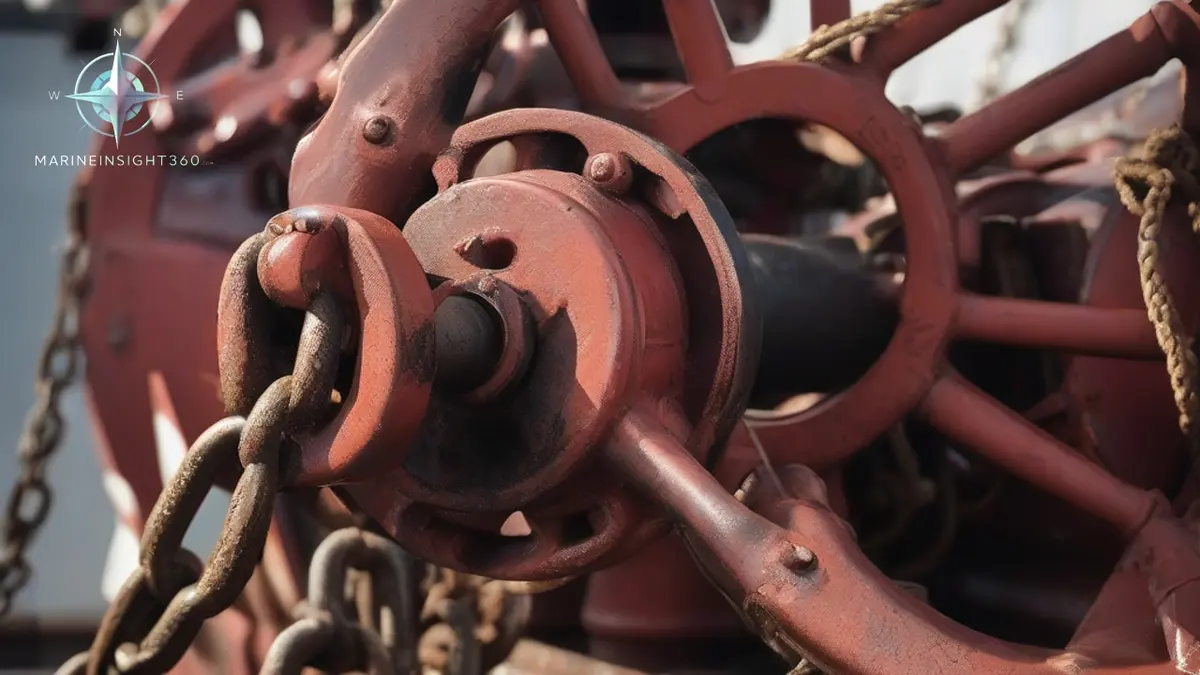
A windlass on a boat is the deck machine that lowers and raises the anchor and its chain. It grips the chain with a notched wheel called a gypsy or wildcat, controls the chain's run with a brake, and takes its power from an electric or hydraulic motor, or from a manual handle on small craft.
Every vessel that anchors depends on this one piece of gear, from a 9 meter (30 foot) sailboat to a 300 meter (984 foot) bulk carrier. The scale changes; the working principle barely does.
The main parts of a windlass on a boat
- Gypsy or wildcat. A wheel with pockets shaped to match the chain links exactly. As it turns, each link seats into a pocket and is carried around, so the chain cannot slip.
- Band brake. Wraps around a drum on the gypsy shaft. It controls the speed of chain running out and holds the chain when the motor is off.
- Clutch. Connects or disconnects the gypsy from the drive train, letting the chain run free of the motor when anchoring.
- Warping drum. A smooth barrel fitted to many windlasses, used for hauling mooring ropes independently of the chain.
- Motor and gearbox. Electric or hydraulic power geared down to produce the heavy, slow pull the chain demands.
- Chain stopper. A mechanical lock on deck, often called a devil's claw or pawl, that takes the load off the windlass once anchoring is complete.
How anchoring with a windlass actually works
Dropping the anchor starts with the motor, not the brake. The crew engages the clutch and walks the anchor back out of the hawsepipe under power until it hangs clear, or in deeper water walks it most of the way to the bottom.
To let go, the clutch is disengaged and the brake eased. Gravity takes the anchor and chain down while the brake controls the speed. A controlled run out stops the chain piling on top of the anchor and keeps the gypsy from overspeeding.
Once the required scope is out, the brake is set and the chain stopper engaged. Heaving up reverses the process: clutch in, brake off, and the motor hauls the chain link by link while a wash pump cleans mud off the cable as it comes home.
Windlass or capstan: which one is on your boat
Strictly, a windlass has a horizontal shaft, with the gypsy turning like a wheel facing the bow. A capstan, or vertical windlass, has a vertical shaft with the motor below deck, which saves deck space and keeps weight low.
Ships generally carry horizontal windlasses sized for their cable, often combined with mooring winches. Yachts and small workboats split between the two layouts based on locker space, chain size and foredeck design.
Power choice follows vessel size. Small boats use 12 or 24 volt electric motors, larger yachts and workboats move to hydraulics, and big ships run hydraulic or high voltage electric drives with local and sometimes remote control.
Mistakes that wreck windlasses and injure crews
- Riding to the windlass at anchor. The gearbox is not designed to hold snatch loads for days. Transfer the load to the chain stopper, or on small craft to a snubber line.
- Letting go in deep water. A long free run builds enormous chain speed, and the brake may not stop it. Walk the anchor back most of the way first.
- Using the windlass to drag the boat. Motor up to the anchor with the engine; hauling the vessel with the windlass imposes the loads it fails under most often.
- Standing in the bight. Chain under load parts violently. Keep hands, feet and bodies clear of the cable run at all times.
Maintenance that decides whether it works when needed
Windlasses fail at anchor stations, in front of pilots, at the worst possible time. Regular greasing of bearings and gears, inspection of brake linings, checking clutch adjustment and cycling the gear before arrival are the habits that prevent it.
Watch the electrical side as well. Salt corroded connections and undersized cables starve electric windlasses of current, and a motor that stalls under load overheats quickly.
Treat the windlass as part of the ship's complete ground tackle system, together with the anchor, chain and stoppers, rather than as an accessory. The Marine Machinery section of Marine Insight 360 covers deck machinery, mooring winches and anchor handling gear in more detail.
Sizing is not left to the builder. Class societies including DNV, Lloyd's Register, ClassNK and ABS derive an equipment number from the ship's dimensions and exposed profile. That figure fixes the anchor mass, the chain grade and diameter, and the holding power the windlass brake has to demonstrate. Flag administrations accept the class certificate as evidence that the ground tackle is adequate.
Condition is then checked on a cycle. At docking surveys the cable is ranged out and links are gauged, and chain wasted beyond the allowed loss of diameter is renewed rather than left for another cycle. Port state control officers under the Paris MoU write up a brake that will not hold, a seized cable or a wasted chain as a deficiency on the anchoring equipment.
Sources and further reading
What to read next
Recommended Reading
How Boat Propellers Work: Pitch, Slip, Diameter and Cavitation
A boat propeller is a rotating wing. How pitch, diameter and slip set thrust, why cavitation is not ventilation, and how to match a prop to the engine.
Boat Approaches Tanker Near Yemen: What Happens On Board Next
A boat approaches a tanker near Yemen, then retreats when the armed team appears. Inside the UKMTO reporting chain, warning signs and onboard drills.
How to Use an Anchor Windlass: Walking Out, Letting Go and Heaving In
A working guide to anchor windlass operation: clutch and brake modes, walking out, letting go, depth limits, bringing up on the stopper and brake maintenance.