
How Boat Propellers Work: Pitch, Slip, Diameter and Cavitation
A boat propeller is a rotating wing. How pitch, diameter and slip set thrust, why cavitation is not ventilation, and how to match a prop to the engine.
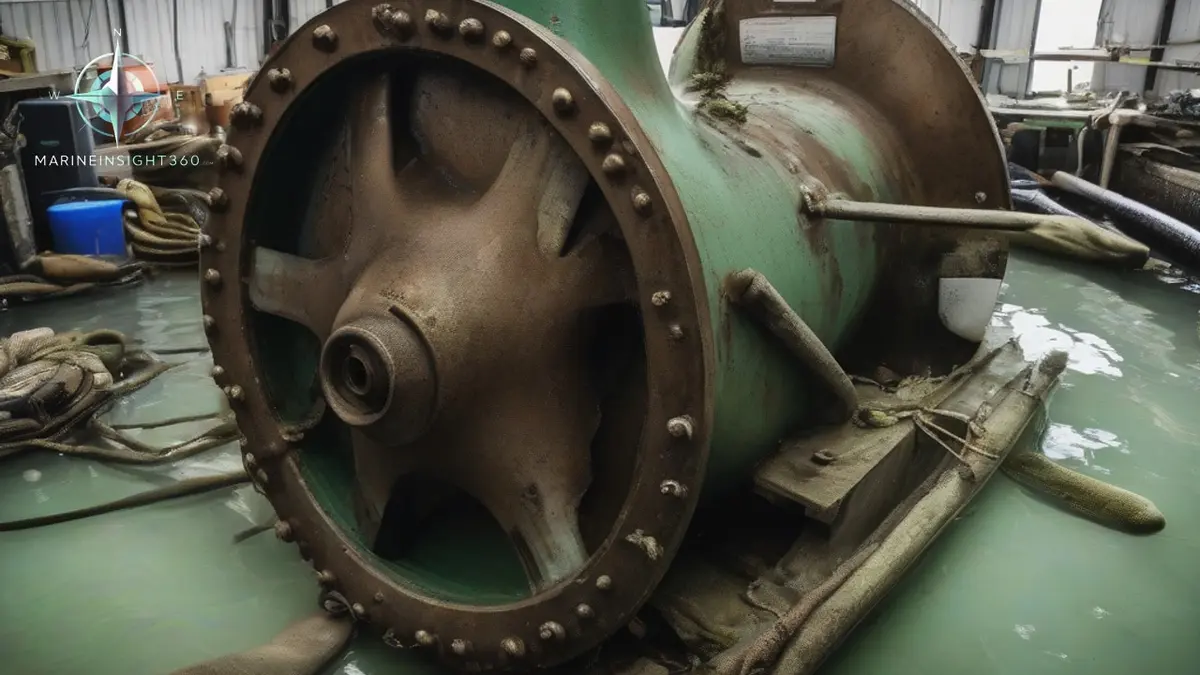
Boat propellers work like rotating wings, and each blade is an airfoil section set at an angle to the water flowing past it. As it turns it generates lift the same way an aircraft wing does, and the component of that lift acting along the shaft line is thrust, which pushes the boat.
To understand how boat propellers work, start there: the blade does not screw through the water like a bolt through a nut. That difference explains almost everything else about propeller behavior, including why some slip is not a loss but a requirement. It is also why a US dealer repitching an outboard prop for Great Lakes towing and a UK yard propping a Solent workboat are solving exactly the same problem.
Three numbers describe any propeller: diameter, pitch and blade area. Diameter is the circle swept by the blade tips. Pitch is the theoretical distance the propeller would advance in one revolution if the water were solid, so a 19 inch pitch prop would move forward 19 inches per turn. Blade area determines how much of that circle is actually working surface.
Pitch and slip: why a propeller never advances its full pitch
Water yields. The propeller accelerates it aft, and because the water moves, the boat advances less than the geometric pitch each revolution. The shortfall, expressed as a percentage, is slip.
Slip is often described as an inefficiency, which is misleading. A propeller with zero slip would be accelerating no water at all and generating no thrust. Thrust is the reaction to accelerating a mass of water aft, so some slip is the price of producing any force. What matters is whether slip is in a sensible range for the hull. A well-matched planing boat typically shows slip in the region of 10 to 15 percent.
A heavily loaded workboat, a tug on a tow or a displacement hull working hard will show considerably more, and that is normal rather than a fault.
Slip climbing over time on the same boat and load is a useful diagnostic. It usually points to a fouled or damaged propeller, a fouled hull, or a boat carrying more weight than the owner thinks.
Diameter, blade area and the trade-offs behind the choice
For a given power, a larger, slower-turning propeller accelerates a bigger mass of water by a smaller amount, which is the more efficient way to make thrust. That is why heavy displacement vessels and commercial craft use the biggest propeller the hull can accommodate, geared down to low shaft speeds.
Diameter is limited in practice by tip clearance. Too little gap between blade tips and the hull produces pressure pulses that transmit into the structure as vibration and noise, so naval architects hold a minimum clearance, commonly around 15 percent of diameter on conventional installations. Draught and aperture size do the rest of the limiting on small craft.
Blade area ratio is the working compromise. More blade area resists cavitation because the thrust is spread over a larger surface, but it adds friction drag and costs efficiency. High-power, high-speed installations therefore run wider blades than a slow trawler of the same diameter.
Blade count, rake and cup
Three blades is the common default for speed and efficiency. A fourth blade adds grip, smooths vibration, improves acceleration and holds better in rough water at the cost of a small reduction at the top end. Five and six blade propellers appear on high-power and low-vibration applications.
Rake is the angle the blades lean aft from the hub. More rake helps hold water on a surfacing or high-trim installation. Cup is a small trailing edge curl that lets the blade hold pressure at higher loading, effectively adding a little pitch and improving bite.
Cavitation and ventilation are different failures
These two get confused constantly and they have separate causes and separate cures.
Cavitation happens when local pressure on the blade back drops below the vapor pressure of water and the water boils at ambient temperature. The vapor bubbles collapse violently when they reach a higher pressure region, and the repeated implosions erode the blade surface, leaving a pitted, sandblasted appearance. Causes include excessive pitch or blade loading, insufficient blade area, damaged or rough leading edges, and disturbed inflow from a badly faired strut or a dented hull.
Ventilation happens when air reaches the blades, either drawn down from the surface or pulled forward from the exhaust. The propeller loses grip almost completely, engine revs surge, and thrust disappears until the air clears. Common causes are a propeller set too high, sharp turns at speed, or excessive trim.
The distinction matters when diagnosing a problem. Pitted blades mean cavitation and a hydrodynamic issue. Sudden rev surges in turns with clean blades mean ventilation and a geometry or trim issue.
Matching the propeller to the engine
The single most important check on any powerboat is whether the engine reaches its rated wide open throttle rpm band with a normal load aboard. Engine makers publish that band, and the propeller is the device that sets where the engine actually lands.
- Over-propped means too much pitch or diameter, and the engine cannot reach rated rpm. It runs continuously overloaded, with high exhaust temperatures, heavier soot on diesels and a shortened life.
- Under-propped means the engine over-revs before the boat reaches its potential speed, wasting available power and risking rev limiter intervention.
A common workshop rule of thumb on outboards and sterndrives is that one inch of pitch change shifts wide open throttle rpm by roughly 150 to 200 rpm, with more pitch reducing rpm. It is a starting point for prop selection, not a precise calculation, and testing on the water with a realistic load is what settles it.
Material, damage and the fuel cost of neglect
Aluminum propellers are cheap and repairable but flex under load, which costs performance. Stainless steel holds its shape, allowing thinner and more efficient blades, but transmits impact shock into the gearcase instead of absorbing it. Nickel aluminum bronze is the standard for shaft-driven and commercial installations for its strength and corrosion resistance.
Small damage costs real money. A blade bent a few millimeters out of true creates vibration, unbalanced loading and a measurable fuel penalty, and a roughened or fouled blade does the same quietly. Propeller polishing is a routine efficiency measure on merchant ships for exactly this reason. Rope cutters fitted ahead of the propeller are cheap insurance on any vessel working near fishing gear or mooring lines.
Right-handed propellers, which turn clockwise viewed from astern when going ahead, also produce a transverse thrust known as prop walk, most obvious going astern, when the stern swings to port. Single-screw boat handlers use it deliberately when berthing rather than fighting it.
The Marine Machinery section of Marine Insight 360 covers shafting, sterngear and propulsion maintenance in more detail.
Above small craft the propeller stops being the owner's choice alone. Class societies including DNV, Lloyd's Register, ABS and Bureau Veritas publish rules for propeller and shafting design, approve the drawings, and require welded blade repairs to be carried out by an approved firm to an agreed procedure. Work done outside that route surfaces at the next docking survey.
Blade condition is now a reporting matter as well as a fuel one. The IMO carbon intensity framework rates a ship on the fuel it burns for the transport work it does, so a fouled or damaged propeller shows up in an annual rating rather than only in the bunker bill. Polishing intervals are planned against that, and divers record blade roughness.
Sources and further reading
- Propeller Cavitation Explained - Michigan Wheel
- Propeller Cavitation: reasons, effects and prevention
- Propeller design and thrust
What to read next
Recommended Reading
How a Ship's Propeller Works: Thrust, Pitch and Slip
How a propeller works on a ship: how blade pitch turns engine torque into thrust, why slip matters, and what causes cavitation damage on the blades.
Parts of a Boat: The Terms Every Crew Member Uses
A working guide to the parts of a boat: hull, keel, bow, stern, transom, gunwale, rudder and the direction terms that keep orders unambiguous on the water.

When Does a Boat Become a Ship? Where Mariners Actually Draw the Line
When does a boat become a ship? The tonnage thresholds, traditional tests and odd exceptions mariners use to draw the line between boats and ships.